Walking is the most underrated treatment for lower back pain. It's free, requires no special equipment, and research consistently shows it helps most types of...
Walking is the most underrated treatment for lower back pain. It’s free, requires no special equipment, and research consistently shows it helps most types of back pain. Yet many people with back pain avoid walking, worried it will make things worse. In most cases, the opposite is true—walking is one of the safest and most effective things you can do.
walking lower back pain – Walking for Lower Back Pain
This guide explains why walking helps back pain, how to walk correctly for maximum benefit, and how to build a walking program that actually makes a difference.
Why Walking Helps Lower Back Pain
The Mechanisms
Walking benefits your back through multiple pathways:
Improved circulation: Increases blood flow to spinal structures, promoting healing and nutrient delivery
Gentle mobilization: Movement reduces stiffness without stressing the spine
Reduced inflammation: Regular movement decreases inflammatory markers
Weight management: Helps maintain healthy body weight, reducing spinal load
What Research Shows
Studies consistently support walking for back pain:
Walking is as effective as specific exercise programs for chronic low back pain
Regular walking reduces risk of back pain recurrence by 25-40%
Walking programs improve pain, function, and quality of life
Benefits occur with moderate walking—you don’t need to walk fast or far
Walking vs. Sitting
The contrast is significant:
Factor
Sitting
Walking
Disc pressure
High (40-90% more than standing)
Lower than sitting
Blood flow
Reduced
Increased
Muscle activation
Minimal
Natural stabilizer engagement
Stiffness
Increases over time
Decreases
Hip flexors
Shorten and tighten
Lengthen with each step
The Immediate Effect
Many people notice their back feels better after even a short walk. This isn’t placebo—walking immediately increases blood flow, activates stabilizing muscles, and changes spinal mechanics. If your back hurts after sitting, a 5-10 minute walk is often the fastest relief.
Total: 40-55 minutes accumulated throughout the day
Walking Through Pain
When Walking Helps
Walking typically helps most with:
General lower back stiffness
Sitting-related back pain
Muscle-based back pain
Chronic nonspecific low back pain
Post-acute phase of back injuries
When Walking May Not Help
Some conditions require modifications:
Spinal stenosis: Walking may worsen leg symptoms—try shorter walks, walking with slight forward lean, or using a cart/walker
Acute disc herniation: Start with very short, gentle walks and progress slowly
Severe acute pain: Begin with standing and gentle movement before walking
Managing Pain During Walking
Mild discomfort: Usually okay to continue—often improves as you warm up
Increasing pain: Slow down, shorten walk, or stop if it keeps worsening
Radiating leg pain: Stop and assess—may need to modify approach
Pain after walking: May need to reduce duration or intensity
Modifications for Specific Conditions
Spinal stenosis:
Walking with slight forward lean often more comfortable
Using a shopping cart or walker provides relief
Shorter frequent walks better than long ones
Uphill may be easier than downhill
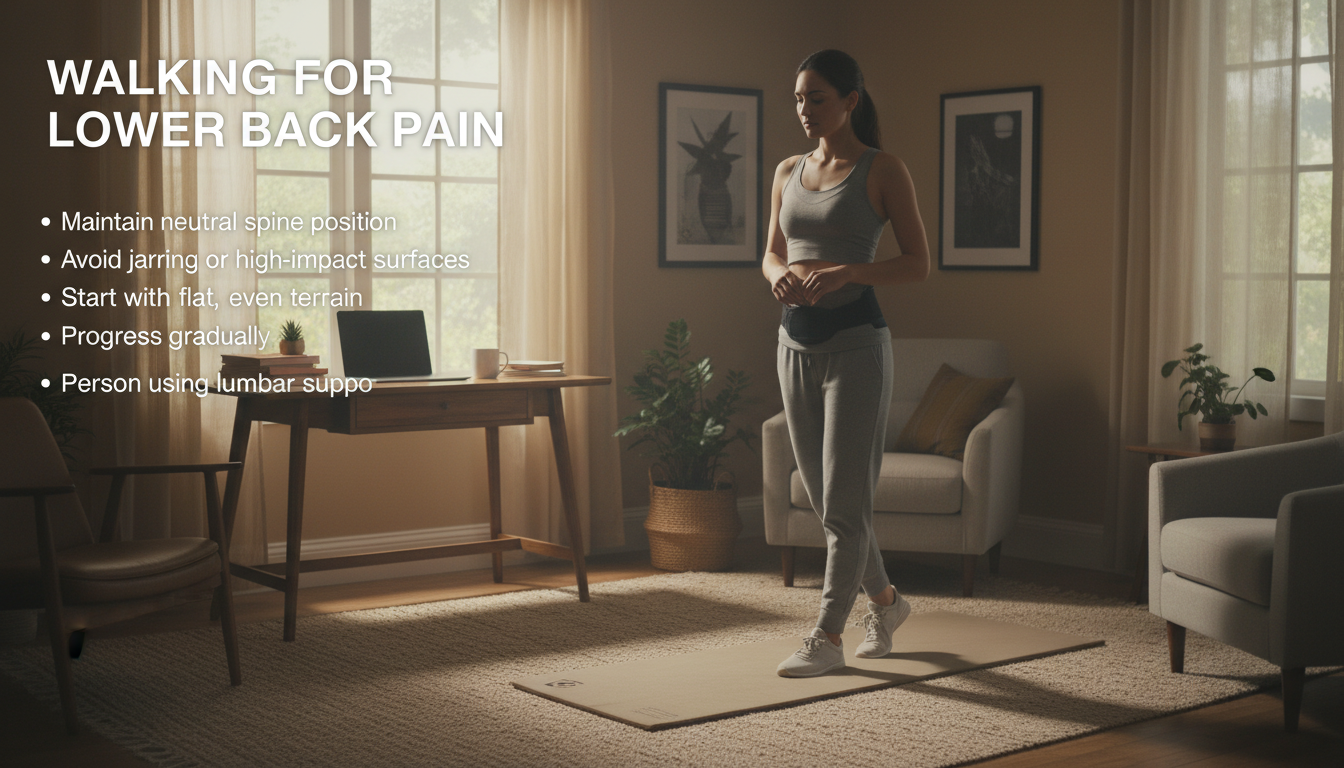
Disc problems:
Maintain neutral spine position
Avoid jarring or high-impact surfaces
Start with flat, even terrain
Progress gradually
Person using lumbar support pillow in office chair
Walking vs. Other Activities
Walking Compared to Running
Impact: Walking has 1-1.5x body weight impact; running has 2.5-3x
For back pain: Walking is generally safer, especially when starting
Recommendation: Master walking before considering running
Walking vs. Swimming
Both are excellent for back pain
Walking is more accessible and practical for daily use
Swimming provides greater unloading of spine
Best approach: use both if possible
Walking vs. Stationary Cycling
Cycling has less impact but different posture demands
Walking better mimics daily functional movement
Cycling can be problematic if bike setup is poor
Walking is easier to do regularly throughout the day
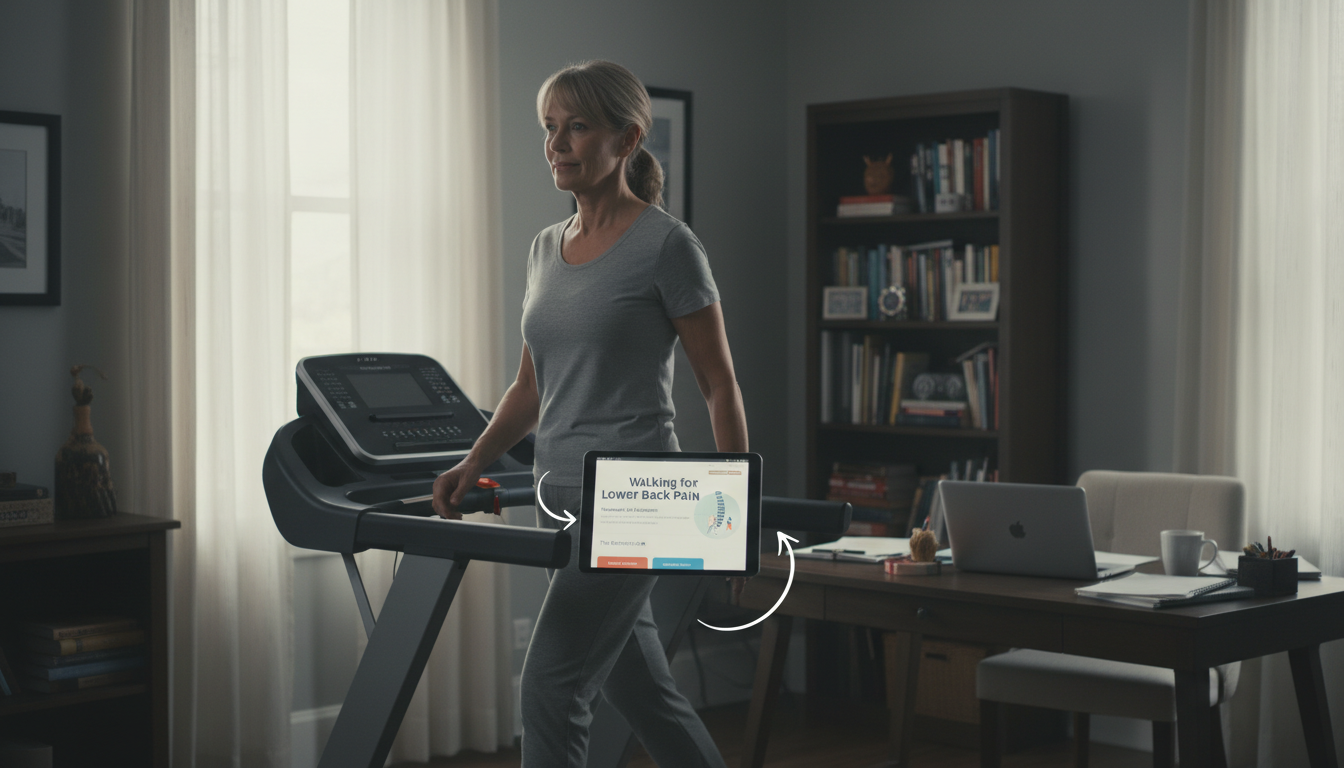
Walking Breaks at Work
The Research on Walking Breaks
Studies show that breaking up sitting with walking:
Reduces back pain intensity by 20-40%
Improves end-of-day discomfort
Enhances focus and productivity
Works better than sitting stretches alone
Practical Implementation
Set reminders: Every 30-60 minutes, walk for 2-5 minutes
Walking meetings: Take phone calls while walking
Longer routes: Use distant bathroom, printer, or coffee
Lunch walks: Don’t eat at your desk—walk to get food
Parking strategy: Park farther away, get extra steps
Indoor Walking Options
When weather or workspace limits outdoor walking:
Walk the office corridors
Use stairs for multi-floor walking
Walk in place or pace during calls
Under-desk walking pads (if available)
Mall walking for longer weekend walks
Frequently Asked Questions
Is it okay to walk if my back hurts?
Usually yes. For most back pain, walking is one of the safest and most helpful activities. Start gently—short walks at an easy pace—and gradually increase. If walking significantly worsens your pain (not just mild initial discomfort that improves as you warm up), shorten the duration or consult a healthcare provider. Walking is generally safe and beneficial for back pain.
How much walking is enough to help back pain?
Research shows benefits starting at about 20-30 minutes daily. However, even short walks throughout the day help—multiple 5-10 minute walks can be as effective as one longer session. For prevention, aim for 150 minutes per week (30 minutes, 5 days). Start where you can and build gradually; any walking is better than none.
Should I walk fast or slow for back pain?
Start at a comfortable pace where you can maintain good posture. Speed matters less than consistency and form. As you progress, moderate-pace walking (where you can talk but are slightly out of breath) provides additional cardiovascular benefits. Don’t sacrifice form for speed—walking with poor posture because you’re going too fast defeats the purpose.
Why does my back hurt more when I first start walking?
Initial stiffness and discomfort that improves after a few minutes is normal—this is your body warming up and increasing blood flow to stiff tissues. However, if pain worsens progressively during the walk rather than improving, stop and reassess. You may need shorter walks, different terrain, or to address an underlying issue.
Can walking actually fix my back pain long-term?
Walking alone may not completely “fix” back pain, but it’s a cornerstone of most successful long-term management strategies. Regular walking reduces recurrence by 25-40%, improves function, and helps maintain a healthy weight. Combined with proper sitting support, good posture habits, and appropriate strengthening exercises, walking is one of the most effective long-term back pain management tools available.
The Bottom Line
Walking is one of the simplest and most effective treatments for lower back pain:
Start where you are: Even 10 minutes helps—build from there
Focus on form: Good posture matters more than speed
Be consistent: Daily walking beats occasional long sessions
Break up sitting: Short walks throughout the day compound benefits
Support between walks: Proper lumbar support prevents undoing your progress
The best exercise for your back is the one you’ll actually do. For most people, that’s walking—and that’s great news because it works.
Walk + Sit Right = Happy Back
Walking helps your back. Sitting wrong hurts it. Our lumbar pillow protects the progress you make on your feet.