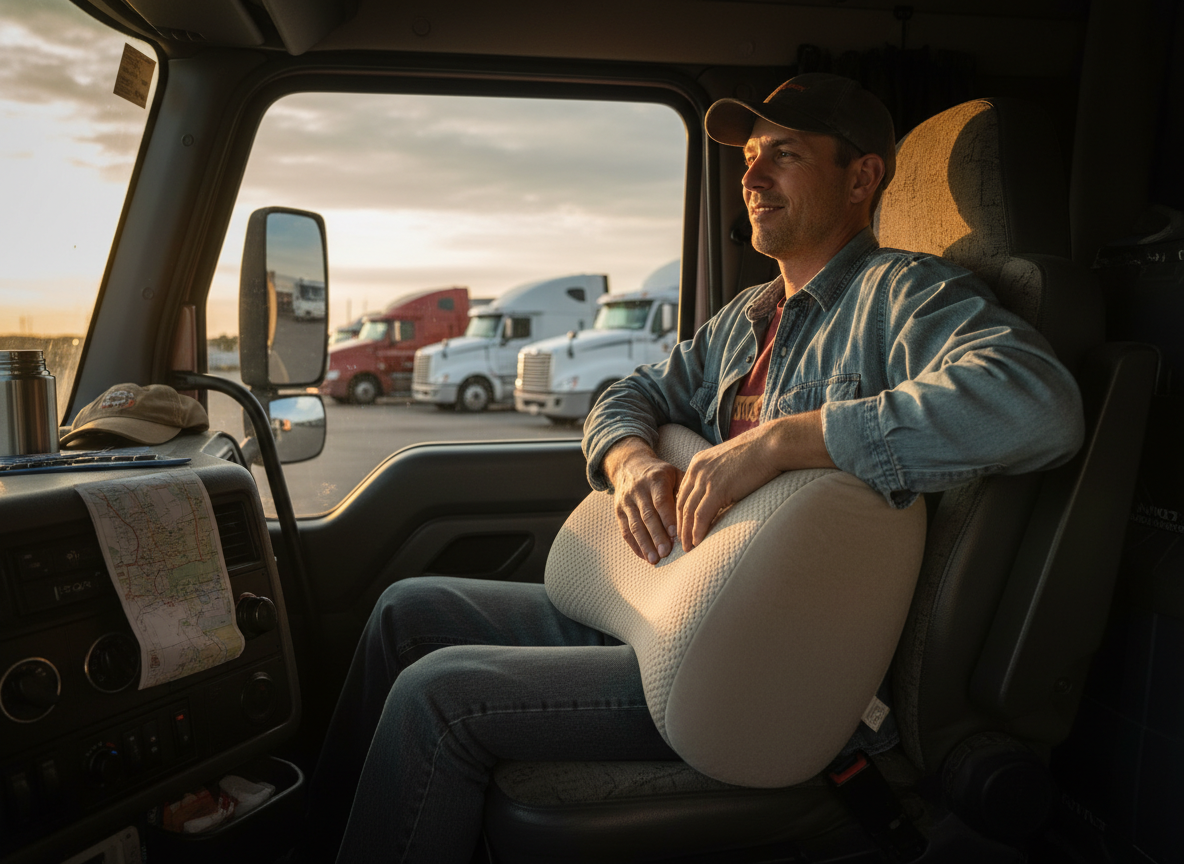
You can't pull over every time your back hurts. As a truck driver, you're dealing with conditions that most office workers can't imagine—10+ hour shifts behind...
You can’t pull over every time your back hurts. As a truck driver, you’re dealing with conditions that most office workers can’t imagine—10+ hour shifts behind the wheel, constant vibration, limited movement, and miles between rest stops. Your back takes a beating that’s unique to your profession.
truck driver back pain – Truck Driver Back Pain Solutions
Truck drivers have some of the highest rates of back pain of any occupation. The combination of prolonged sitting, whole-body vibration, and awkward loading/unloading creates a perfect storm for spinal problems. But there are solutions that work on the road.
This guide covers truck driver-specific back pain causes, practical solutions for the cab, and strategies for long-haul comfort.
Extended sitting duration: 8-14+ hours per day, often without breaks
Whole-body vibration: Constant truck vibration transmits through the spine
Limited movement: Can’t stand or walk during most of the shift
Loading/unloading: Heavy lifting at the beginning and end of routes
Awkward postures: Reaching, twisting while maneuvering
Road conditions: Bumps and jolts stress the spine
The Vibration Factor
Whole-body vibration is particularly damaging:
Vibration accelerates disc degeneration
Creates micro-trauma to spinal structures
Increases muscle fatigue and tension
Reduces blood flow to spinal tissues
Research links truck driving vibration to herniated discs
Sitting Duration Impact
Daily Driving Time
Back Pain Risk
Intervention Level Needed
4-6 hours
Moderate
Basic ergonomic setup
6-8 hours
High
Comprehensive support + breaks
8-10 hours
Very High
Maximum support + exercises
10+ hours
Extreme
Full intervention strategy required
The Statistics Are Sobering
Studies show 50-70% of truck drivers experience low back pain, and it’s one of the leading causes of disability retirement in the profession. The combination of vibration, sitting, and loading activities creates compounding stress on the spine that accumulates over years.
Cab Ergonomics and Seat Setup
Optimizing Your Truck Seat
Start with what you can adjust:
Seat height: Thighs parallel to floor or slightly lower
Your 30-minute break and 10-hour rest period are opportunities:
Walk immediately: Get out and walk for at least 5 minutes
Stretch: Targeted stretches during every stop
Change posture: Stand, lean against truck, change positions
Hydrate: Dehydration increases muscle tension
Quick Stretches at the Truck Stop
Hip Flexor Stretch (Against Truck):
Step one foot forward into lunge position
Lean into the stretch, hands on truck for balance
Hold 30 seconds each side
Standing Back Extension:
Stand with hands on lower back
Gently arch backward
Hold 5 seconds, repeat 10 times
Hamstring Stretch (Bumper Step):
Place foot on bumper step
Keep leg straight, lean forward slightly
Hold 30 seconds each side
Trunk Rotation:
Stand with feet shoulder-width apart
Rotate upper body left and right
Keep hips facing forward
10 rotations each direction
At the Sleeper Berth
Knee-to-chest stretches lying down
Cat-cow stretches on mattress
Gentle pelvic tilts
Glute bridges before getting up
Loading and Unloading Safely
Protecting Your Back During Manual Work
If your routes include physical loading:
Warm up first: Walk around the truck, do gentle stretches
Lift with legs: Classic advice but critical
Never twist while lifting: Turn with your feet
Get help for heavy items: Know your limits
Use dollies and hand trucks: Don’t be a hero
The Pre-Drive Routine
5-minute walk around truck during pre-trip inspection
Quick stretching routine (3-5 minutes)
Adjust seat and lumbar support before driving
Plan your stop schedule
The Post-Drive Routine
Walk for 5-10 minutes immediately after stopping
Stretch hip flexors, hamstrings, and back
Ice or heat if needed
Avoid heavy lifting right after a long drive
Person using lumbar support pillow in office chair
Long-Term Management
Exercise During Home Time
Build strength and flexibility when you’re off the road:
Core strengthening: Planks, bird-dogs, dead bugs
Glute activation: Bridges, clamshells, hip thrusts
Flexibility: Daily stretching routine
Walking: Counteracts sitting; aim for 30 minutes daily
Swimming: Excellent for spine decompression
Weight Management
Excess weight increases spinal load:
Every extra pound adds 4 pounds of pressure on your spine
Truck stop food makes weight management challenging
Pack healthy snacks (nuts, fruit, protein bars)
Cooler with healthy meals when possible
Sleep Quality
Poor sleep increases pain perception:
Invest in quality sleeper berth mattress or topper
Use a pillow that maintains neck alignment
Block light and noise effectively
Maintain consistent sleep schedule when possible
Equipment Recommendations
Essential Cab Equipment
Quality lumbar pillow: Firm, durable, maintains support
Seat cushion: Reduces vibration, supports posture
Adjustable armrests: Reduce shoulder and upper back strain
Nice-to-Have Items
Portable heating pad (12V)
Massage roller for rest stops
Compression back brace for loading days
Quality mattress topper for sleeper
What to Look for in a Trucker Lumbar Pillow
Durability: Must handle daily use and vibration
Firmness: Soft pillows compress quickly
Strap system: Stays in place during driving
Breathable cover: Long hours create heat buildup
Easy to clean: Road life is messy
When to See a Doctor
Red Flags Requiring Immediate Attention
Numbness or weakness in legs
Bladder or bowel control changes
Pain after a fall or accident
Severe pain that doesn’t improve with rest
Unexplained weight loss with back pain
When to Get Evaluated
Pain lasting more than 2 weeks
Pain that prevents driving
Progressive worsening
Radiating pain down legs
Morning stiffness lasting hours
Frequently Asked Questions
Why do truck drivers get more back pain than other workers?
Truck drivers face a unique combination: prolonged sitting (10+ hours), whole-body vibration that damages discs, limited ability to move or change positions, and often physical loading demands. Studies show vibration alone accelerates disc degeneration. The profession combines multiple risk factors that compound over time.
What’s the best seat position for long-haul driving?
Seat slightly reclined (100-110 degrees), lumbar support adjusted to fill the curve of your lower back, thighs parallel to floor, slight bend in knees when pressing pedals, and shoulders relaxed against backrest. The key is proper support so muscles can relax—tension from unsupported sitting causes fatigue and pain.
How often should I stop during long drives?
Ideally every 2 hours, though regulations may require longer stretches. During your mandatory 30-minute break, prioritize walking and stretching over sitting in the cab or truck stop booth. Even brief stops to fuel can include a quick walk around the truck and basic stretches.
Can truck driving cause permanent back damage?
Years of truck driving can accelerate disc degeneration and contribute to conditions like herniated discs and chronic pain. However, proper prevention strategies significantly reduce this risk. Ergonomic setup, regular exercise during home time, and addressing problems early can help protect your spine long-term.
Is a gel or memory foam seat cushion better for driving?
Memory foam generally performs better for long-haul driving. It provides consistent support for hours, doesn’t bottom out like gel, and maintains its shape better over time. Gel can feel cooler initially but may not provide enough support for 8+ hour shifts. High-density memory foam offers the best balance of comfort and support.
The Bottom Line
Truck driving presents unique back pain challenges, but they’re manageable:
Optimize your cab: Proper seat setup and lumbar support are essential
Use your breaks: Walk and stretch during every stop
Protect during loading: Proper lifting technique saves your back
Build strength: Use home time for exercise and recovery
Address problems early: Don’t drive through serious pain
Your back needs to last as long as your driving career. Investing in prevention now pays dividends for years on the road.
Support for the Professional Driver
Our heavy-duty lumbar pillow is built for the demands of professional driving—firm support that lasts mile after mile, shift after shift.