Free Shipping
Fast Delivery
Safe Payment
30-Day Guarantee
Free Shipping
Fast Delivery
Safe Payment
30-Day Guarantee

Spondylolisthesis Sitting Position

Your vertebra has slipped forward. Whether you've just been diagnosed with spondylolisthesis or have been managing it for years, figuring out how to sit...
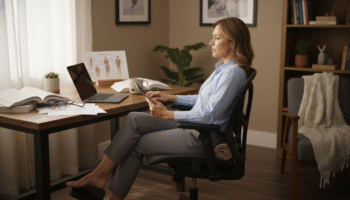
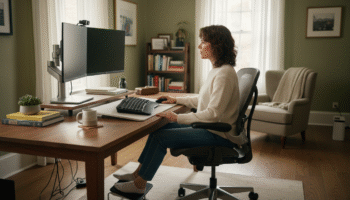
Spondylolisthesis Sitting Position - Hero Image

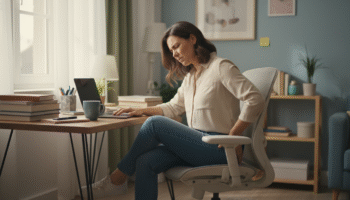
Your vertebra has slipped forward. Whether you’ve just been diagnosed with spondylolisthesis or have been managing it for years, figuring out how to sit comfortably is a daily challenge. The wrong position aggravates the slip; the right position can provide relief.

spondylolisthesis sitting – Spondylolisthesis Sitting Position

Spondylolisthesis requires a different approach to sitting than most back conditions. Understanding the mechanics of your specific grade and type helps you find positions that support your spine rather than stress it.

This guide explains how vertebral slippage affects sitting, what positions help versus hurt, and how to modify your workspace for this specific condition.

Understanding Spondylolisthesis

What It Is

Spondylolisthesis occurs when one vertebra slips forward relative to the one below it. This creates:

  • Instability at the affected spinal segment
  • Potential nerve compression
  • Stress on surrounding muscles and ligaments
  • Pain that varies with position

Types of Spondylolisthesis

  • Isthmic: Caused by a fracture in the pars interarticularis (common in athletes)
  • Degenerative: Results from arthritis and disc degeneration (common in older adults)
  • Congenital: Present from birth due to abnormal vertebral formation
  • Traumatic: Caused by injury

Grading System

Grade Slip Percentage Typical Impact
Grade I 0-25% Often asymptomatic, mild positioning needs
Grade II 25-50% Moderate symptoms, positioning important
Grade III 50-75% Significant symptoms, careful management
Grade IV 75-100% Severe, often requires surgery

Position Response Varies by Type

Isthmic spondylolisthesis typically feels better with flexion (bending forward). Degenerative spondylolisthesis often feels better with slight extension (maintaining lordosis). Your type affects which sitting positions work best. Work with your healthcare provider to understand your specific pattern.

How Sitting Affects Spondylolisthesis

The Extension-Flexion Question

Position response depends on your spondylolisthesis type:

Extension (arching back):

  • Can compress at the slip site
  • May worsen isthmic spondy symptoms
  • Sometimes helps degenerative spondy

Flexion (rounding forward):

  • Opens the posterior structures
  • Often helps isthmic spondy
  • May worsen degenerative spondy instability

The Stability Challenge

Regardless of type, spondylolisthesis creates spinal instability. Prolonged sitting without proper support allows:

  • Gradual position drift
  • Muscle fatigue that reduces support
  • Increased stress at the slip site
  • Cumulative irritation of pain generators

Sitting Positions by Spondylolisthesis Type

For Isthmic Spondylolisthesis

Generally responds better to neutral or slight flexion:

  • Avoid excessive lumbar lordosis
  • Moderate lumbar support (not aggressive)
  • Slightly flexed posture may feel better
  • Reclined position with hip flexion often comfortable

For Degenerative Spondylolisthesis

Generally responds better to supported lordosis:

  • Firm lumbar support to maintain curve
  • Avoid slouching (increases instability)
  • More upright posture typically better
  • Position similar to disc herniation recommendations

For All Types

Universal principles:

  • Avoid extremes: Neither aggressive extension nor deep flexion
  • Support matters: External support reduces demand on damaged structures
  • Movement helps: Position changes prevent cumulative stress
  • Listen to your body: Your symptoms guide optimal position

Adjustable Support for Your Unique Spine

Whether you need gentle support or firm positioning, our adjustable lumbar pillow can be customized to your spondylolisthesis needs.

Find Your Support Level →

30-Day Money Back
2-Year Warranty
Free Returns
24/7 Support

Adjustable Firmness | 30-Day Trial | 2-Year Warranty

Workspace Setup for Spondylolisthesis

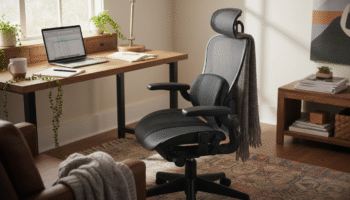
Chair Selection

Look for:

  • Adjustable lumbar: Different intensity options
  • Recline capability: Opens hip angle, changes loading
  • Firm seat: Stable base prevents unwanted movement
  • Armrests: Help with transitions (sit-to-stand)

Lumbar Support Customization

  • Isthmic type: Position lower, reduce intensity
  • Degenerative type: Standard positioning, firm support
  • Mixed response: Experiment with position and firmness

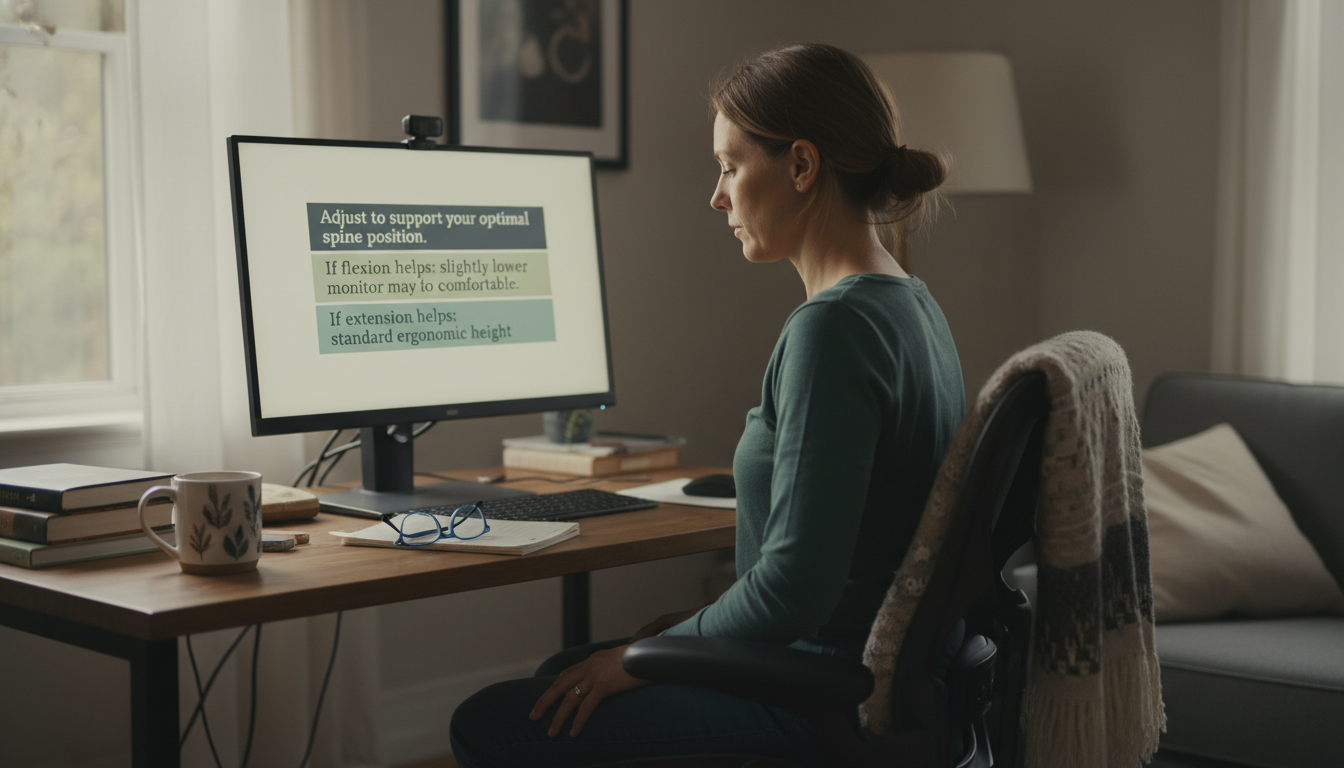
Desk Height and Monitor Position

  • Adjust to support your optimal spine position
  • If flexion helps: slightly lower monitor may be comfortable
  • If extension helps: standard ergonomic height

Person using lumbar support pillow in office chair

Movement and Exercise Considerations

The Importance of Core Stability

Strong core muscles provide the stability your spine lacks:

  • Abdominal bracing: Creates muscular corset effect
  • Deep stabilizers: Multifidus, transverse abdominis
  • Hip stability: Glutes support pelvis position

Safe Exercises

  • Neutral spine exercises: Bird-dogs, dead bugs
  • Pelvic tilts: Build awareness of spine position
  • Walking: Promotes spine health without loading
  • Swimming/water exercise: Movement without compression

Exercises to Approach Carefully

  • Deep backbends (may worsen isthmic)
  • Heavy lifting (increases shear forces)
  • High-impact activities (jarring to unstable segment)
  • Extremes of flexion or extension

Daily Management Strategies

Sitting Duration Limits

  • Grade I-II: Break every 45-60 minutes
  • Grade III+: Break every 20-30 minutes
  • More frequent breaks during symptom flares

Transition Techniques

Standing from sitting puts stress on the slip site:

  1. Engage core before standing
  2. Scoot to edge of chair
  3. Use armrests to assist
  4. Rise smoothly, avoid jerking
  5. Pause briefly before walking

Carrying and Lifting

  • Avoid carrying heavy loads
  • When necessary, keep objects close to body
  • Avoid asymmetric carrying
  • Consider a rolling bag for work materials

Warning Signs

Seek Medical Attention If:

  • Progressive weakness in legs
  • Numbness or tingling worsening
  • Bladder or bowel changes
  • Pain dramatically increased
  • New neurological symptoms

Signs of Progression:

  • Increasing pain despite good management
  • Activities becoming more limited
  • Posture changes visible to others
  • Balance or gait affected

Frequently Asked Questions

Can sitting make spondylolisthesis worse?

Poor sitting posture can aggravate symptoms and theoretically stress an unstable segment, but sitting itself doesn’t typically cause slippage progression. The concern is symptom aggravation and muscle deconditioning from excessive sitting. Proper positioning with regular movement protects your spine.

What is the best sitting position for spondylolisthesis?

It depends on your type. Isthmic spondylolisthesis often responds better to neutral or slightly flexed positioning. Degenerative spondylolisthesis usually prefers supported lordosis. Both benefit from external support and regular position changes. Your symptom response guides the best position for you.

Should I use lumbar support with spondylolisthesis?

Yes, but the intensity and position may differ from standard recommendations. Degenerative types typically need firmer lumbar support. Isthmic types may prefer softer support or lower positioning. External support reduces demand on your damaged spinal structures—it’s helpful for all types when properly customized.

How long can I sit with spondylolisthesis?

This varies by grade and individual tolerance. Grade I-II patients with good positioning often tolerate 45-60 minute intervals. Higher grades or symptomatic periods may require 20-30 minute limits. Listen to your symptoms—increasing pain or stiffness signals time to move.

Does spondylolisthesis get worse over time?

Most spondylolisthesis is stable and doesn’t progress significantly. However, some cases do worsen, particularly if associated with ongoing instability. Regular follow-up with imaging helps monitor your specific situation. Good management including core strengthening helps prevent progression.

The Bottom Line

Sitting with spondylolisthesis requires understanding your specific type and listening to your body:

  1. Know your type: Isthmic and degenerative respond to different positions
  2. Support accordingly: Customize lumbar support to your needs
  3. Move regularly: Position changes prevent cumulative stress
  4. Strengthen your core: Muscular support compensates for structural instability
  5. Monitor symptoms: Changes warrant medical evaluation

With proper management, most people with spondylolisthesis can sit comfortably for work and daily activities.

Support Your Spine, Your Way

Our adjustable lumbar pillow lets you find the exact support level your spondylolisthesis needs—in any chair.

Try Risk-Free for 30 Days →

30-Day Money Back
2-Year Warranty
Free Returns
24/7 Support

30-Day Money-Back Guarantee | 2-Year Warranty | Free Shipping

More Posts

Your Cart

Your cart is empty

Looks like you haven't added anything yet.

Start Shopping