
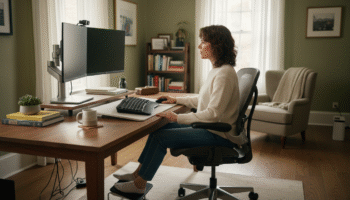
Gluteal Amnesia and Back Pain
Your glutes have forgotten how to work. It sounds strange,

That nagging pain at the base of your spine—right where your back meets your pelvis? The one that flares up after sitting at your desk, driving, or honestly any time you’re not moving? You might be dealing with SI joint dysfunction, one of the most underdiagnosed causes of lower back pain.
📋 Table of Contents
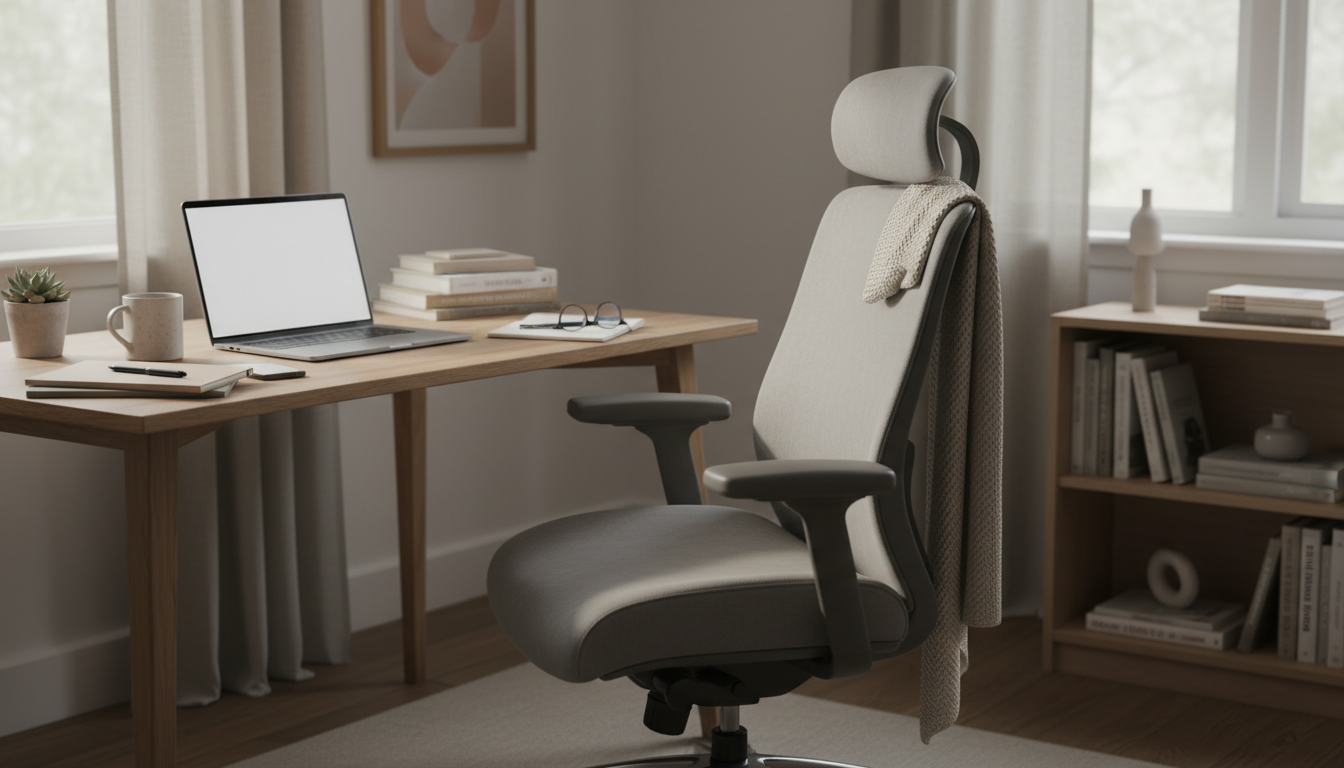
The sacroiliac (SI) joint is a common culprit behind sitting pain, but it’s often mistaken for general low back pain or sciatica. Understanding how sitting affects this joint—and what positions help versus hurt—can finally give you relief.
This guide explains SI joint mechanics, why sitting aggravates it, and specific positioning strategies that actually work.
The sacroiliac joints are two joints on either side of your spine where the sacrum (triangular bone at the base of your spine) meets the ilium (your pelvic bone). They:
| Condition | Pain Location | Key Differentiator |
|---|---|---|
| SI Joint | PSIS (dimples above buttocks) | Pain with asymmetric loading; one-sided |
| Disc Herniation | Central low back, radiating | Flexion worsens; nerve symptoms |
| Facet Joint | Bilateral, midline low back | Extension worsens; more diffuse |
| Piriformis | Deep in buttock | Muscle tenderness; sitting on hard surface |
Stand on one leg (on the painful side) for 30 seconds. If this recreates or worsens your pain at the base of your spine, SI joint involvement is likely. The joint is loaded asymmetrically during single-leg stance, which stresses a dysfunctional SI joint.
When you sit with weight shifted to one side—whether from habit, leaning on an armrest, or reaching—you load one SI joint more than the other. This asymmetric stress aggravates an already irritated joint.
Slouched sitting tilts your pelvis backward, which:
The SI joint ligaments stiffen when held in one position. This “creep” means standing up after prolonged sitting causes sudden stress on ligaments that have temporarily lost their tension.
Cross-legged sitting, wallet in back pocket, leaning to one side to use a mouse—these common desk habits create the asymmetric loading that SI joints hate.
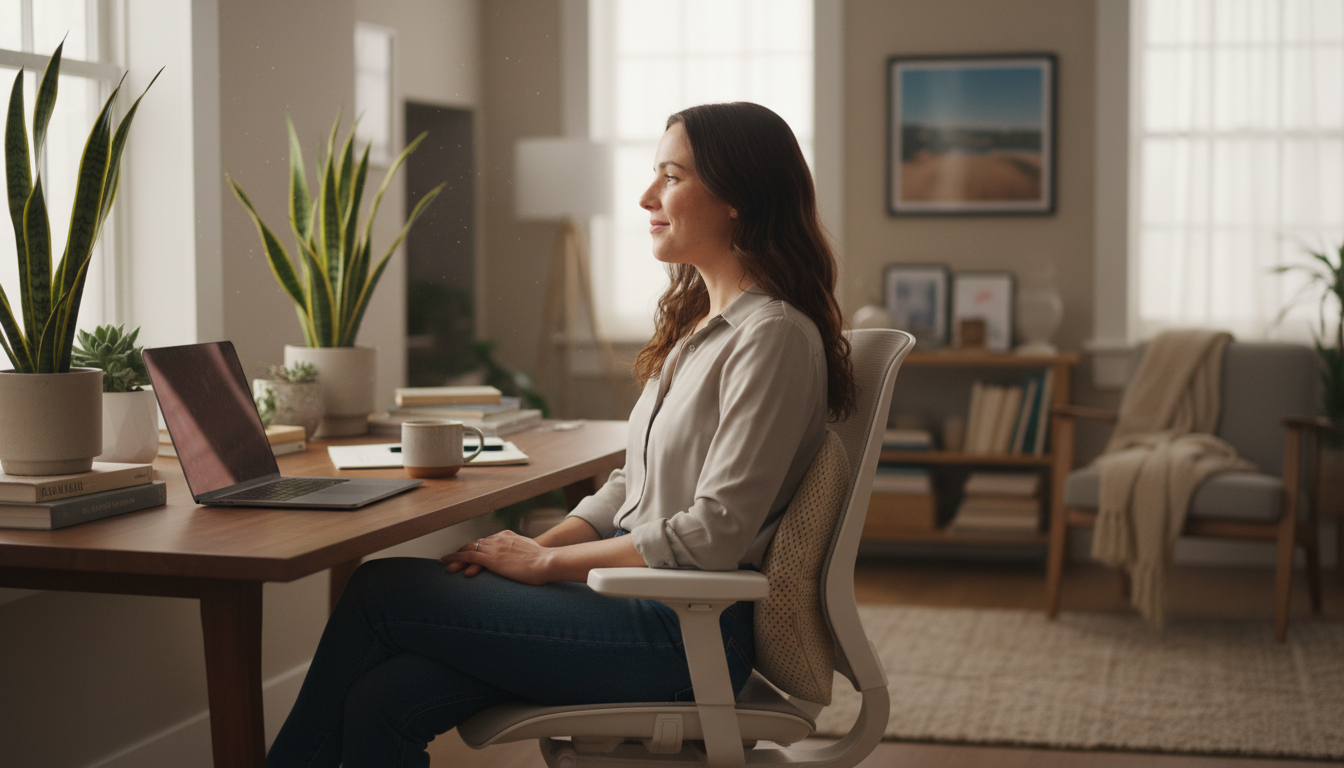
The single most important rule: keep weight evenly distributed on both sit bones.
Avoid both excessive anterior tilt (arching) and posterior tilt (slouching):
Proper Support for SI Joint Health
Our lumbar pillow helps maintain the neutral pelvis position your SI joints need—preventing the posterior tilt that aggravates dysfunction.
Memory Foam Comfort | 30-Day Trial | 2-Year Warranty
Lumbar support maintains your lordotic curve and prevents the posterior pelvic tilt that stresses SI joints. Look for:
A wedge cushion tilts your pelvis slightly forward, which:
If your SI joint is significantly unstable, a sacroiliac belt worn during sitting can provide additional joint compression and stability. Discuss with a healthcare provider.
Strong muscles around the SI joint reduce reliance on the joint and ligaments alone:
Strengthens glutes that stabilize the pelvis. 3 sets of 15, daily.
Builds core stability that protects the SI joint. 3 sets of 10 each side, daily.
Targets hip external rotators that support pelvic stability. 3 sets of 15 each side.
Teaches core control without loading the SI joint. 3 sets of 10 each side.
SI joints do poorly with prolonged static positioning. Stand and move every 30 minutes minimum.
When standing up from sitting:
SI joint improvements come from consistent good habits, not occasional perfect positioning.
Sitting, especially with poor posture, creates asymmetric loading and posterior pelvic tilt that stress the SI joint. The prolonged static position also causes ligament creep, making the joint feel stiff and painful when you finally move.
Sit with equal weight on both sit bones, hips level with or above knees, lumbar support maintaining your lordotic curve, feet flat on floor, and nothing in your back pockets. The key is symmetry—avoid any position that loads one side more than the other.
A lumbar support cushion helps maintain neutral pelvis position, which reduces SI joint stress. A wedge cushion can also help by tilting the pelvis forward slightly. Coccyx cushions with cutouts don’t specifically help SI joints but may provide general comfort.
Prolonged poor sitting doesn’t typically cause SI joint dysfunction, but it definitely aggravates existing dysfunction. Common causes include pregnancy, trauma, asymmetric activities (golf, single-leg sports), and hypermobility. Poor sitting then makes these problems worse.
With proper positioning, exercise, and avoiding aggravating activities, most SI joint dysfunction improves significantly within 4-8 weeks. Chronic cases may take longer. Some people need ongoing maintenance strategies to prevent recurrence.
SI joint pain doesn’t have to rule your work life. The keys to sitting successfully:
With consistent attention to positioning and regular movement, most SI joint sufferers can work comfortably through the day.
Support Your SI Joint Recovery
Our ergonomic lumbar pillow helps maintain the neutral pelvis position your SI joints need—in any chair.
30-Day Money-Back Guarantee | 2-Year Warranty | Free Shipping
Your glutes have forgotten how to work. It sounds strange,
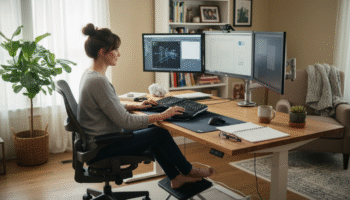
Your hip flexors are the hidden culprits of desk-job back
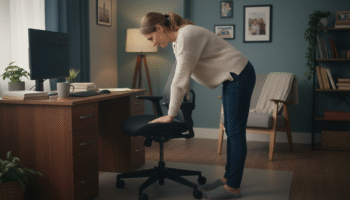
Your back is stiff, tight, and angry. And you’ve got
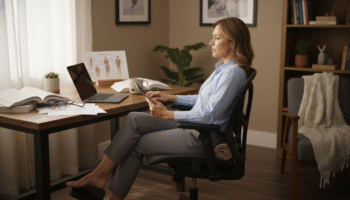
Sitting with a herniated disc can feel like torture. Every
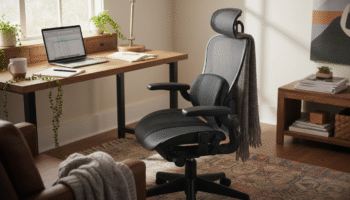
Your desk chair is failing you. Even if you paid
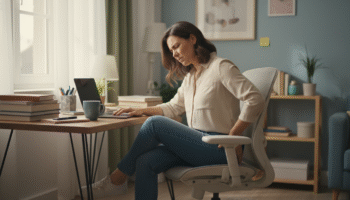
That deep ache in your buttock that won’t quit? The

You’ve blamed your chair for years. And you’re probably right—but
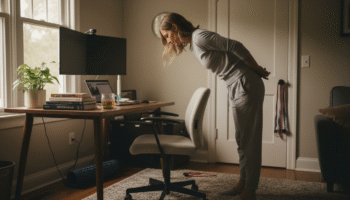
Your back is aching right now, isn’t it? That dull
Is your lower back screaming at you by 3 PM?
Most lumbar pillows end up in closets within weeks. Not