
Gluteal Amnesia and Back Pain
Your glutes have forgotten how to work. It sounds strange,

If you’ve ever felt that shooting, burning pain radiating from your lower back down your leg, you know sciatica doesn’t just hurt—it disrupts your entire life.
📋 Table of Contents

Sitting becomes torture. Working at a desk feels impossible. Even activities you used to enjoy are now overshadowed by the constant worry: “Will this trigger another flare-up?”
While sciatica often requires comprehensive treatment, the right supportive pillows can provide significant relief—especially while sitting. This guide explains which pillows actually help sciatica, how to position them correctly, and what else you can do to find relief.
Sciatica refers to pain along the sciatic nerve—the longest nerve in your body. It runs from your lower back, through your buttocks, and down each leg to your feet.
Sciatica isn’t a diagnosis itself; it’s a symptom of an underlying condition that irritates or compresses the sciatic nerve. Common causes include:
Sitting is particularly problematic for sciatica sufferers because:
Here’s the good news: proper spinal alignment while sitting can significantly reduce sciatic nerve compression. When your spine maintains its natural curves—including the inward lumbar curve—there’s less pressure on the discs and nerve roots.
This is where supportive pillows make a real difference.
Not all pillows help sciatica equally. Here’s what works, and when to use each type:
Lumbar pillows support your lower back’s natural curve, reducing disc pressure and maintaining proper spinal alignment.
How they help sciatica:
Best features for sciatica sufferers:
💡 Our recommendation: For most sciatica sufferers, a quality lumbar support pillow provides the most relief because it addresses the root cause—poor spinal alignment. The LumbarPillow Orthopedic is designed specifically to eliminate lower back pain by supporting your spine’s natural curve.
Coccyx cushions have a U-shaped cutout at the back to relieve pressure on your tailbone and coccyx area.
When to use a coccyx cushion:
Coccyx vs. lumbar—which do you need?
Wedge cushions tilt your pelvis forward, changing your sitting angle and potentially reducing nerve compression.
When wedges help:
Important note: Wedges don’t work for everyone with sciatica. Some people find the forward tilt increases their pain. Test carefully before committing.
Some people benefit from using multiple supports together:
Start with lumbar support alone, then add other cushions if needed.
Based on effectiveness for sciatica relief, build quality, and user feedback:
| Product | Type | Best For | Key Feature |
|---|---|---|---|
| LumbarPillow Orthopedic | Lumbar Support | Best for Sciatica | AirFlex™ memory foam, ergonomic contour |
| Everlasting Comfort Coccyx | Coccyx Cushion | Tailbone/Buttock Pain | U-shaped cutout, cooling gel |
| ComfiLife Combination | Lumbar + Seat Set | Full Sitting Support | Two-piece system |
| OPTP McKenzie Roll | Lumbar Roll | Minimalist Support | PT recommended |
Most sciatica originates in the lumbar spine—the area between L4 and S1 vertebrae. Supporting this area:
Other pillows address symptoms; lumbar support addresses the structural cause.
If using both lumbar support and seat cushion:
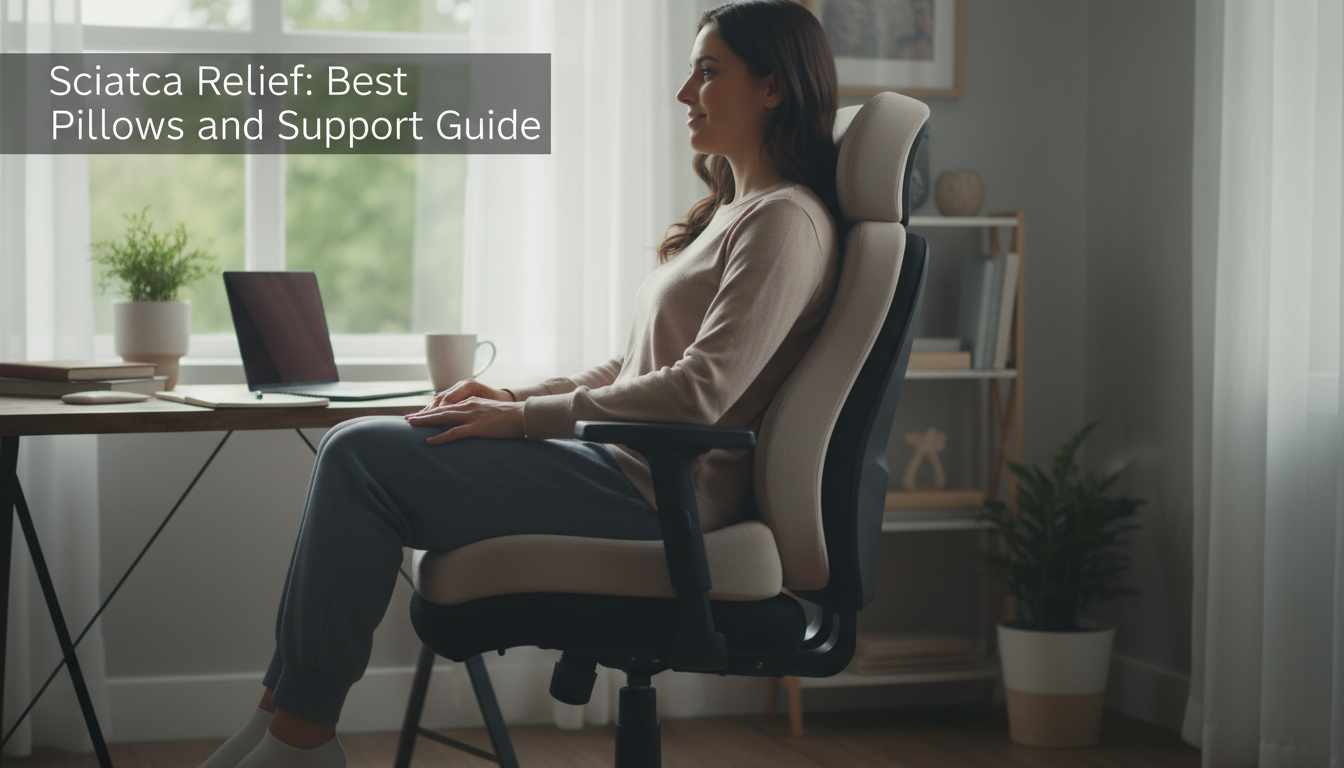
The goal is maintaining your spine’s natural curves:
Leg position affects sciatic nerve tension:
Crossing your legs twists your pelvis and can increase pressure on the sciatic nerve. If you habitually cross your legs, it may take conscious effort to break the habit.
Sitting on a wallet creates uneven pressure that can aggravate piriformis-related sciatica. Move your wallet to a front pocket or remove it when sitting for extended periods.
The “C-curve” slump increases disc pressure and can worsen herniation. This is exactly what lumbar support prevents—by filling the gap in your lower back, it makes slouching uncomfortable.
Sitting on the front edge of your chair removes all back support and forces your muscles to work overtime. Sit all the way back with your spine against the lumbar pillow.
Even a perfect position becomes problematic if you never move. Aim to shift position or stand every 30-60 minutes.
These gentle stretches can provide relief (stop if pain increases):
Pay attention to which positions relieve your symptoms:
See a healthcare provider if you experience:
Most sciatica improves with conservative treatment over 4-12 weeks. Options include:
With proper treatment and supportive care:
Using supportive pillows during recovery helps maintain proper alignment and prevent re-aggravation.
For most people, yes. A quality lumbar support pillow maintains proper spinal alignment, reducing pressure on the sciatic nerve roots. It’s particularly effective for sciatica caused by disc issues (the most common type). While it’s not a cure, it can significantly reduce pain during sitting—often the most problematic activity for sciatica sufferers.
Sit with feet flat on the floor, knees at or slightly below hip level, and lower back supported with a lumbar pillow. Avoid crossing legs, slouching, or sitting on anything in your back pocket. Change positions frequently—even the best position becomes problematic if held too long.
Sitting doesn’t usually cause sciatica directly, but prolonged sitting with poor posture can contribute to conditions that lead to sciatica (like disc herniation). Sitting also typically worsens existing sciatica by increasing disc pressure and compressing nerve roots.
Acute sciatica often improves within 4-6 weeks with conservative treatment. Chronic sciatica (lasting more than 12 weeks) may require more intensive treatment. Using supportive pillows and maintaining good posture can speed recovery and prevent recurrence.
You don’t need to avoid sitting entirely—but you should sit better and sit less. Use proper lumbar support, take frequent standing breaks, and avoid positions that worsen symptoms. Many people find that supported sitting is actually more comfortable than unsupported standing.
High-density memory foam is excellent for sciatica support. It conforms to your body’s shape while maintaining the support needed to keep your spine aligned. Low-density foam or soft materials don’t provide adequate support and should be avoided.
Don’t let sciatica control your life.
Our orthopedic lumbar pillow uses AirFlex™ memory foam with ergonomic contouring to support your spine’s natural curve—reducing pressure on the sciatic nerve where it matters most.
30-Day Money-Back Guarantee | 2-Year Warranty | Free Shipping
Your glutes have forgotten how to work. It sounds strange,
Your hip flexors are the hidden culprits of desk-job back
Your back is stiff, tight, and angry. And you’ve got
That nagging pain at the base of your spine—right where
Sitting with a herniated disc can feel like torture. Every
Your desk chair is failing you. Even if you paid
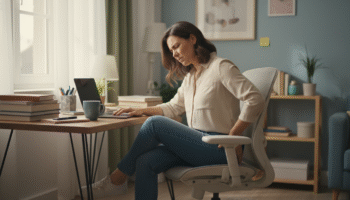
That deep ache in your buttock that won’t quit? The

You’ve blamed your chair for years. And you’re probably right—but
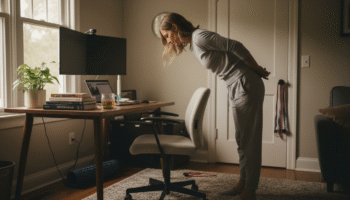
Your back is aching right now, isn’t it? That dull
Is your lower back screaming at you by 3 PM?