

Gluteal Amnesia and Back Pain
Your glutes have forgotten how to work. It sounds strange,


Bad posture doesn’t just look unprofessional—it’s slowly damaging your spine.
📋 Table of Contents
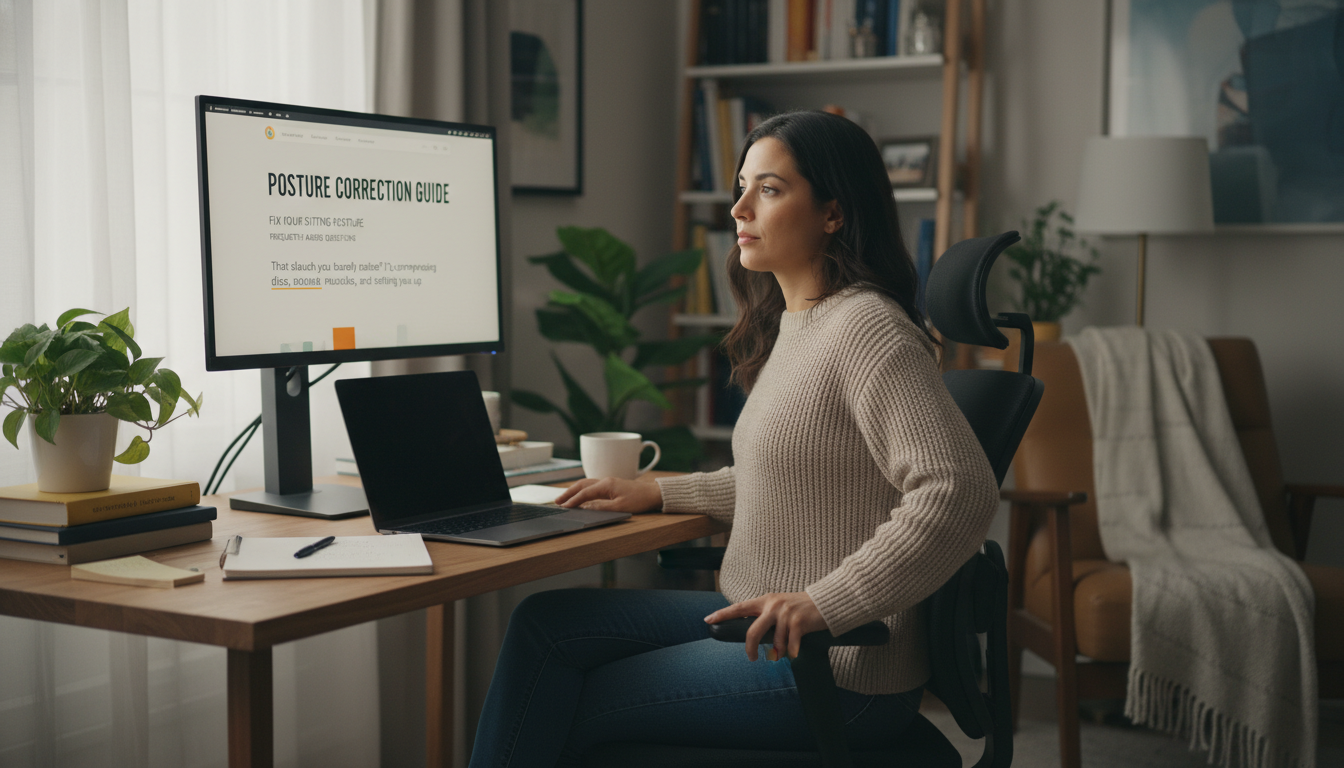
That slouch you barely notice? It’s compressing your discs, straining your muscles, and setting you up for chronic pain. The longer you wait to fix it, the harder it becomes.
The good news: with the right approach, you can correct years of poor posture habits. This guide shows you exactly how—from understanding what good posture looks like to the tools and exercises that actually work.
Poor posture doesn’t just cause back pain. Over time, it leads to:
Our bodies evolved for movement, not sitting. Modern life creates posture problems through:
A healthy spine has three natural curves:
Good sitting posture maintains these curves. Bad posture—especially slouching—flattens them into a “C” shape, stressing discs and muscles.
Check these points throughout your day:
Stand against a wall with heels 2 inches from the wall. Your buttocks, shoulder blades, and back of head should touch the wall. There should be a small gap (about one hand’s thickness) at your lower back. If your head doesn’t naturally touch the wall, you have forward head posture—one of the most common modern postural problems.
Before fixing problems, identify them:
Common problems to identify:
Environment shapes posture. Optimize your setup:
This is the most impactful single change for most people.
Most chairs don’t support your lumbar curve, so your spine flattens into a slouch. A lumbar pillow fills the gap, maintaining proper alignment without constant conscious effort.
💡 Key insight: Lumbar support works passively—it maintains your posture without requiring you to constantly think about it. This makes it more effective than willpower alone. The LumbarPillow Orthopedic is designed specifically for this purpose.
Strong core muscles support your spine. Without them, even the best chair setup won’t be enough long-term.
Essential exercises:
Start with 5-10 minutes daily. Consistency matters more than intensity.
You can’t fix what you don’t notice. Set up reminders:
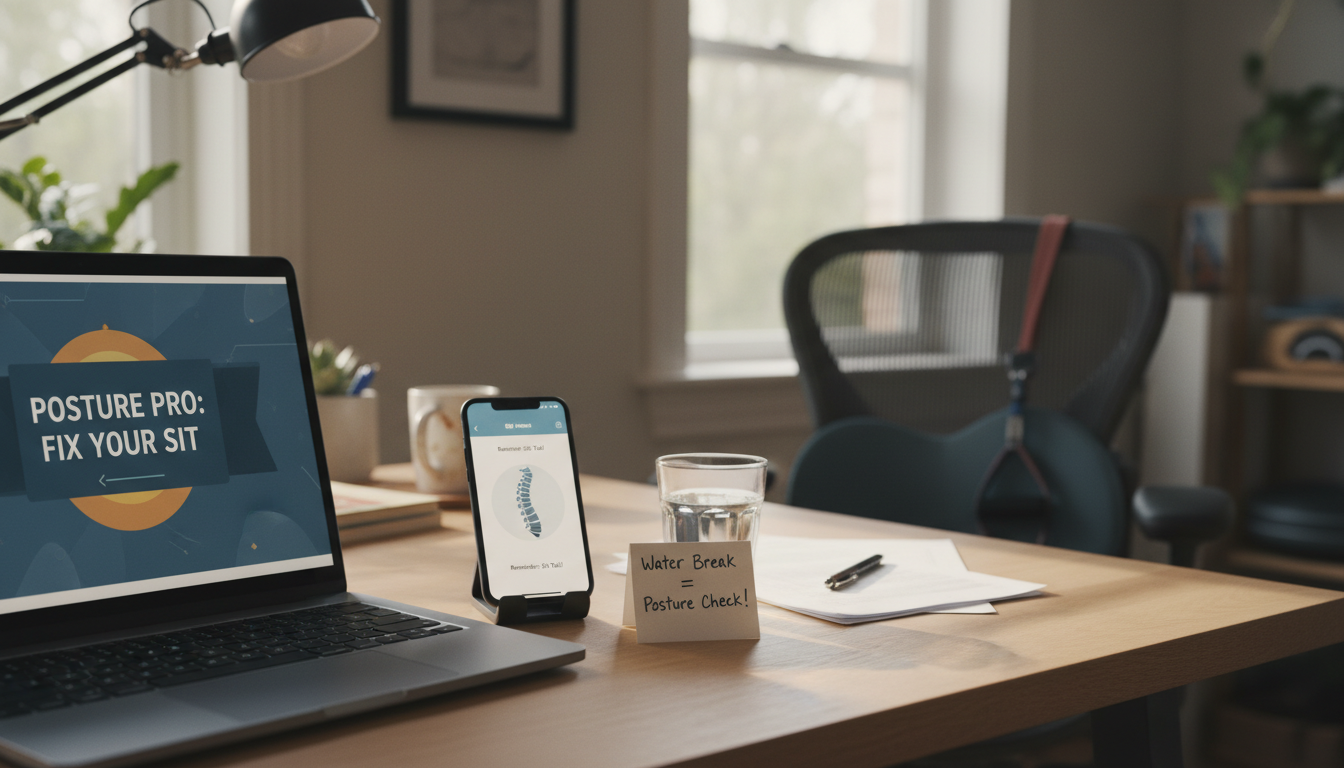
Lumbar pillows are the most cost-effective posture tool for most people.
How they help:
Best for: Anyone who sits more than 4 hours daily.
Wearable devices that pull your shoulders back.
Pros: Provide physical reminder to maintain posture
Cons: Can be uncomfortable, don’t address root cause (weak muscles), may create dependency
Our take: Posture correctors can help short-term, but they’re not a long-term solution. They don’t strengthen muscles—and some people develop worse posture without them. Use as training wheels while building strength, not as a permanent crutch.
Good ergonomic chairs help, but they’re not magic:
Our take: A $50 lumbar pillow on a $200 chair often provides better support than a $600 “ergonomic” chair alone.
Posture reminder apps can help build awareness:
Poor posture tightens certain muscles. Stretch these daily:
Chest stretch (for rounded shoulders):
Hip flexor stretch (for flat lower back):
Neck stretch (for forward head):
Poor posture weakens certain muscles. Strengthen these:
Chin tucks (for forward head):
Wall angels (for rounded shoulders):
Back extensions (for weak back muscles):
This 10-minute routine addresses the most common posture problems:
Do this once daily—morning or evening works equally well.
With consistent effort (proper support + daily exercises), most people notice improvement within 2-4 weeks. Significant correction typically takes 2-3 months. Severe postural issues may take longer and might benefit from professional guidance (physical therapy). The key is consistency—doing a little every day is more effective than occasional intensive sessions.
They provide temporary awareness but don’t address root causes. Wearable posture correctors can remind you to sit up straight, but they don’t strengthen weak muscles or address environmental factors. Some users become dependent on them. Better approach: use as a short-term training tool while building strength and using proper support (lumbar pillow).
Lumbar support is the most impactful single change for sitting posture—it passively maintains your spine’s natural curve. However, for complete posture correction, combine it with: proper workspace setup, strengthening exercises, and regular movement breaks. Lumbar support alone won’t fix weak muscles or bad habits, but it’s the best starting point.
Yes, though it becomes more challenging with age. Even older adults can significantly improve posture with consistent effort. The main considerations: older spines may have structural changes that limit full correction, and progress may be slower. Start with lumbar support and gentle exercises. Severe or long-standing postural issues may benefit from professional assessment.
Willpower alone doesn’t work because maintaining posture consciously is exhausting. Your muscles fatigue, your attention drifts, and you default to comfortable (bad) positions. The solution: make good posture the path of least resistance through environmental changes (lumbar support makes slouching uncomfortable) and strength building (strong muscles maintain posture automatically).
Consider professional help if: pain is severe or persistent, you have structural issues (scoliosis, disc problems), exercises cause increased pain, or you’re not improving after 2-3 months of consistent effort. A physical therapist can identify specific problems and create a targeted treatment plan.
Start fixing your posture today.
The easiest first step? Proper lumbar support. Our orthopedic pillow maintains your spine’s natural curve automatically—so good posture becomes the comfortable choice, not the effortful one.
30-Day Money-Back Guarantee | 2-Year Warranty | Free Shipping
Your glutes have forgotten how to work. It sounds strange,
Your hip flexors are the hidden culprits of desk-job back
Your back is stiff, tight, and angry. And you’ve got

That nagging pain at the base of your spine—right where
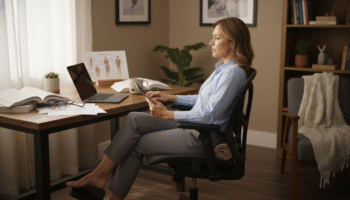
Sitting with a herniated disc can feel like torture. Every
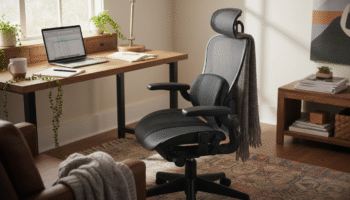
Your desk chair is failing you. Even if you paid
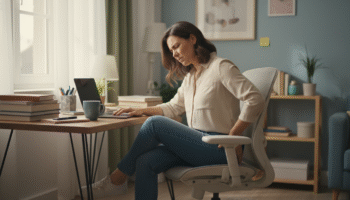
That deep ache in your buttock that won’t quit? The

You’ve blamed your chair for years. And you’re probably right—but
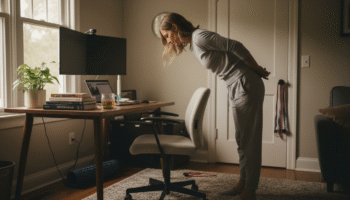
Your back is aching right now, isn’t it? That dull
Is your lower back screaming at you by 3 PM?