Free Shipping
Fast Delivery
Safe Payment
30-Day Guarantee
Free Shipping
Fast Delivery
Safe Payment
30-Day Guarantee

Morning Stretches for Back Pain

Mornings are the hardest time for backs. After 7-8 hours of sleep, your discs have rehydrated and are at their fullest—and most vulnerable. Your muscles are...
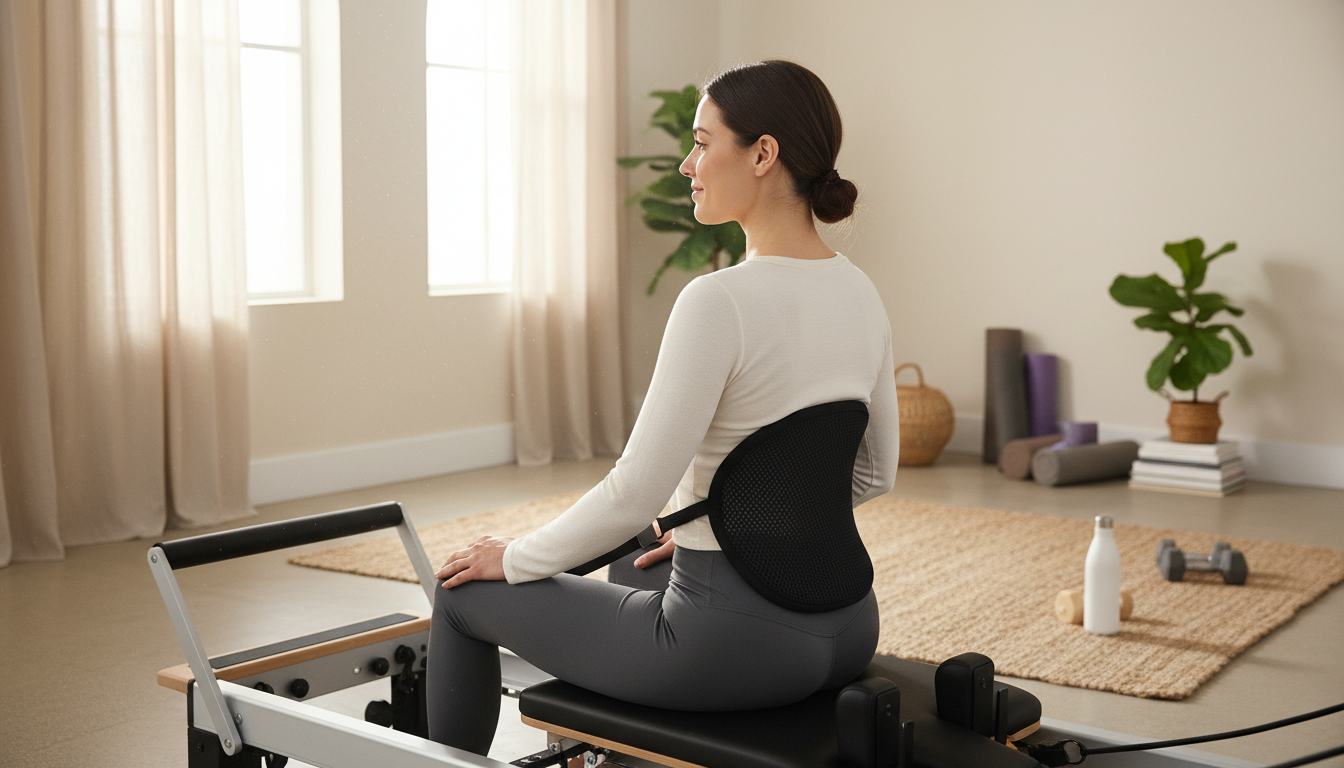
Morning Stretches for Back Pain - Hero Image

Mornings are the hardest time for backs. After 7-8 hours of sleep, your discs have rehydrated and are at their fullest—and most vulnerable. Your muscles are cold and stiff. Your joints haven’t moved in hours. This is why so many people with back pain dread getting out of bed and feel worst in the first hour of their day.

morning stretches back pain – Morning Stretches for Back Pain

The right morning stretches can transform this difficult time. By gently mobilizing your spine, activating key muscles, and preparing your body for the day ahead, you can significantly reduce morning stiffness and pain.

This guide covers morning stretches specifically designed for people with back pain—what to do, when, and how to do it safely.

Why Mornings Are So Hard on Backs

The Overnight Changes

During sleep, your spine undergoes significant changes:

  • Disc rehydration: Spinal discs absorb fluid overnight, making them fuller and more pressure-sensitive
  • Joint stiffness: Synovial fluid thickens, making joints feel stiff
  • Muscle tightness: Muscles cool down and shorten
  • Reduced blood flow: Circulation slows during rest
  • Position effects: Sustained sleeping position can strain tissues

Why You Feel Worse First Thing

These overnight changes mean:

  • Spine is more vulnerable to sudden loading
  • Forward bending is riskier (discs are pressurized)
  • Movements feel restricted and painful
  • It takes time for everything to “loosen up”

The Science of Morning Stiffness

Research shows:

  • Spinal stiffness is 54% higher in the first hour after waking
  • Disc pressure is 240% higher after lying down than after moving around
  • Most disc injuries occur in the morning when people bend or lift

The 30-Minute Rule

Spine experts recommend avoiding forward bending and heavy lifting for at least 30 minutes after waking. This allows discs to gradually lose some fluid and become less vulnerable. Your morning stretches should work with this principle—gentle mobilization, not aggressive flexion.

In-Bed Stretches (Before Getting Up)

Start your stretches while still lying in bed:

Knee-to-Chest (Single Leg)

  1. Lie on your back
  2. Slowly bring one knee toward chest
  3. Hold behind thigh (not on kneecap)
  4. Keep other leg extended or bent
  5. Hold 20-30 seconds
  6. Switch legs
  7. Do: 2-3 each side

Why it helps: Gentle spinal flexion, releases hip and lower back

Supine Twist

  1. Lie on back, knees bent
  2. Slowly let both knees fall to one side
  3. Keep shoulders flat on bed
  4. Hold 20-30 seconds
  5. Return to center, repeat other side
  6. Do: 2-3 each side

Why it helps: Mobilizes spine through rotation, releases tight muscles

Pelvic Tilts

  1. Lie on back, knees bent, feet flat
  2. Gently arch lower back (anterior tilt)
  3. Then flatten lower back into mattress (posterior tilt)
  4. Move slowly, feel each vertebra
  5. Do: 10-15 tilts

Why it helps: Mobilizes lumbar spine, activates core

Glute Bridge

  1. Lie on back, knees bent, feet flat
  2. Press through heels, lift hips
  3. Squeeze glutes at top
  4. Hold 5 seconds
  5. Lower slowly
  6. Do: 10 repetitions

Why it helps: Activates glutes, counteracts hip flexor tightness

Full Body Stretch

  1. Reach arms overhead, point toes
  2. Lengthen entire body
  3. Hold 10 seconds
  4. Relax
  5. Do: 3 stretches

Why it helps: General wake-up, elongates spine

Start Mornings Right, Support All Day

Morning stretches get you moving. Our lumbar pillow keeps your spine happy when you sit down at work.

Get All-Day Support →

30-Day Money Back
2-Year Warranty
Free Returns
24/7 Support

Morning to Night Comfort | 30-Day Trial | 2-Year Warranty

Standing Stretches (After Getting Up)

Once you’re out of bed, continue with standing movements:

Standing Cat-Cow

  1. Stand with hands on thighs
  2. Round back (cat)—tuck chin, curve spine
  3. Arch back (cow)—lift chest, extend spine
  4. Move slowly through full range
  5. Do: 10 cycles

Hip Circles

  1. Stand with feet hip-width apart
  2. Place hands on hips
  3. Circle hips clockwise
  4. Then counterclockwise
  5. Do: 10 circles each direction

Standing Side Bend

  1. Stand tall, feet hip-width
  2. Reach one arm overhead
  3. Lean gently to opposite side
  4. Feel stretch along side
  5. Hold 15-20 seconds
  6. Repeat other side
  7. Do: 2 each side

Standing Hip Flexor Stretch

  1. Step one foot forward in small lunge
  2. Tuck pelvis under (posterior tilt)
  3. Feel stretch in front of back hip
  4. Hold 30 seconds
  5. Switch sides
  6. Do: 2 each side

Gentle Back Extension

  1. Stand with hands on lower back
  2. Gently lean backward
  3. Keep hips forward
  4. Hold 5 seconds
  5. Return to neutral
  6. Do: 5-10 repetitions

Why it helps: Counteracts overnight flexion, relieves disc pressure

Floor Stretches (If Time Allows)

For a more complete routine (add 5-10 minutes):
Cat-Cow on Floor

  1. Start on hands and knees
  2. Alternate between rounding (cat) and arching (cow)
  3. Move slowly, coordinate with breath
  4. Do: 10-15 cycles

Child’s Pose

  1. Kneel, sit back on heels
  2. Fold forward, arms extended or by sides
  3. Let forehead rest on floor
  4. Breathe deeply
  5. Do: Hold 30-60 seconds

Thread the Needle

  1. Start on hands and knees
  2. Reach one arm under body, rotating spine
  3. Rest shoulder on floor
  4. Hold 20-30 seconds
  5. Repeat other side
  6. Do: 2 each side

Sphinx Pose

  1. Lie on stomach, forearms on floor
  2. Elbows under shoulders
  3. Lift chest, maintain neutral neck
  4. Hold 20-30 seconds
  5. Do: 2-3 holds

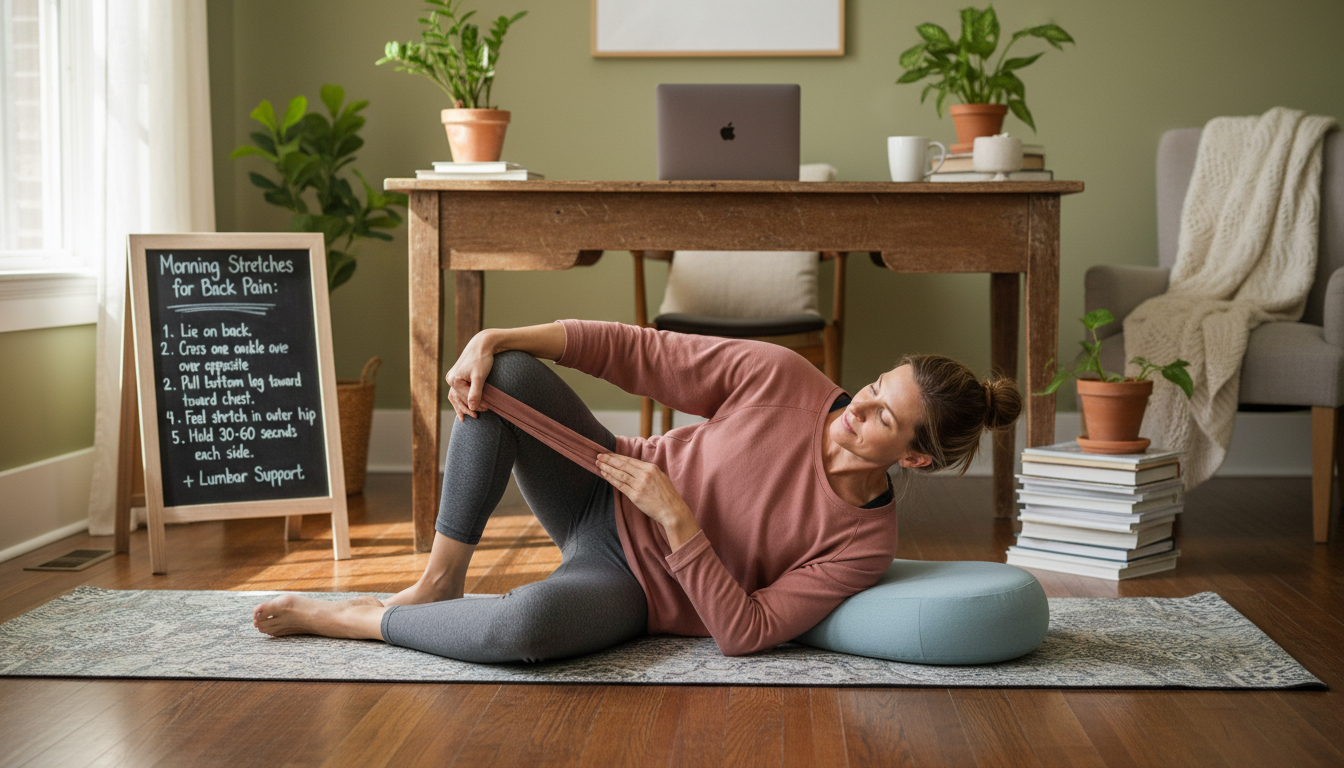
Figure Four Stretch

  1. Lie on back
  2. Cross one ankle over opposite knee
  3. Pull bottom leg toward chest
  4. Feel stretch in outer hip
  5. Hold 30-60 seconds each side

Person using lumbar support pillow in office chair

Sample Morning Routines

5-Minute Quick Routine

Exercise Duration Location
Knee-to-chest 30 sec each In bed
Pelvic tilts 1 minute In bed
Standing cat-cow 1 minute Standing
Standing back extension 30 sec Standing
Hip circles 30 sec Standing

10-Minute Complete Routine

Exercise Duration Location
Full body stretch 30 sec In bed
Knee-to-chest 30 sec each In bed
Supine twist 30 sec each In bed
Pelvic tilts 1 minute In bed
Glute bridge 1 minute In bed/floor
Cat-cow (floor) 2 minutes Floor
Child’s pose 1 minute Floor
Hip flexor stretch 30 sec each Standing
Back extension 30 sec Standing

Morning Movement Principles

What to Avoid in the Morning

  • Deep forward bending: Especially in first 30 minutes—discs are vulnerable
  • Heavy lifting: Wait until you’ve been moving around
  • Sudden movements: Everything should be slow and controlled
  • Aggressive stretching: Gentle is key—muscles are cold
  • Sitting immediately: Move first, then sit

How to Get Out of Bed Safely

  1. Roll onto your side
  2. Let legs drop off bed as you push up with arms
  3. Sit on edge of bed briefly
  4. Stand slowly

Avoid: Sitting straight up using abdominals (increases disc pressure significantly)

Before Your Commute

If you drive to work:

  • Complete at least the 5-minute routine before driving
  • Walk around for a few minutes
  • Set up lumbar support in car before sitting
  • Avoid heavy lifting (luggage, briefcase) until you’ve been moving

Frequently Asked Questions

Why is my back worse in the morning?

Several factors combine: your discs absorb fluid overnight making them fuller and more pressure-sensitive, muscles stiffen from hours of inactivity, joint fluid thickens, and circulation decreases. This makes your spine stiffer and more vulnerable in the morning. It typically takes 30-60 minutes of being upright and moving before things “loosen up.”

Should I stretch before getting out of bed?

Yes, in-bed stretches are ideal because they’re gentle and don’t require getting up when your back is stiffest. Start with knee-to-chest, pelvic tilts, and supine twists while still lying down. These movements gently mobilize your spine and prepare it for standing. Avoid sitting straight up—roll to your side instead.

How long should my morning stretch routine be?

Even 5 minutes makes a significant difference. A 10-minute routine is ideal if time allows. The key is consistency—a brief daily routine beats a long occasional one. Start with whatever time you can commit to and build from there. Morning stretches should feel like a helpful ritual, not a chore.

Should I stretch on days when I wake up without pain?

Yes. Morning stretches work best as prevention, not just treatment. Even when you feel fine, the overnight changes (disc swelling, muscle stiffness) have occurred—you’re just tolerating them better. Consistent stretching prevents the gradual accumulation of morning stiffness that leads to problems over time.

What if stretching makes my morning pain worse?

Some stretches may not be right for your condition. Avoid deep forward bends if they increase symptoms. Focus on gentle movements—pelvic tilts, knee rocks, standing back extensions. If pain consistently worsens with gentle stretching, consult a healthcare provider. You may need condition-specific modifications or to address an underlying issue.

The Bottom Line

Morning stretches can transform the hardest part of the day:

  1. Start in bed: Gentle movements before getting up
  2. Get up safely: Roll to side, push up, avoid sit-ups
  3. Continue standing: Cat-cow, extensions, hip circles
  4. Avoid bending: No deep forward folds for 30 minutes
  5. Support the day: Use lumbar support when you sit down

A few minutes of morning stretches sets up your whole day for less pain and better movement. Make it a non-negotiable habit.

Start Right, Stay Right All Day

Morning stretches prepare your spine. Our lumbar pillow protects it during the hours of sitting that follow.

Try Risk-Free for 30 Days →

30-Day Money Back
2-Year Warranty
Free Returns
24/7 Support

30-Day Money-Back Guarantee | 2-Year Warranty | Free Shipping

More Posts

Your Cart

Your cart is empty

Looks like you haven't added anything yet.

Start Shopping