

Gluteal Amnesia and Back Pain
Your glutes have forgotten how to work. It sounds strange,

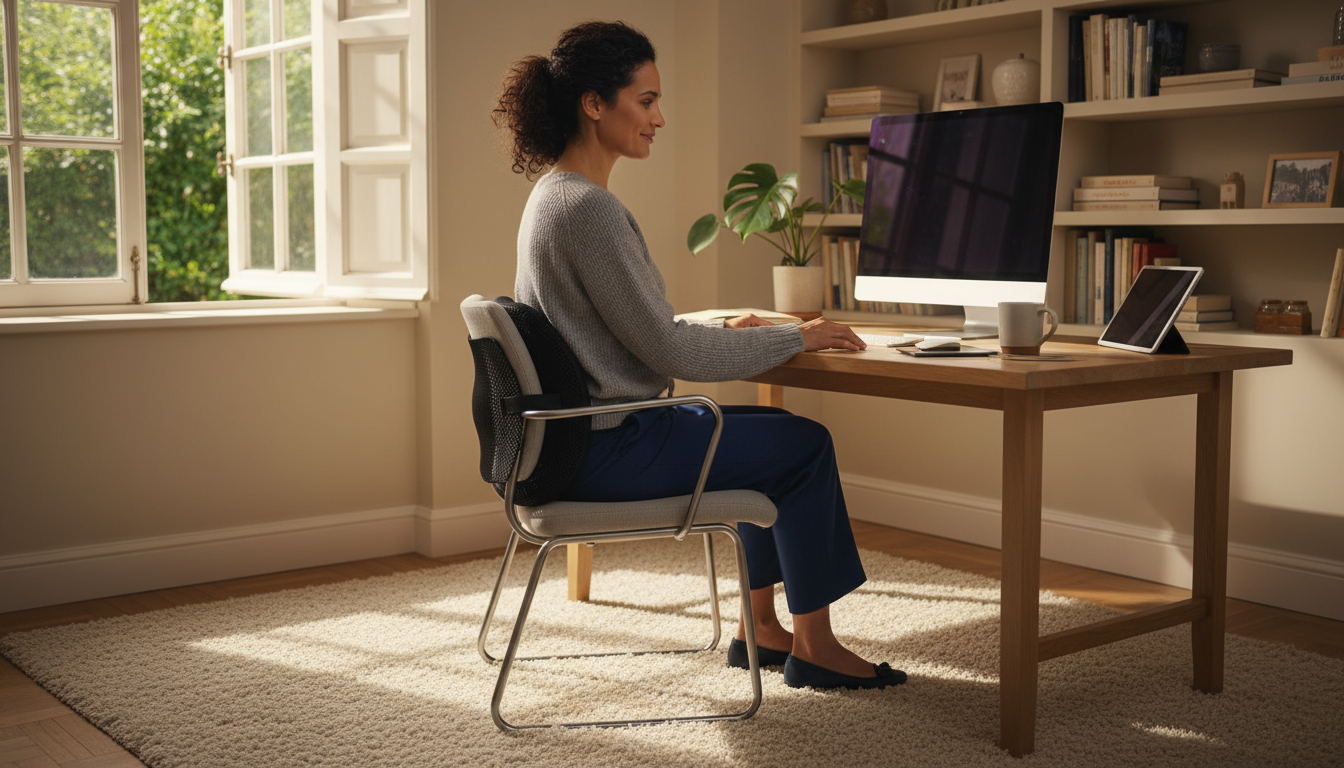
Choosing between memory foam and inflatable lumbar support comes down to how you’ll use it. Each type excels in different situations, and understanding their fundamental differences helps you avoid buying the wrong solution for your needs.
📋 Table of Contents
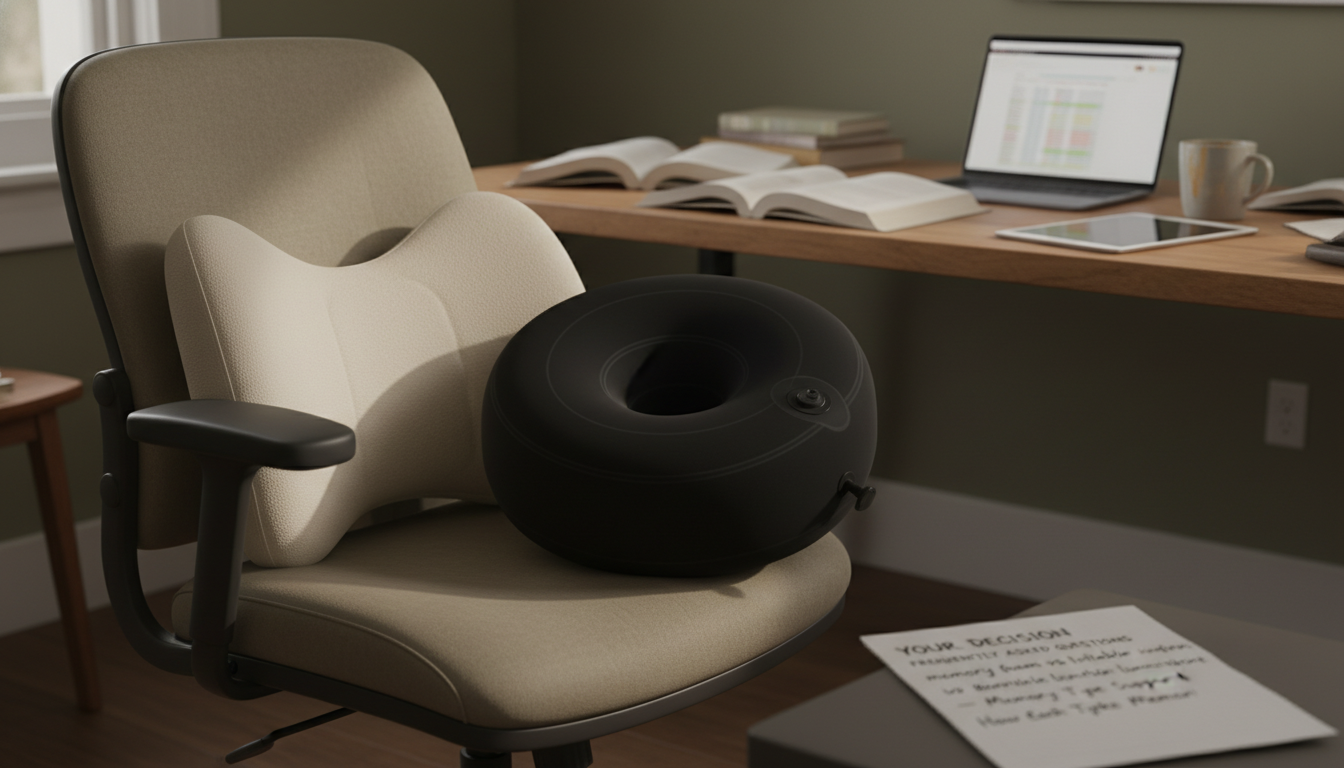
Memory foam (viscoelastic polyurethane) responds to pressure and temperature. Your body heat softens the foam, allowing it to conform precisely to your lumbar curve. When pressure is removed, it slowly returns to its original shape.
Support mechanism: Passive conforming—the foam adapts to you rather than you adjusting the foam.
Inflatable supports use air chambers that you manually adjust via pump, valve, or squeeze bulb. Firmness increases or decreases by adding or releasing air.
Support mechanism: Active adjustment—you control firmness level to match your preference.
| Factor | Memory Foam | Inflatable |
|---|---|---|
| Firmness Adjustment | Fixed (conforms to body) | Fully adjustable |
| Conformability | Excellent (molds to spine) | Limited (uniform pressure) |
| Portability | Moderate (fixed size) | Excellent (deflates flat) |
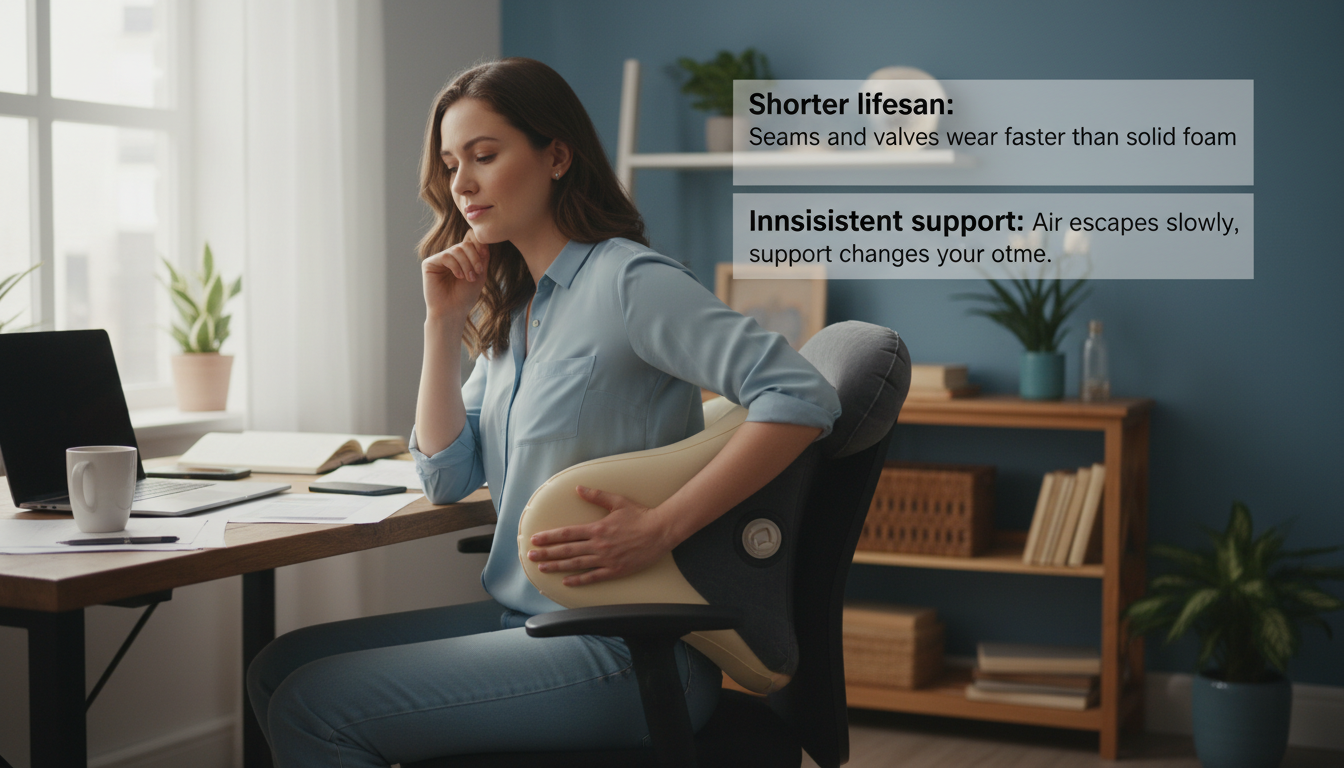
| Durability | 3-5+ years (quality foam) | 1-3 years (seam/valve wear) |
| Maintenance | None (wash cover only) | Regular air adjustment |
| Set-and-Forget | Yes | No (air escapes over time) |
| Price Range | $25-60 | $15-40 |
| Best Use | Daily office/home use | Travel, variable needs |
Memory foam distributes pressure evenly across your lumbar region. Unlike air bladders that push back uniformly, foam creates varying pressure based on your spine’s contours—more support where you need it, less where you don’t.
This conforming property means the same pillow effectively supports different body types without manual adjustment.
| Density | Quality Level | Expected Lifespan | Support Consistency |
|---|---|---|---|
| 2.5-3 lbs/ft³ | Budget | 6-12 months | Degrades quickly |
| 3.5-4 lbs/ft³ | Mid-range | 2-3 years | Good retention |
| 4-5 lbs/ft³ | Premium | 4-5+ years | Excellent long-term |
Look for CertiPUR-US certification, which ensures the foam is free from harmful chemicals, made without ozone depleters, and has low VOC emissions. This certification also indicates better density and durability standards.
Inflatable lumbar supports typically feature one or more air chambers with a manual pump mechanism. Adding air increases firmness and depth; releasing air softens support. Most designs offer infinite adjustment within their range.
Winner: Memory Foam
For all-day seated work, memory foam excels:
Winner: Inflatable
When packing space matters:
Consider: One of Each
If you work from multiple locations:
Winner: Inflatable
If your support needs change:
Winner: Memory Foam
Cost over five years:
Premium Memory Foam Lumbar Support
High-density foam that conforms to your spine. Set-and-forget support that lasts for years—no pumping, adjusting, or maintenance required.
CertiPUR-US Certified | 30-Day Guarantee | 2-Year Warranty
Problem: Feels too firm initially
Solution: Quality memory foam needs body heat to soften. Give it 15-30 minutes to warm up. This becomes non-issue after first few uses.
Problem: Too warm against back
Solution: Look for gel-infused foam or breathable mesh covers. Premium foam includes cooling technology.
Problem: Won’t fit in bag for travel
Solution: Accept memory foam’s limitation for travel—consider an inflatable backup for trips.
Problem: Keeps losing air
Solution: Check valve tightness. Small leaks develop in seams over time—this is normal wear. If under warranty, request replacement.
Problem: Creates pressure points
Solution: Reduce inflation slightly. Over-inflated supports push too hard in a concentrated area rather than distributing pressure.
Problem: Tedious to adjust
Solution: Find your preferred firmness and mark the inflation level. Some models have pressure indicators.
Some manufacturers combine both technologies:
Base layer of memory foam with inflatable chamber beneath. Provides conforming surface with adjustable firmness.
Pros: Best of both worlds—conforming comfort with adjustable firmness
Cons: Higher cost, more potential failure points, added complexity
Multiple air chambers allowing adjustment of different zones independently.
Pros: Zone-specific support adjustment
Cons: More complexity, more potential leak points
Choose based on your primary use case:
| If You… | Choose |
|---|---|
| Sit at same desk daily for extended periods | Memory Foam |
| Travel frequently and need portable support | Inflatable |
| Want reliable, consistent support | Memory Foam |
| Need variable firmness for changing conditions | Inflatable |
| Prioritize long-term value over upfront cost | Memory Foam |
| Share support between multiple users | Inflatable |
| Want zero maintenance | Memory Foam |
For most people seeking daily back support at their primary workspace, memory foam delivers superior long-term comfort and value. Save inflatable options for travel and situations requiring portability or adjustable firmness.
Yes, memory foam works well in cars. The pillow conforms to your back regardless of seat type. Use adjustable straps to secure it to the headrest post or around the seat. Some people keep a dedicated pillow in their car rather than transferring their office pillow.
This varies by quality. Budget inflatables may need daily adjustment as air slowly escapes. Quality models with better seals hold pressure for several days or weeks. All inflatables require occasional maintenance—expect to check and adjust at least weekly.
Quality memory foam maintains its properties for years. Budget foam (under 3.5 lbs/ft³ density) breaks down and softens within months. Look for high-density foam with reputable certifications to ensure long-term consistency.
Yes. Pressure changes during flight don’t significantly affect inflation. You may need minor adjustment after reaching altitude as air expands slightly, but there’s no safety concern. The main advantage is packing flat in carry-on luggage.
For consistent daily support that maintains proper posture, memory foam typically provides better results due to its conforming properties and reliable support. Inflatable can work well if you actively manage firmness throughout the day, but requires more attention. If your back pain varies significantly, an inflatable allows real-time adjustment—but most people benefit more from consistent, conforming support.
Your glutes have forgotten how to work. It sounds strange,
Your hip flexors are the hidden culprits of desk-job back
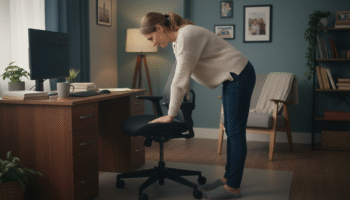
Your back is stiff, tight, and angry. And you’ve got

That nagging pain at the base of your spine—right where
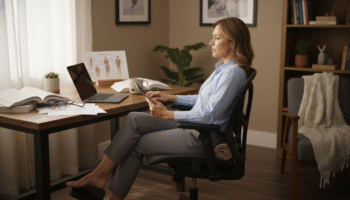
Sitting with a herniated disc can feel like torture. Every
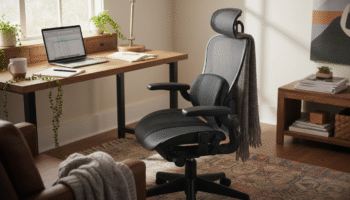
Your desk chair is failing you. Even if you paid
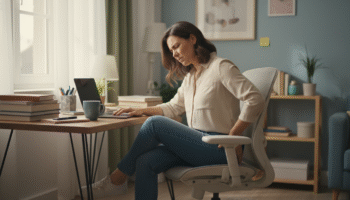
That deep ache in your buttock that won’t quit? The

You’ve blamed your chair for years. And you’re probably right—but
Your back is aching right now, isn’t it? That dull
Is your lower back screaming at you by 3 PM?