

Gluteal Amnesia and Back Pain
Your glutes have forgotten how to work. It sounds strange,


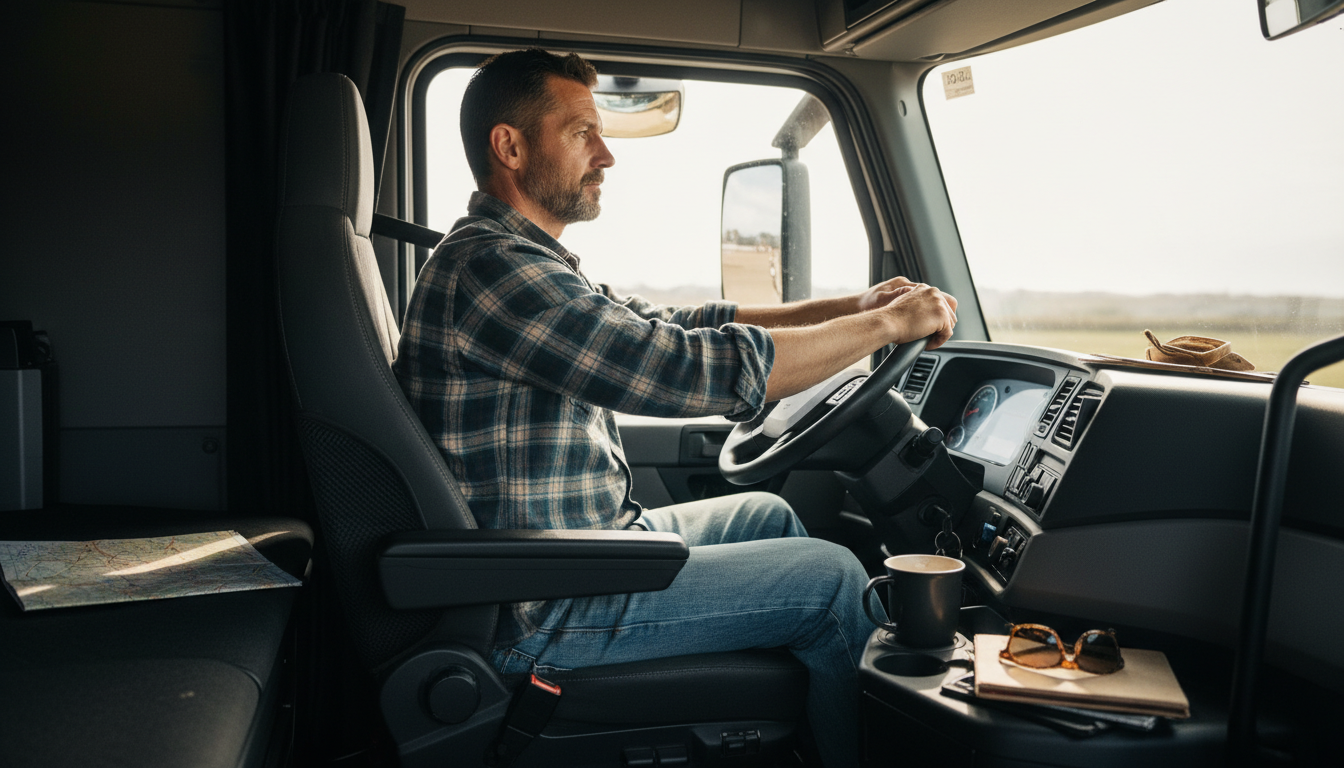
You spend 8-11 hours a day in your truck seat. That’s more than most people spend in their beds.
📋 Table of Contents

Professional truck drivers have some of the highest rates of back pain of any occupation. The combination of vibration, fixed position, and inadequate seat design creates a perfect storm for spinal problems. This isn’t just discomfort—it threatens your career and your health.
This guide is specifically for professional drivers: OTR truckers, local delivery drivers, and anyone who makes a living behind the wheel. We’ll cover what works, what doesn’t, and how to protect your back for the long haul.
Unlike office workers, truck drivers face something called whole-body vibration (WBV)—constant low-frequency vibration transmitted through the seat.
Effects of WBV:
Studies show commercial drivers have 4-5x higher rates of low back disorders than the general population—and WBV is a major factor.
FMCSA regulations allow up to 11 hours of driving in a 14-hour window. That means:
Even premium truck seats often fall short:
For professional drivers, a dedicated lumbar pillow is often more effective than relying on seat adjustments.
Why they work for trucking:
What to look for:
Built for professional use: The LumbarPillow Orthopedic uses AirFlex™ memory foam that maintains support through 10+ hour shifts. The dual strap system secures to truck seat headrests, and the breathable mesh cover handles long hours in varying cab temperatures.
For tailbone pressure and overall seat comfort, consider adding a seat cushion.
Types:
Best approach: Combine lumbar pillow (for back) with seat cushion (for bottom) for comprehensive support.
If your truck has an air-ride seat, make sure it’s set up correctly:
Set mirrors after you’ve positioned yourself with proper support. This ensures you maintain good posture to use them effectively.
DOT-mandated breaks are opportunities for recovery:
30-minute break:
10-hour off-duty:
These can be done at any stop:
Standing back extension: Hands on lower back, lean backward gently, hold 10 seconds. Repeat 5 times.
Hip flexor stretch: Step forward into a lunge, push hips forward. Hold 30 seconds each side.
Hamstring stretch: Foot on step, lean forward keeping back straight. Hold 30 seconds each side.
Shoulder rolls: Roll shoulders forward, up, back, and down. 10 times each direction.
Dehydrated discs are more vulnerable to damage. Stay hydrated by:
See a doctor if you experience:
Back problems can affect your DOT medical certification. Protect your career by:
Some companies provide or reimburse for ergonomic products. Check with your safety department. Even if they don’t, consider it an investment in your career—back problems can end driving careers. A $50-100 lumbar pillow is cheap insurance against that.
Yes. Air-ride suspension helps with shock absorption and vibration but doesn’t provide the specific lumbar curve support your spine needs. Many drivers with premium air-ride seats still benefit significantly from adding a lumbar pillow.
Side sleeping with a pillow between your knees keeps your spine aligned. Back sleeping with a pillow under your knees works too. Avoid sleeping on your stomach. The mattress matters—consider a memory foam topper if the stock mattress is worn.
Yes—a portable lumbar pillow works in both. Some drivers keep one in the truck and one at home. If you’re driving personal vehicle on your days off, maintaining lumbar support helps your back recover rather than creating more stress.
With daily professional use, quality lumbar pillows last 1-2 years before support noticeably degrades. Budget pillows may flatten in months. Check for signs: pillow doesn’t spring back, noticeable indentations, or it just doesn’t feel supportive anymore. Given the hours you spend in your seat, replacing when needed is worth it.
Protect your back. Protect your career.
Our lumbar pillow is built for professional-grade use. AirFlex™ memory foam maintains support through 10+ hour shifts, day after day. Because your back needs to last as long as your career.
30-Day Money-Back Guarantee | 2-Year Warranty | Free Shipping
Your glutes have forgotten how to work. It sounds strange,

Your hip flexors are the hidden culprits of desk-job back
Your back is stiff, tight, and angry. And you’ve got

That nagging pain at the base of your spine—right where
Sitting with a herniated disc can feel like torture. Every
Your desk chair is failing you. Even if you paid

That deep ache in your buttock that won’t quit? The

You’ve blamed your chair for years. And you’re probably right—but

Your back is aching right now, isn’t it? That dull
Is your lower back screaming at you by 3 PM?