
Gluteal Amnesia and Back Pain
Your glutes have forgotten how to work. It sounds strange,

Your hip flexors are the hidden culprits of desk-job back pain. These powerful muscles at the front of your hips spend hours in a shortened position while you sit—and when you finally stand up, they pull your pelvis forward, jamming your lower back into a painful arch.
📋 Table of Contents
The hip-spine connection is one of the most overlooked causes of chronic back pain in office workers. Tight hip flexors don’t just affect your hips—they fundamentally change your posture and put constant stress on your lumbar spine.
This guide explains the hip flexor-back pain connection, how to test for tightness, and the stretching protocols that can provide real relief.
Your hip flexors are a group of muscles that flex your hip (bring your thigh toward your torso):
The psoas muscle is particularly important because it attaches directly to your spine:
| Mechanism | What Happens | Result |
|---|---|---|
| Anterior Pelvic Tilt | Hip flexors pull pelvis forward | Excessive lumbar curve |
| Spinal Compression | Psoas pulls on vertebrae | Disc and facet stress |
| Muscle Imbalance | Glutes and abs become inhibited | Back muscles overwork |
| Movement Dysfunction | Hip extension becomes limited | Spine compensates during walking |
When you sit, your hip flexors are in a shortened position. Eight hours of sitting is eight hours of teaching your hip flexors to stay short. When you stand, they can’t fully lengthen, so they pull your pelvis into anterior tilt and your lower back into excessive extension—causing pain.
A clinical test you can do at home:
Interpreting Results:
What to look for:
Muscles adapt to positions they’re held in:
When hip flexors are tight and overactive:
| Daily Sitting | Hip Flexor Impact | Back Pain Risk |
|---|---|---|
| 0-4 hours | Minimal tightening | Low |
| 4-6 hours | Mild shortening | Moderate |
| 6-8 hours | Significant adaptive changes | High |
| 8+ hours | Chronic tightness likely | Very High |
Break the Sitting-Tightness Cycle
While you work on stretching your hip flexors, our lumbar pillow helps maintain proper pelvic position—reducing the compensation that causes back pain.
Pelvic Positioning | 30-Day Trial | 2-Year Warranty
1. Half-Kneeling Hip Flexor Stretch (Most Important)
2. Couch Stretch (Intense)
3. Standing Quad/Hip Flexor Stretch
4. Pigeon Pose (Yoga)
Most people stretch hip flexors incorrectly. The key is the posterior pelvic tilt:
Strengthening glutes helps balance hip flexor tightness:
Glute Bridges:
Clamshells:
Strong core helps control pelvic position:
Absolutely. Tight hip flexors, especially the psoas muscle, pull directly on the lumbar spine. They also tilt the pelvis forward, forcing the lower back into excessive extension. This combination creates compression and shear forces on spinal structures that cause pain. Research consistently links hip flexor tightness to lower back pain in desk workers.
You may feel some relief immediately after stretching, but lasting change takes time. Expect 4-6 weeks of consistent daily stretching to see significant improvement in hip flexor length. The muscles adapted to being short over months or years—they need consistent work to lengthen again. Patience and consistency are key.
Gentle stretching is usually beneficial, but severe pain during stretching isn’t normal. You should feel a moderate stretch sensation, not sharp pain. If stretching causes significant pain, you may have an injury or condition that needs evaluation. Start with gentle stretches and gradually increase intensity as tolerance improves.
Standing puts hip flexors in a lengthened position, which helps prevent further tightening. However, standing alone won’t stretch already-tight hip flexors—you still need to actively stretch them. The best approach combines sitting, standing, and regular stretching throughout the day.
Sitting shortens your hip flexors. When you stand after prolonged sitting, your hip flexors can’t fully lengthen, so your pelvis tilts forward and your lower back extends to compensate. This creates immediate stress on lumbar structures. The longer you’ve been sitting, the more pronounced this effect typically is.
Tight hip flexors are a major cause of desk-job back pain:
Addressing hip flexor tightness often provides the missing piece for people who haven’t found relief from other back pain treatments.
Complete the Solution
While you work on hip flexor flexibility, our ergonomic lumbar pillow supports proper pelvic positioning—addressing both sides of the equation.
30-Day Money-Back Guarantee | 2-Year Warranty | Free Shipping
Your glutes have forgotten how to work. It sounds strange,
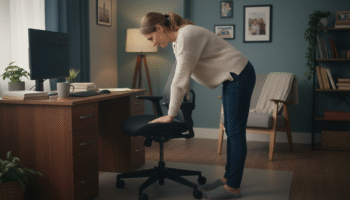
Your back is stiff, tight, and angry. And you’ve got
That nagging pain at the base of your spine—right where
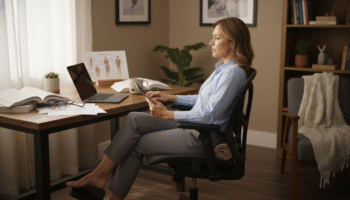
Sitting with a herniated disc can feel like torture. Every
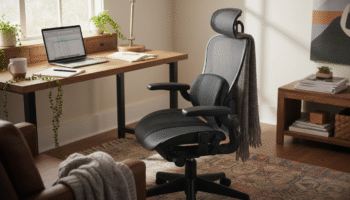
Your desk chair is failing you. Even if you paid
That deep ache in your buttock that won’t quit? The

You’ve blamed your chair for years. And you’re probably right—but
Your back is aching right now, isn’t it? That dull
Is your lower back screaming at you by 3 PM?
Most lumbar pillows end up in closets within weeks. Not