
Gluteal Amnesia and Back Pain
Your glutes have forgotten how to work. It sounds strange,

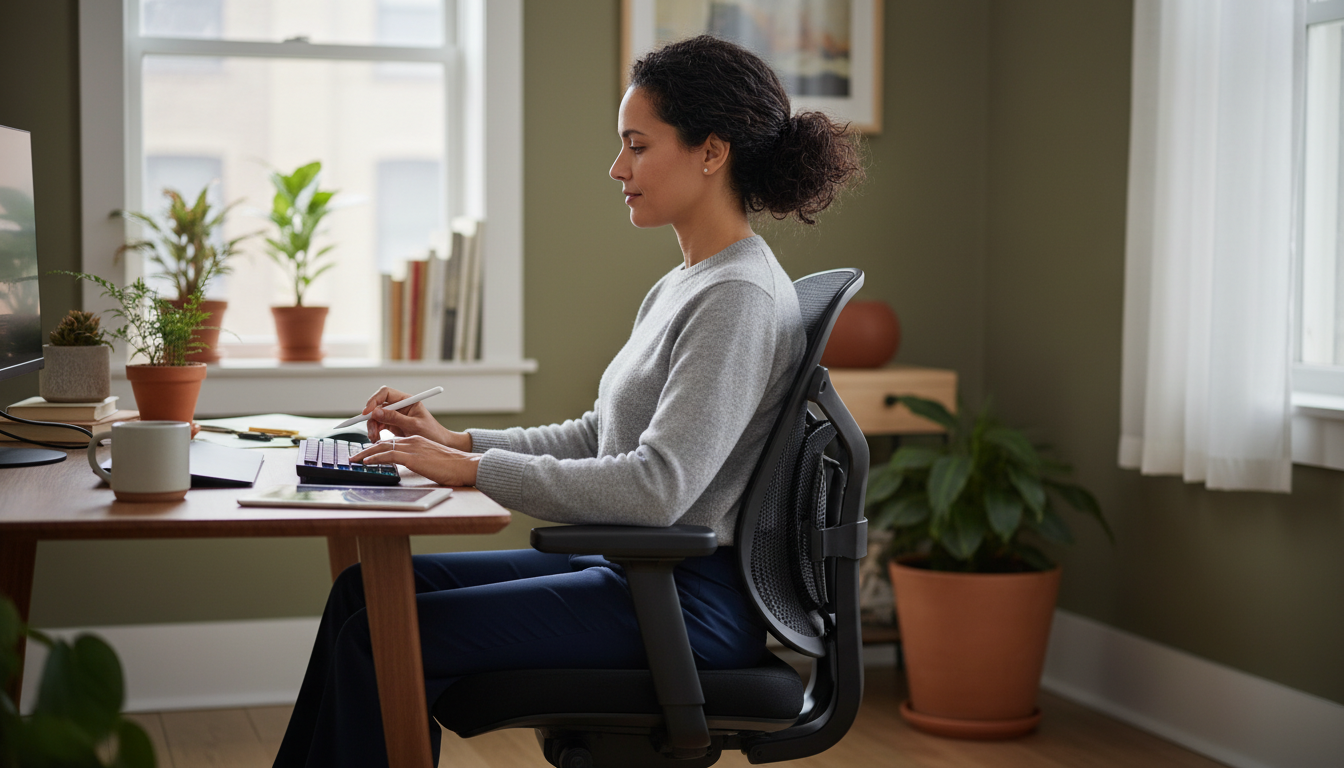
Your feet dangling above the floor or pressed flat on hard ground might be the hidden cause of your back pain. A desk footrest seems like a minor accessory, but it’s a critical link in the ergonomic chain. When your feet aren’t properly supported, your entire sitting posture suffers—and your lower back pays the price.
📋 Table of Contents

Your sitting posture is a connected system. Problems at the base cascade upward:
If you’re shorter than average or your chair doesn’t lower enough:
Even with feet reaching the floor:
Sit with your back against your chair’s backrest. With your chair at the height needed for proper desk ergonomics (elbows at keyboard height), check your feet:
| Type | Best For | Features | Price Range |
|---|---|---|---|
| Fixed Height | Single user, consistent setup | Simple, no adjustments | $20-40 |
| Adjustable Height | Multiple users, varied positions | Height customization | $30-70 |
| Tilting/Rocking | Active sitting, leg circulation | Movement-encouraging design | $40-100 |
| Heated | Cold offices, circulation issues | Warmth + support | $50-100 |
| Massage/Textured | Foot fatigue, circulation | Massage nodes or rollers | $30-80 |
The simplest option—a solid platform at a set height:
Allow customization of platform height:
Typical adjustable footrests offer 3-6 inches of height range. Measure how much elevation you need:
These encourage foot and leg movement while seated:
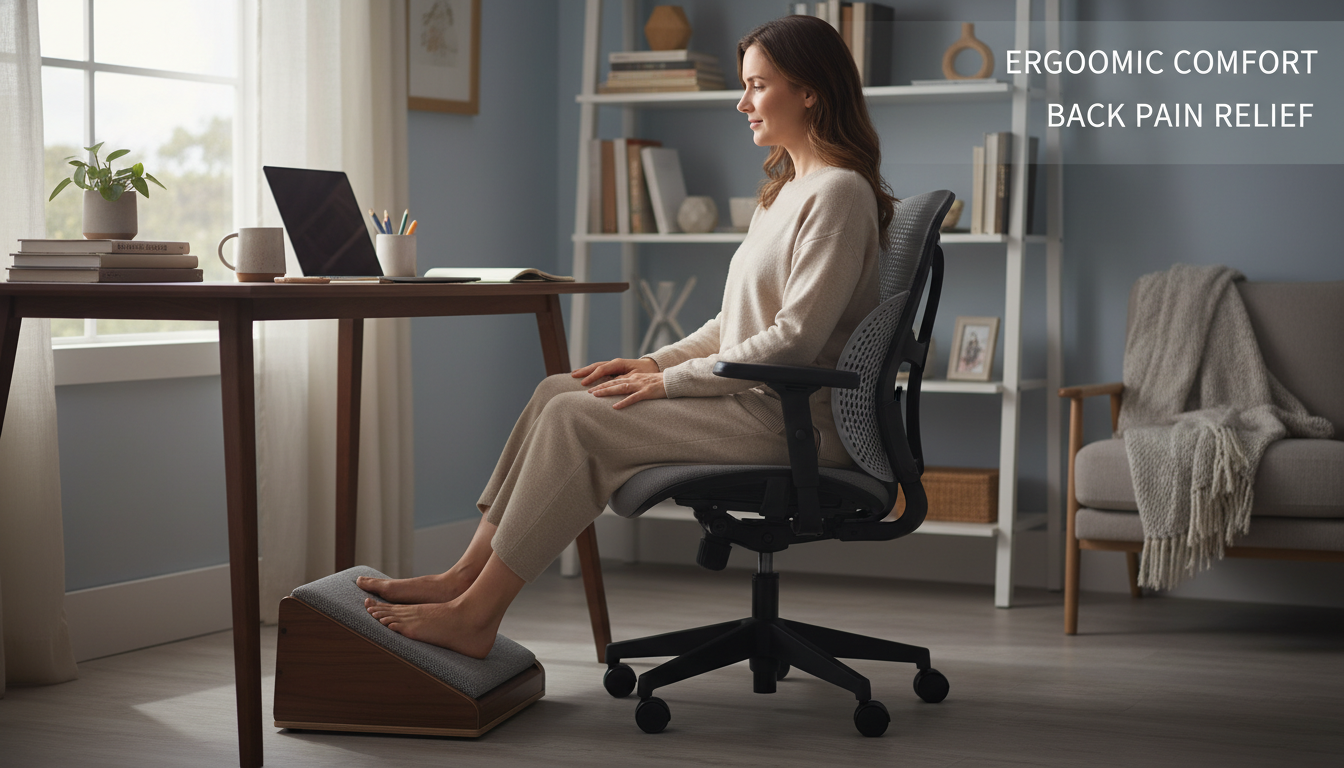
The goal is thighs approximately parallel to floor (or slight downward slope):
If your footrest has adjustable angle:
For comprehensive sitting comfort, footrest and lumbar support work together:
Neither works as well without the other. A footrest can’t help your back if your lumbar curve isn’t supported. Lumbar support is less effective if your pelvis is tilted wrong due to improper foot position.
Complete Your Sitting Setup
Proper foot support is half the equation. Premium lumbar support completes the ergonomic chain from feet to spine.
Essential Pair: Footrest + Lumbar Support | 30-Day Guarantee
A footrest that’s too high forces knees above hip level, tilting pelvis backward—the exact problem you’re trying to avoid. Lower is generally better than higher.
Stretching legs forward to reach the footrest pulls you out of proper sitting position. Keep the footrest close enough for comfortable, natural use.
Static footrests encourage static sitting. If budget allows, movement-capable footrests provide additional circulation and comfort benefits.
A platform that’s too small limits foot positioning options and may cause you to perch unnaturally. Size up when in doubt.
If you need immediate relief while waiting for a proper footrest:
Your footrest should raise your feet until your thighs are approximately parallel to the floor (or sloping slightly downward). The exact height depends on your chair height, leg length, and desk setup. Start with the minimum height that eliminates pressure behind your knees, then adjust from there.
Yes, by establishing proper lower body positioning. When feet dangle or rest incorrectly, pelvic position suffers, which affects lumbar curve. A footrest that creates proper thigh and pelvic position allows your lumbar support to work effectively. It’s one component of the complete ergonomic setup.
Possibly. If your feet reach the floor but your thighs slope upward (knees higher than hips), a footrest can level things out. Also, if your floor is very hard or cold, a cushioned footrest adds comfort. Movement-capable footrests benefit anyone who wants to encourage circulation during long sitting.
For most users, yes. Rocking or tilting footrests encourage micro-movements that improve circulation, reduce static stress, and provide an outlet for restlessness. The movement is subtle and doesn’t interfere with work. Fixed footrests are simpler and cheaper but don’t provide these additional benefits.
When sitting at a sit-stand desk, yes—you need the same foot support as any other seated work. When standing, no—your feet should be on the floor or an anti-fatigue mat. Some users keep a footrest under their desk that they push aside when standing and pull back when sitting.
Your glutes have forgotten how to work. It sounds strange,
Your hip flexors are the hidden culprits of desk-job back
Your back is stiff, tight, and angry. And you’ve got
That nagging pain at the base of your spine—right where
Sitting with a herniated disc can feel like torture. Every
Your desk chair is failing you. Even if you paid
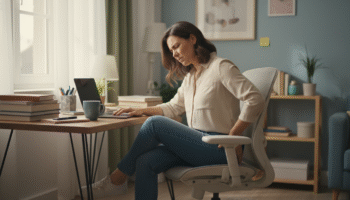
That deep ache in your buttock that won’t quit? The

You’ve blamed your chair for years. And you’re probably right—but
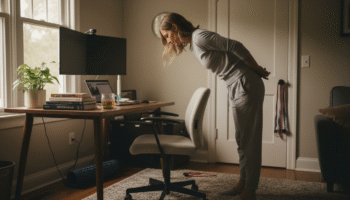
Your back is aching right now, isn’t it? That dull
Is your lower back screaming at you by 3 PM?