That sharp, localized pain in your lower back that gets worse when you arch backward? It's probably coming from your facet joints—the small paired joints that...
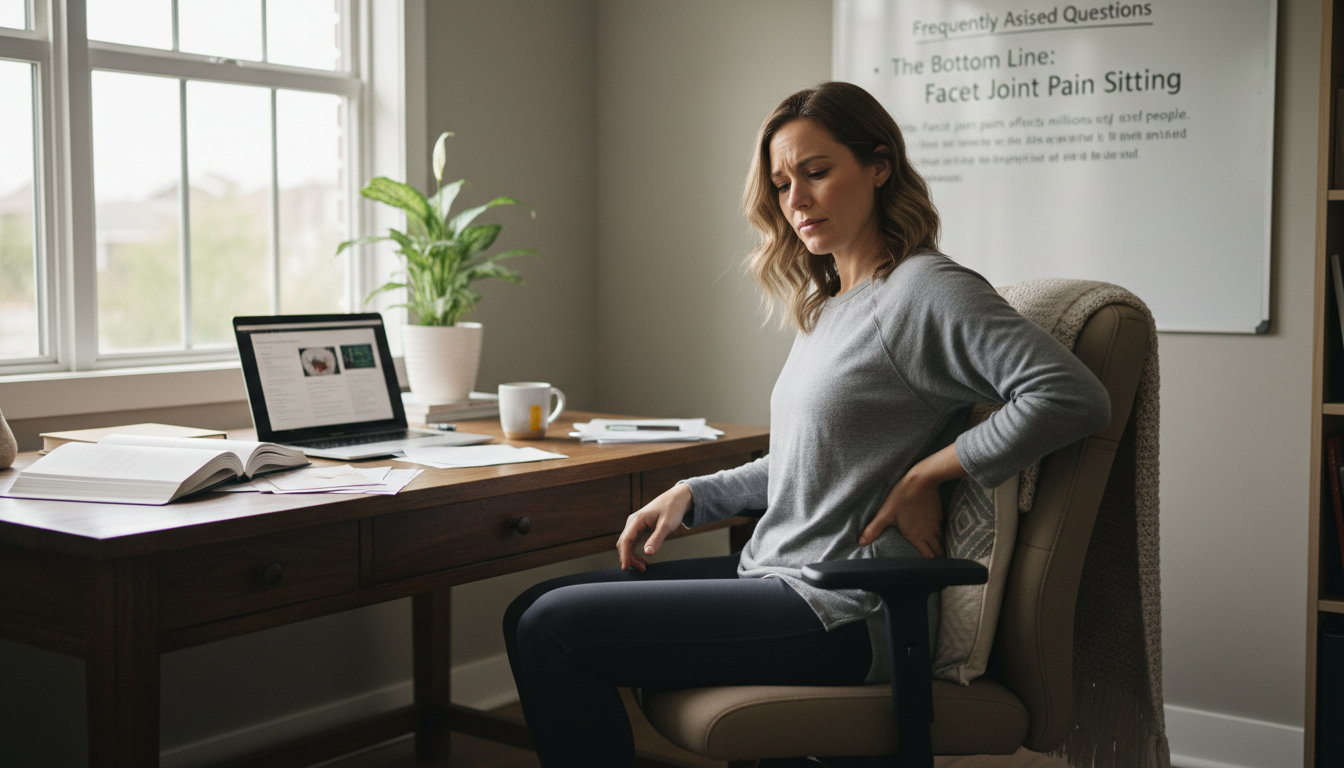
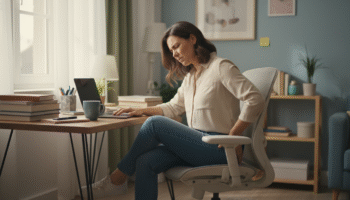
That sharp, localized pain in your lower back that gets worse when you arch backward? It’s probably coming from your facet joints—the small paired joints that connect each vertebra to the ones above and below. And if you have a desk job, sitting is likely making it worse.
Facet joint pain affects millions of people, yet it’s often misdiagnosed or overlooked. Understanding how these joints work—and how sitting positions affect them—can help you find positions that reduce your pain.
This guide explains facet joint mechanics, why sitting aggravates facet syndrome, and specific positioning strategies that can help.
Understanding Facet Joint Pain
What Are Facet Joints?
Facet joints (also called zygapophyseal joints) are small, synovial joints located on each side of your spine. They:
Guide and limit spinal movement
Bear about 20-30% of spinal load
Become more loaded with extension (arching back)
Have rich nerve supply (can produce significant pain)
What Causes Facet Joint Pain
Facet arthritis: Degeneration of joint cartilage (most common)
Facet hypertrophy: Enlarged joints from degenerative changes
Synovial cysts: Fluid-filled cysts from joint degeneration
Capsular strain: Injury to the joint capsule
Inflammation: From overuse or acute injury
Classic Facet Pain Presentation
Location: Localized to one or both sides of spine (not midline)
Referral pattern: May radiate to buttock or thigh (not below knee)
Morning stiffness: Often better with movement
Facet vs. Disc Pain: A Quick Comparison
Facet pain typically worsens with extension (arching back) and improves with flexion (bending forward). Disc pain is usually the opposite—worse with flexion, better with extension. If arching backward triggers sharp back pain, facet involvement is likely.
How Sitting Affects Facet Joints
The Good News
Sitting is often more comfortable than standing for facet pain because:
Sitting flexes the spine, unloading facet joints
Hip flexion reduces lumbar lordosis
Less weight-bearing stress on joints
The Bad News
But prolonged or poor sitting creates problems:
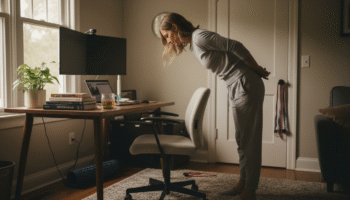
Transition pain: Going from sit to stand loads facets suddenly
Slouch-overcorrect cycle: Arching to “correct” slouching loads facets
Stiffness: Static positioning leads to joint stiffness
Muscle deconditioning: Weak muscles increase facet loading when you move
The Lordosis Paradox
Most sitting advice emphasizes maintaining lumbar lordosis. For facet joints, this can be problematic:
Excessive lordosis loads facet joints
But too much flexion creates other problems
The goal: neutral with mild support, not aggressive lordosis
Best Sitting Positions for Facet Joint Pain
Position 1: Neutral to Slight Flexion
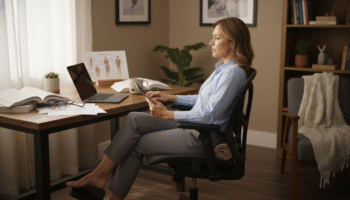
Unlike disc conditions that need lordosis, facet pain often prefers neutral or slight flexion:
Gentle lumbar support (not aggressive)
Slight forward lean acceptable
Avoid arching backward
Hip angle around 90-100 degrees
Position 2: Reclined Sitting
Reduces both facet loading and muscle effort:
Recline backrest 100-120 degrees
Use armrests to support weight
Lumbar support to prevent excessive rounding
Good for prolonged sitting tasks
Position 3: Perch Position (Short Periods)
Forward sitting opens facet joints:
Sit at front edge of chair
Hips higher than knees (slight forward tilt)
Weight on thighs, not spine
Not sustainable long-term
Positions to Avoid
Aggressive lumbar support pushing you into extension
Chairs that force lordosis
Sitting with legs extended (beach chair position)
Slouching then over-correcting with backward arch
Gentle Support That Doesn’t Overload
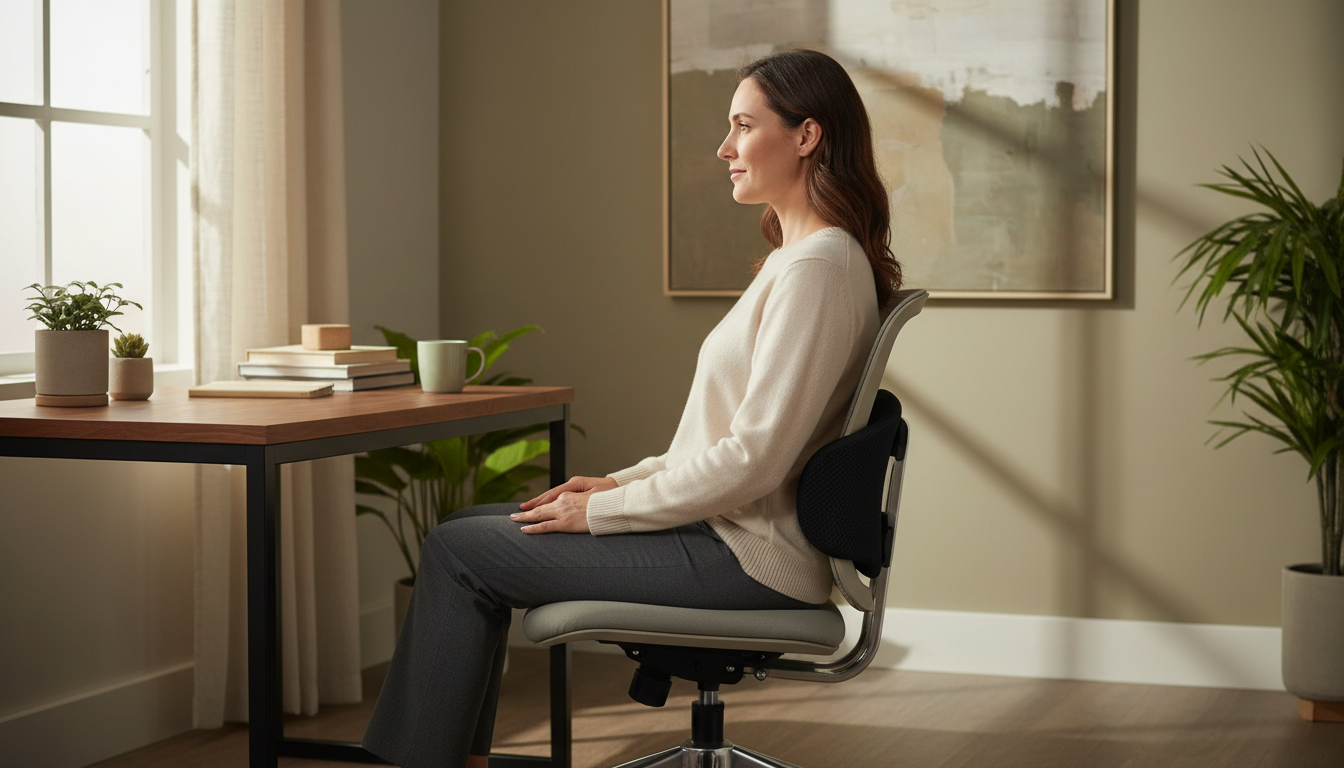
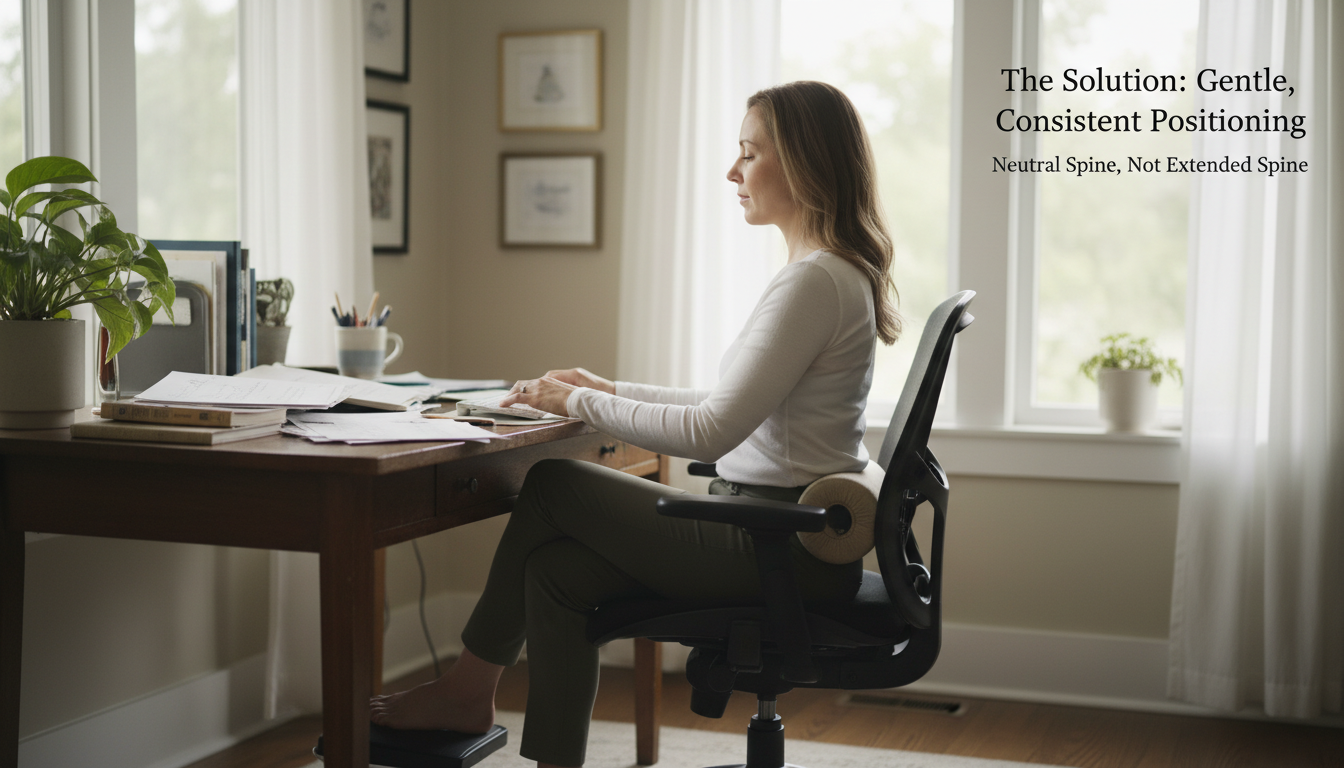
Our contoured lumbar pillow provides supportive positioning without forcing excessive extension—ideal for facet joint sensitivity.
The solution: Gentle, consistent positioning with external support rather than muscle effort. Neutral spine, not extended spine.
Person using lumbar support pillow in office chair
Workplace Modifications
Chair Adjustments
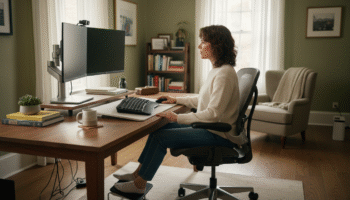
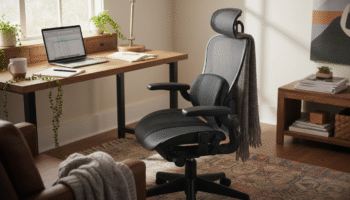
Lumbar support: Moderate, not aggressive
Backrest angle: 100-110 degrees (slight recline)
Seat height: Standard (hips at knee level or slightly higher)
Armrests: Use them—reduces spine loading
Movement Strategies
Change positions every 30 minutes
Walk rather than stand statically
Avoid prolonged standing (loads facets more than sitting)
Seated movement (shifting weight, pelvic tilts) helps
Workstation Setup
Monitor at eye level (prevents neck extension)
Keyboard close (prevents reaching)
Phone headset (prevents cradling)
Heat and Cold Therapy
When to Use Heat
Heat often helps facet joint pain:
Before sitting (warms joints)
During sitting (maintains comfort)
After prolonged positioning (reduces stiffness)
Morning stiffness particularly responsive to heat
Heat Application Tips
Heated lumbar support wraps available
Apply for 15-20 minutes
Low-medium heat (not hot)
Can use while working
When to Use Cold
After acute aggravation
When joints feel inflamed
If heat worsens symptoms
Exercises for Facet Joint Support
Flexion-Based Stretches (Often Feel Good)
Knees to Chest:
Lie on back
Pull both knees toward chest
Hold 30 seconds
Repeat several times daily
Child’s Pose:
Kneel, sit back on heels
Fold forward, arms extended
Hold 30-60 seconds
Exercises to Approach Carefully
Cobra/extension exercises (may aggravate)
Back-bending yoga poses
Heavy back extensions
McKenzie exercises (designed for disc, may worsen facet)
Strengthening for Stability
Core stability exercises (bird-dogs, dead bugs)
Hip strengthening (glute bridges without overextension)
Walking (excellent low-impact activity)
Frequently Asked Questions
Is sitting good or bad for facet joint pain?
Sitting is generally more comfortable than standing for facet pain because it flexes the spine and unloads the facet joints. However, prolonged static sitting causes stiffness, and the transition from sitting to standing can be painful. Optimal management involves comfortable sitting with frequent position changes.
What sitting position is best for facet joint pain?
A neutral to slightly flexed position typically works best. Avoid excessive lumbar lordosis (arching)—unlike disc conditions, facet joints don’t benefit from aggressive lumbar support. A slight recline with gentle lumbar support and good armrest use is often most comfortable.
Does lumbar support help facet joint pain?
Yes, but less aggressive support than typically recommended. Facet joints are loaded by extension, so forcing strong lordosis can worsen symptoms. Choose a moderate lumbar support that maintains neutral alignment without pushing you into excessive arch.
Why does my facet joint hurt more when I stand up?
Standing loads the facet joints more than sitting because standing positions the spine in more extension. Additionally, the transition from sitting to standing requires moving through positions that load the facets. Proper transition technique and brief walking to loosen up can help.
Can facet joint pain be cured?
Facet joint arthritis, like other forms of arthritis, can be managed but not reversed. However, symptoms can be significantly reduced through proper positioning, exercise, heat therapy, and medical treatments like injections when needed. Many people achieve excellent pain control with conservative management.
The Bottom Line
Managing facet joint pain while sitting requires a different approach than most back pain:
Gentle positioning: Neutral spine, not forced lordosis
Avoid extension: Don’t overcorrect by arching backward