
Gluteal Amnesia and Back Pain
Your glutes have forgotten how to work. It sounds strange,

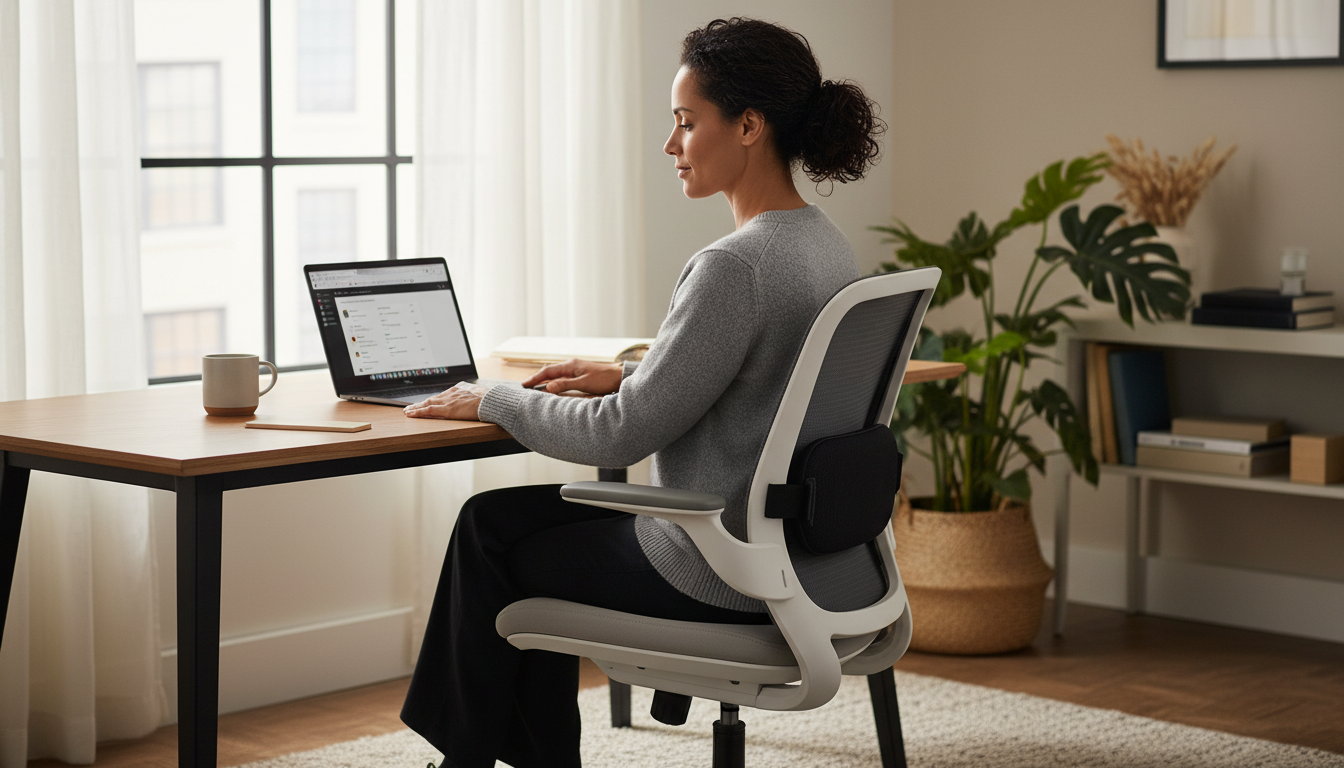
Your desk doesn’t have to be a health hazard. The right equipment can transform hours of sitting into an opportunity for movement, muscle activation, and even exercise—without leaving your workstation or disrupting your productivity. From active sitting devices to under-desk exercisers, there’s a growing category of tools designed to keep your body moving while you work.
📋 Table of Contents
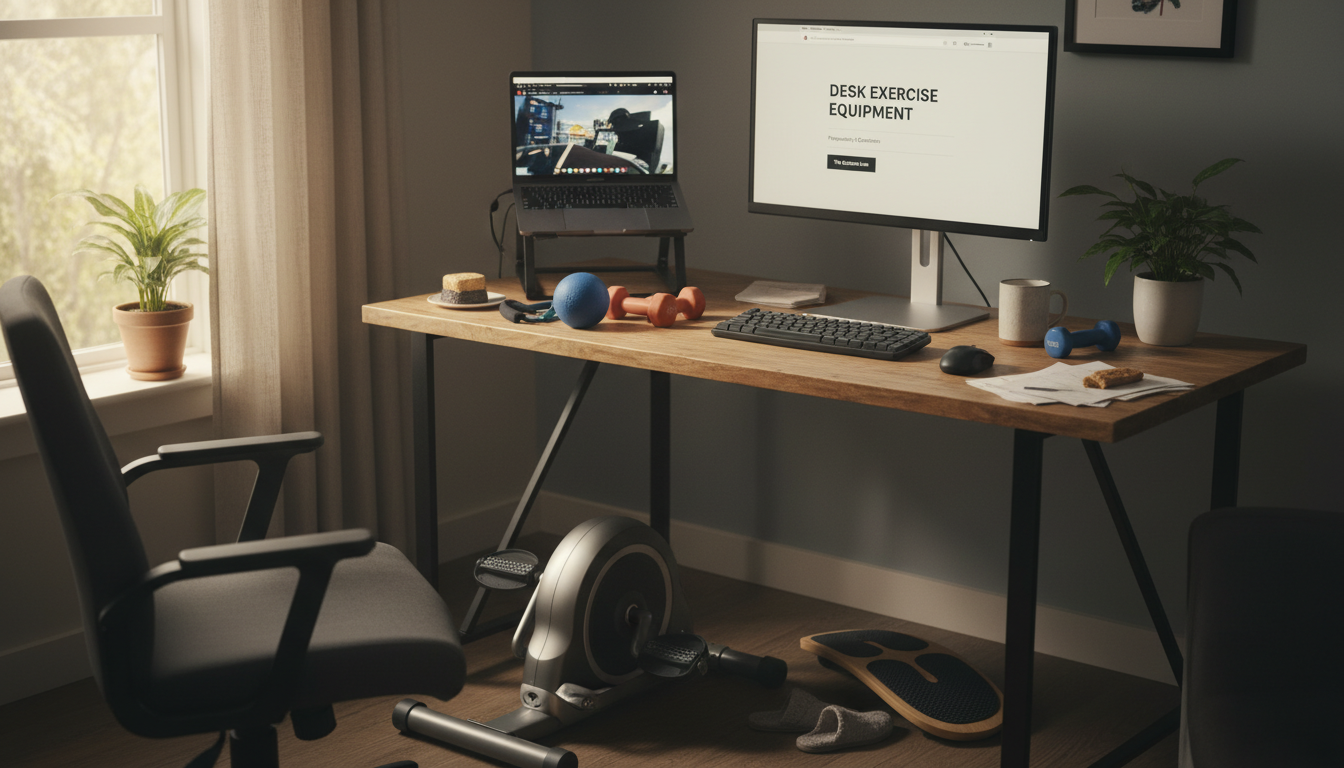
This guide covers desk exercise equipment that actually helps back pain, separating genuinely useful tools from marketing gimmicks.
The typical desk worker experiences:
Desk exercise equipment addresses these issues by:
Desk exercise equipment enhances—but doesn’t replace—proper ergonomics and regular exercise. No gadget compensates for a poorly set up workstation or completely sedentary lifestyle. Think of these tools as ways to add beneficial movement to an already reasonable approach.
What they are: Air-filled cushions that create an unstable sitting surface
How they help:
Best for: People who want subtle core engagement without major changes
Considerations:
Usage tip: Start with 30 minutes, gradually increase to 2-3 hours
What they are: Exercise balls mounted in chair frames
How they help:
Considerations:
Recommendation: Better for short periods than all-day use. Combine with regular chair.
What they are: Chairs that distribute weight between buttocks and shins
How they help:
Considerations:
Recommendation: Good for variety—alternate with regular chair, not as primary seat.
What they are: Stools shaped like horse saddles
How they help:
Considerations:
Active Sitting Still Needs Support
Even with active sitting devices, lumbar support matters. Our pillow works with any chair—regular or active—to maintain your natural curve.
Universal Compatibility | 30-Day Trial | 2-Year Warranty
What they are: Small elliptical or pedaling devices that fit under a desk
How they help:
Features to look for:
Considerations:
Usage tip: Best during calls, video watching, or reading—not intensive keyboard work
What they are: Small stationary bike mechanisms for under-desk use
Similar to ellipticals but:
Recommendation: Good option for those who find elliptical motion awkward
What they are: Low-profile treadmills designed for walking while working
How they help:
Considerations:
Usage tip: Best at slow speeds (1-2 mph) during routine tasks
What they are: Elastic bands for strength exercises at your desk
Exercises you can do:
Benefits:
Usage tip: Keep in desk drawer for quick exercise breaks
What they are: Spring-loaded devices for grip strength
Benefits:
Limitation: Doesn’t directly address back pain, but adds movement variety
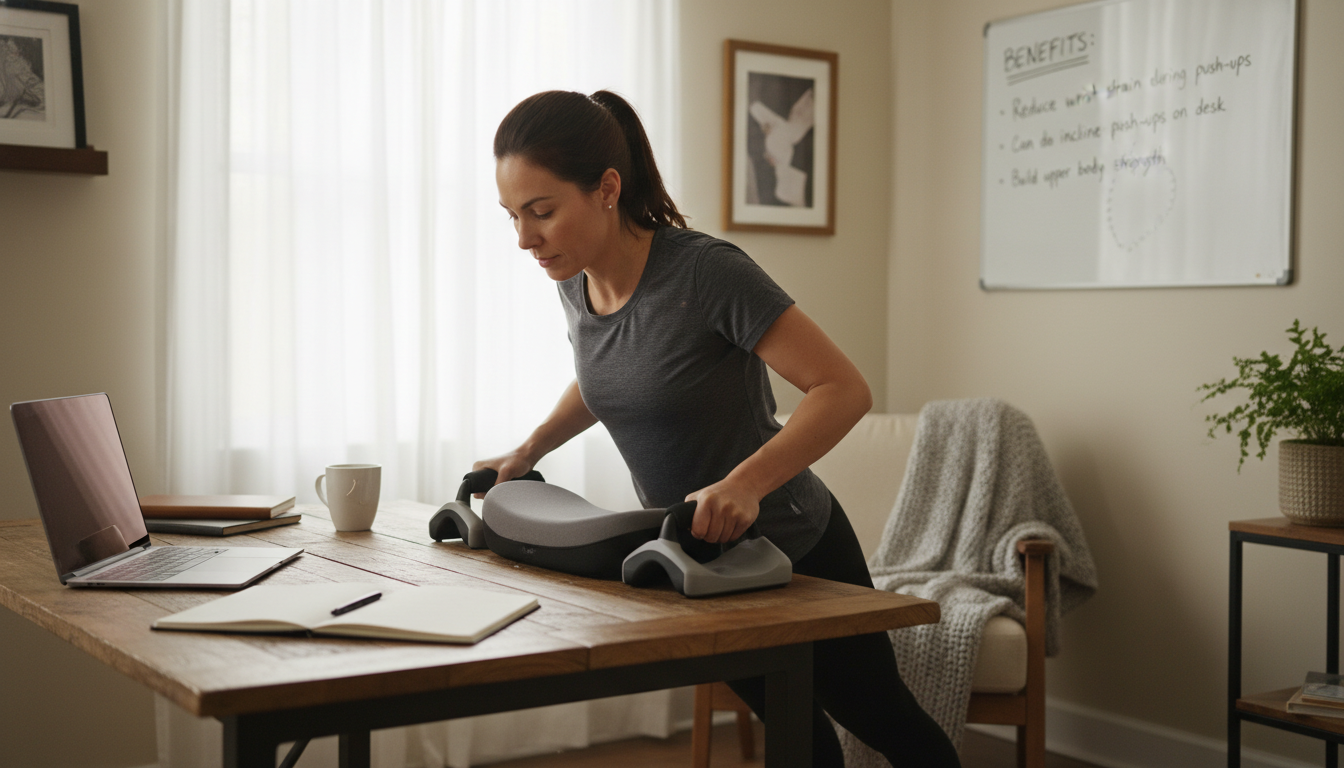
What they are: Handles that allow desk or floor push-ups
Benefits:
What they are: Textured rollers for under-desk foot massage
How they help:
Usage: Roll feet while sitting—absent-minded relief
What they are: Angled platforms for stretching calves
How they help:
What they are: Devices that provide feedback on posture
Types:
Effectiveness: Mixed—can help with awareness but don’t address underlying issues
| Equipment | Back Pain Benefit | Ease of Use | Price Range |
|---|---|---|---|
| lumbar pillow | High | Very easy | $30-80 |
| Wobble cushion | Moderate | Easy | $20-50 |
| Under-desk elliptical | Moderate | Moderate | $100-300 |
| Resistance bands | Moderate | Easy | $10-30 |
| Kneeling chair | Variable | Moderate | $100-300 |
| Walking pad | High | Requires standing desk | $300-800 |
| Balance ball chair | Low-Moderate | Moderate | $50-150 |
| Foot roller | Low | Very easy | $10-30 |
It can help, but results depend on what you’re using and how. Lumbar support provides consistent benefit. Active sitting devices can help by promoting movement and core engagement, but research is mixed on some products. Under-desk exercisers help with circulation and general movement. No equipment replaces proper ergonomics, regular breaks, and exercise outside work.
Generally no—most are better for periods of 1-3 hours rather than 8 hours straight. Even well-designed active sitting can fatigue muscles over long periods. Best approach: alternate between regular chair with lumbar support and active sitting devices throughout the day. Listen to your body—if you’re fatiguing, switch.
Quality models are quite quiet and suitable for shared offices. Cheap models can be noisy. Look for: magnetic resistance (quieter than friction), quality bearings, and padded/rubberized contact points. Read reviews specifically about noise. Even quiet models may not be appropriate during important calls or in very quiet environments.
For back pain specifically, a quality lumbar pillow provides the most consistent, all-day benefit with virtually no downside. It addresses the fundamental problem (lack of lumbar support) without requiring active effort or creating fatigue. Beyond that, a wobble cushion or under-desk exerciser adds beneficial movement. Start with lumbar support, then add other tools.
Probably not as a full replacement. Both can be beneficial for variety, but neither is ideal for 8-hour use. Kneeling chairs can stress knees; balance balls provide no back support and can increase fatigue. Better approach: use your regular chair with lumbar support as your primary seat, and alternate with active sitting options for periods throughout the day.
Desk exercise equipment can genuinely help back pain when used appropriately:
The best desk exercise equipment is equipment you’ll actually use. Start simple, add gradually, and find what works for your body and workflow.
The Essential Desk Accessory
Before adding any gadget, start with proper lumbar support. Our pillow provides all-day benefit that other equipment can’t match.
30-Day Money-Back Guarantee | 2-Year Warranty | Free Shipping
Your glutes have forgotten how to work. It sounds strange,
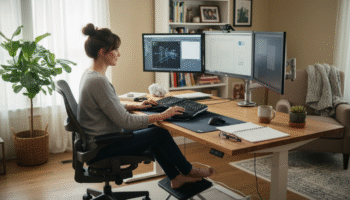
Your hip flexors are the hidden culprits of desk-job back
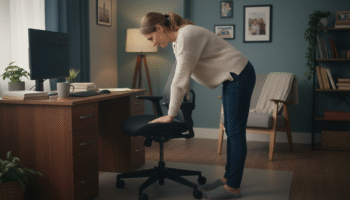
Your back is stiff, tight, and angry. And you’ve got
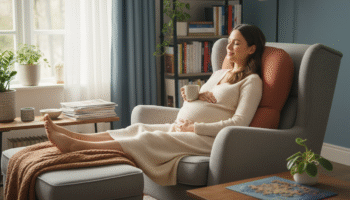
That nagging pain at the base of your spine—right where
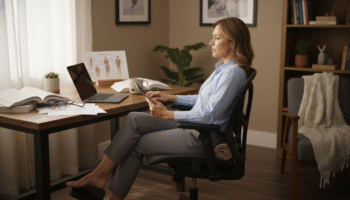
Sitting with a herniated disc can feel like torture. Every
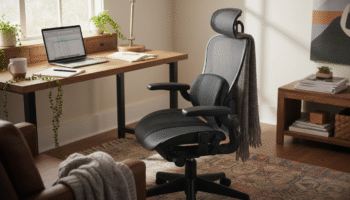
Your desk chair is failing you. Even if you paid
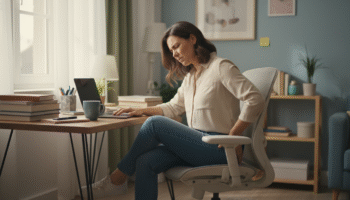
That deep ache in your buttock that won’t quit? The

You’ve blamed your chair for years. And you’re probably right—but
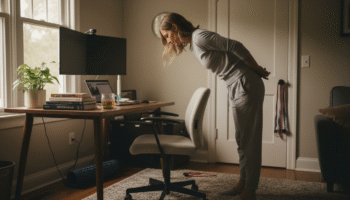
Your back is aching right now, isn’t it? That dull
Is your lower back screaming at you by 3 PM?