

Gluteal Amnesia and Back Pain
Your glutes have forgotten how to work. It sounds strange,


80% of adults will experience back pain at some point—but it’s largely preventable. This 3-minute risk calculator evaluates 15 scientifically-validated factors that contribute to back pain development. Unlike generic advice, you’ll receive a personalized risk profile with specific prevention strategies for your situation.
📋 Table of Contents

Studies from the Journal of Pain Research show that identifying risk factors early can reduce back pain incidence by up to 45%. Answer honestly for the most accurate assessment.
This calculator evaluates four key categories: Lifestyle Factors, Work Environment, Physical Condition, and Medical History. Each factor is weighted based on clinical research data.
Back pain rarely has a single cause. Research published in The Lancet identifies it as a multifactorial condition influenced by:
The good news: most back pain risk factors are modifiable. While you can’t change your age or genetics, you can address:
If your lifestyle score is elevated, focus on:
Occupational factors account for 37% of back pain cases. Key interventions:
Physical factors often compound other risks:
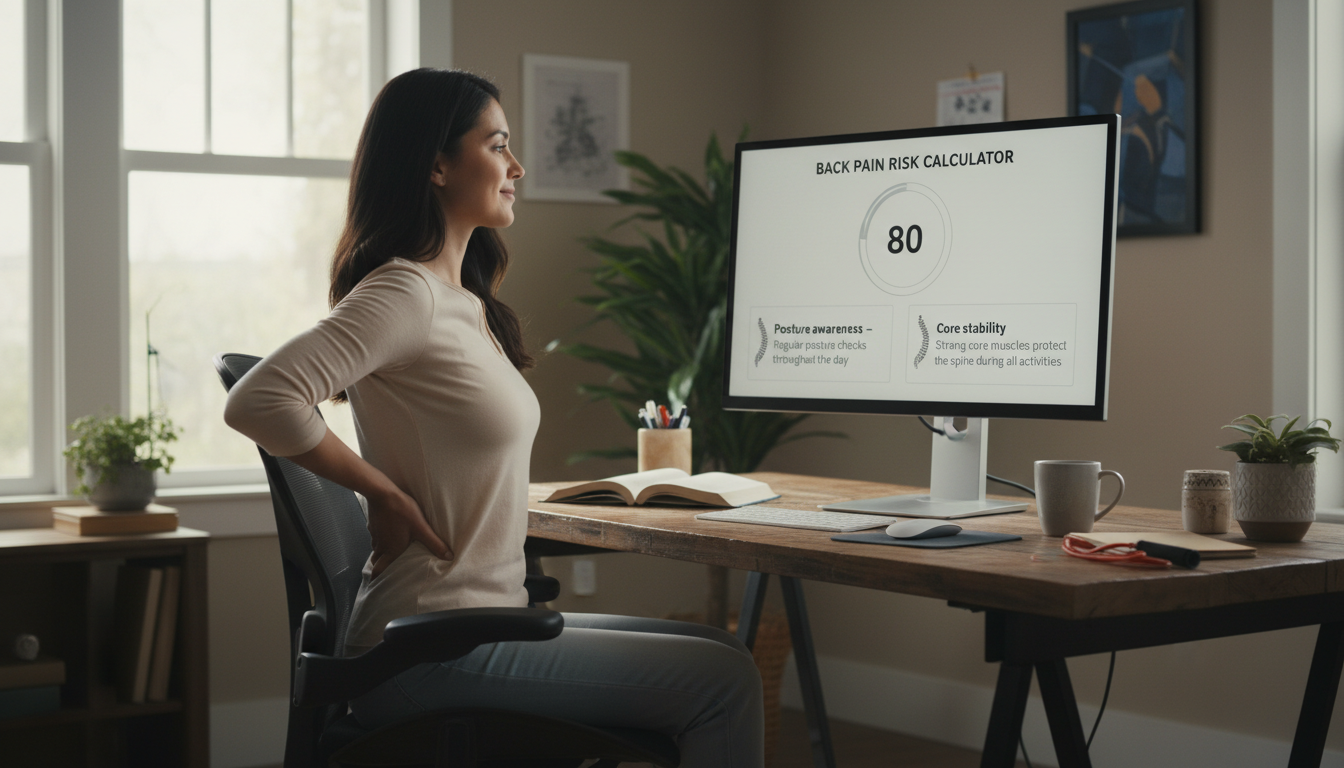
While this calculator helps identify risk factors, consult a healthcare provider if you experience:
Research consistently shows that prevention is 5-10x more effective than treatment for back pain. By addressing risk factors now, you can:
The most impactful single change? Proper lumbar support. Studies show that maintaining the natural lumbar curve during sitting reduces disc pressure by 30-40% and prevents the postural degradation that leads to chronic pain.
This calculator uses factors validated in peer-reviewed research. While it can’t predict individual outcomes, it identifies patterns associated with increased back pain risk in population studies.
No. A high score indicates elevated risk, not certainty. Many people with high-risk profiles never develop significant back pain, especially if they take preventive action.
Absolutely. Most risk factors are modifiable. Retake the assessment after implementing changes to track your progress.
Research points to prolonged sitting without proper support as the most common modifiable risk factor in modern populations. Addressing workspace ergonomics and lumbar support provides the highest return on investment.
Your glutes have forgotten how to work. It sounds strange,

Your hip flexors are the hidden culprits of desk-job back
Your back is stiff, tight, and angry. And you’ve got

That nagging pain at the base of your spine—right where

Sitting with a herniated disc can feel like torture. Every
Your desk chair is failing you. Even if you paid

That deep ache in your buttock that won’t quit? The

You’ve blamed your chair for years. And you’re probably right—but

Your back is aching right now, isn’t it? That dull
Is your lower back screaming at you by 3 PM?