

Gluteal Amnesia and Back Pain
Your glutes have forgotten how to work. It sounds strange,

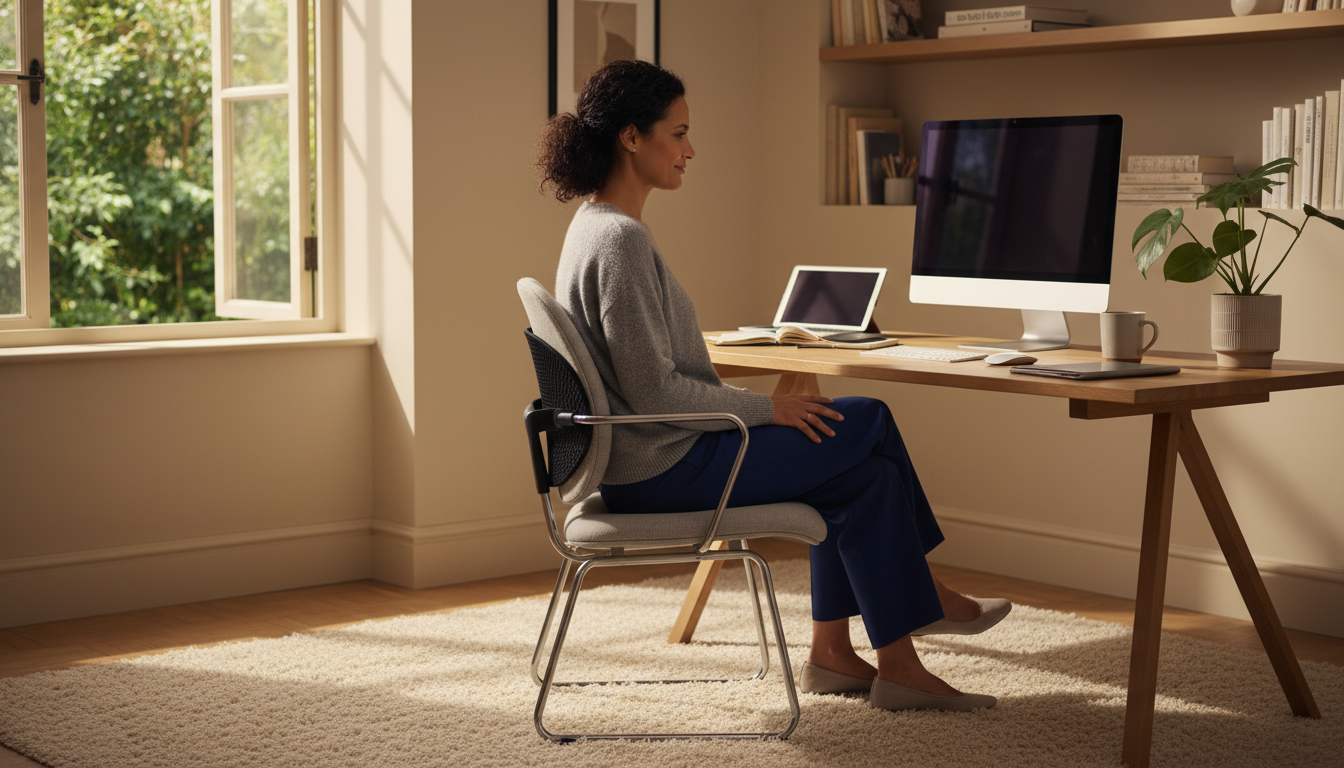
That chair you sit in for 8+ hours a day might be silently destroying your back. Most people don’t realize their chair is the culprit until the damage is done. Take this 2-minute assessment to discover if your chair is helping or hurting you—and exactly what to do about it.
📋 Table of Contents

Answer honestly based on your current chair and how you actually use it:
You spend more time in your office chair than in your bed. The average office worker sits 6-8 hours daily, adding up to over 2,000 hours per year. In that position, every flaw in your chair compounds into real physical consequences.
| Feature | Why It Matters | Without It |
|---|---|---|
| Lumbar Support | Maintains natural spinal curve | Spine flattens, discs compress |
| Adjustable Height | Proper leg positioning | Thigh pressure or dangling feet |
| Armrests | Reduces shoulder strain | Arms tire, shoulders hunch |
| Recline Function | Varies spinal load throughout day | Static pressure on same points |
| Quality Cushioning | Distributes weight evenly | Pressure points cause pain |
Even expensive ergonomic chairs often fail to provide adequate lumbar support for every body type. The built-in support is designed for "average" dimensions, leaving many people with a gap between their lower back and the chair. This gap is where back problems begin—and where a proper lumbar pillow provides immediate relief.
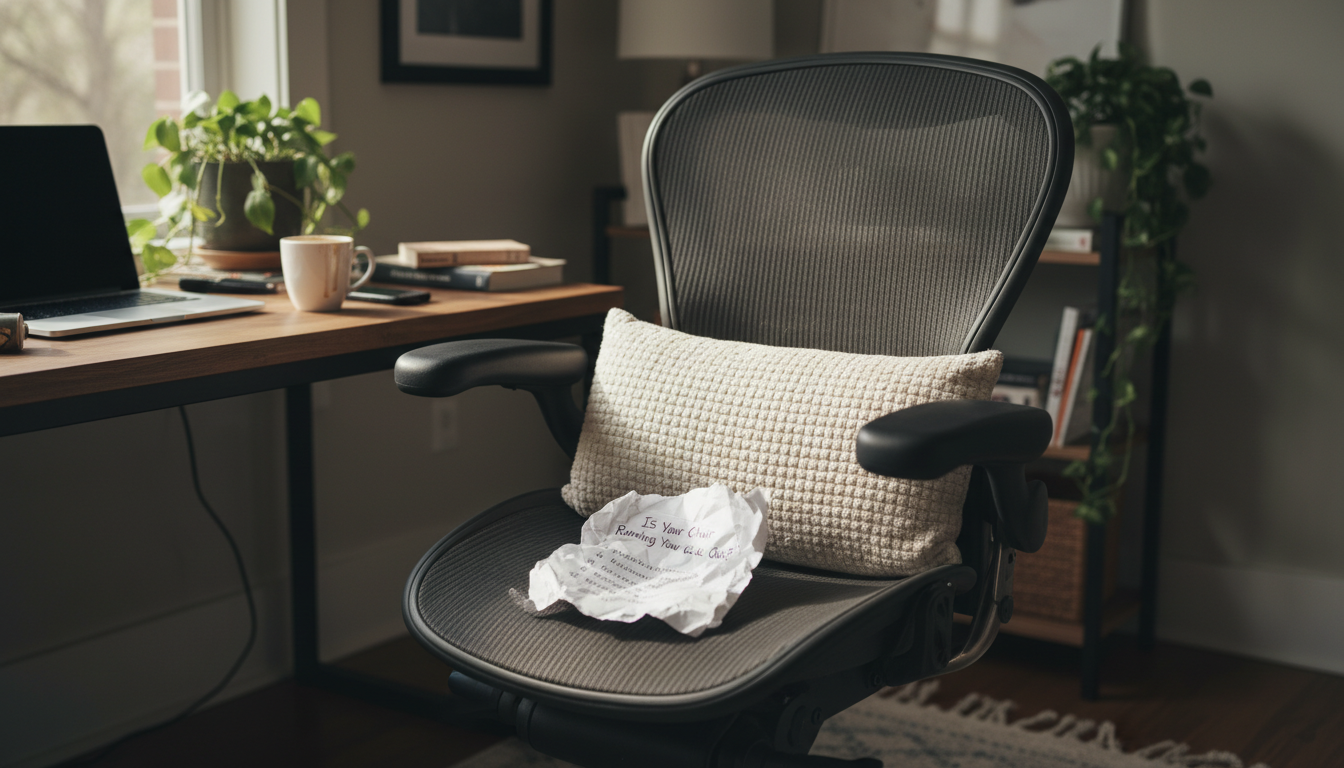
Many people assume they need a new chair when their current one causes discomfort. But consider:
| Option | Cost | Effectiveness |
|---|---|---|
| New ergonomic chair | $300-$1,500+ | Depends on fit and features |
| Quality lumbar pillow | $30-$60 | Targets #1 cause of chair-related pain |
| Lumbar pillow + seat cushion | $60-$100 | Transforms most chairs into ergonomic seating |
Transform Your Chair Today
Don't wait for back pain to force an expensive chair replacement. Our lumbar pillow works with any chair to provide the support your spine needs.
Works With Any Chair | 30-Day Guarantee | Free Returns
Key indicators: pain that starts or worsens during sitting, relief when standing or lying down, and pain that developed after starting a desk job or changing chairs. If your discomfort correlates with time spent in your chair, the chair is likely a factor.
Yes, significantly. The most common chair deficiency is inadequate lumbar support. A quality lumbar pillow addresses this directly, maintaining your spine's natural curve regardless of your chair's built-in features. It won't fix everything (like a worn seat or wrong height), but it tackles the #1 cause of chair-related back pain.
Start with adding support—it's lower cost and lower risk. If your chair's basic structure is sound (stable, adjustable height, decent cushioning), adding lumbar support and potentially a seat cushion can be as effective as a new chair at a fraction of the cost.
Quality chairs last 7-10 years with proper care. However, cushioning and support mechanisms wear out faster than the frame. If your chair is over 5 years old and you're experiencing discomfort, the internal support may be compromised even if it looks fine.
Good lumbar support. Studies show that even budget chairs with proper lumbar support outperform expensive chairs without it. Your spine needs its natural curve maintained—how you achieve that matters less than achieving it.
Your glutes have forgotten how to work. It sounds strange,

Your hip flexors are the hidden culprits of desk-job back
Your back is stiff, tight, and angry. And you’ve got

That nagging pain at the base of your spine—right where

Sitting with a herniated disc can feel like torture. Every
Your desk chair is failing you. Even if you paid

That deep ache in your buttock that won’t quit? The

You’ve blamed your chair for years. And you’re probably right—but

Your back is aching right now, isn’t it? That dull
Is your lower back screaming at you by 3 PM?