Free Shipping
Fast Delivery
Safe Payment
30-Day Guarantee
Free Shipping
Fast Delivery
Safe Payment
30-Day Guarantee

Footrest for Desk Back Pain

Your feet dangling above the floor or pressed flat on hard ground might be the hidden cause of your back pain. A desk footrest seems like a minor accessory,...
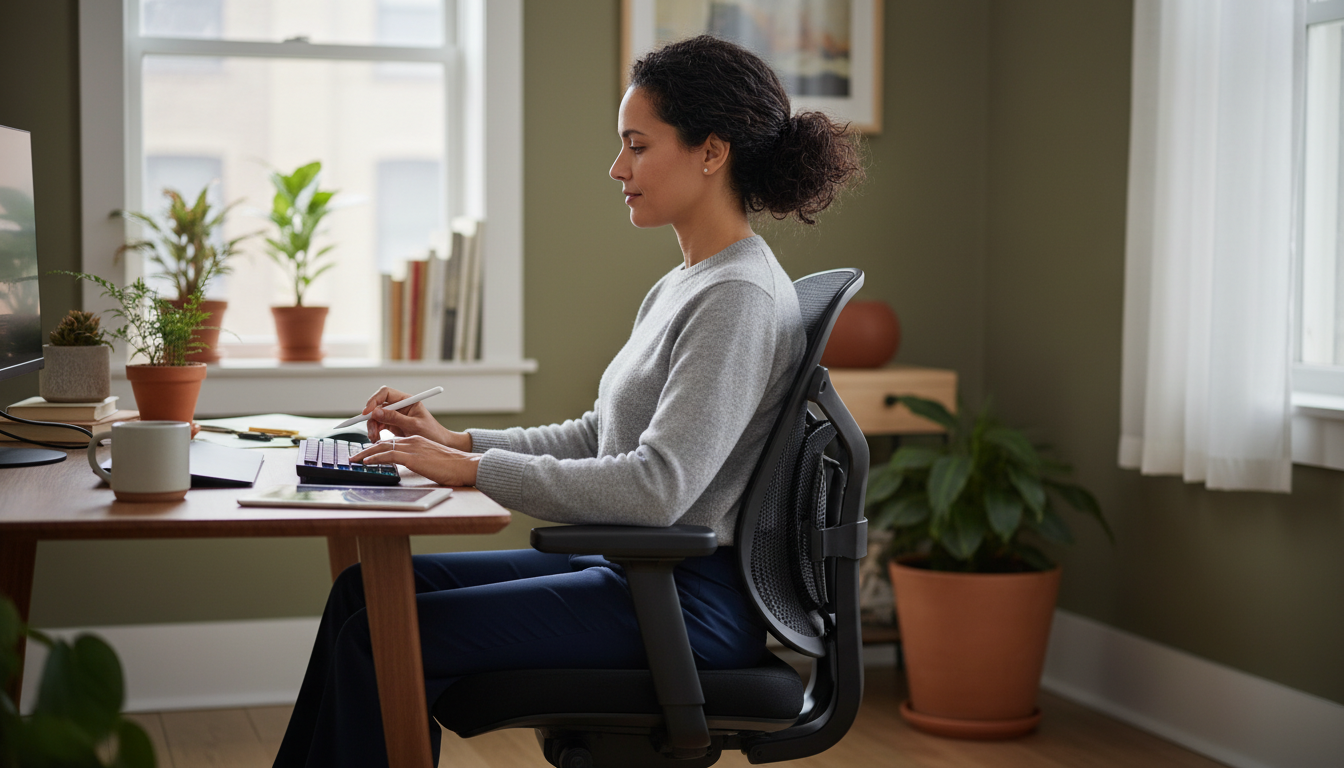
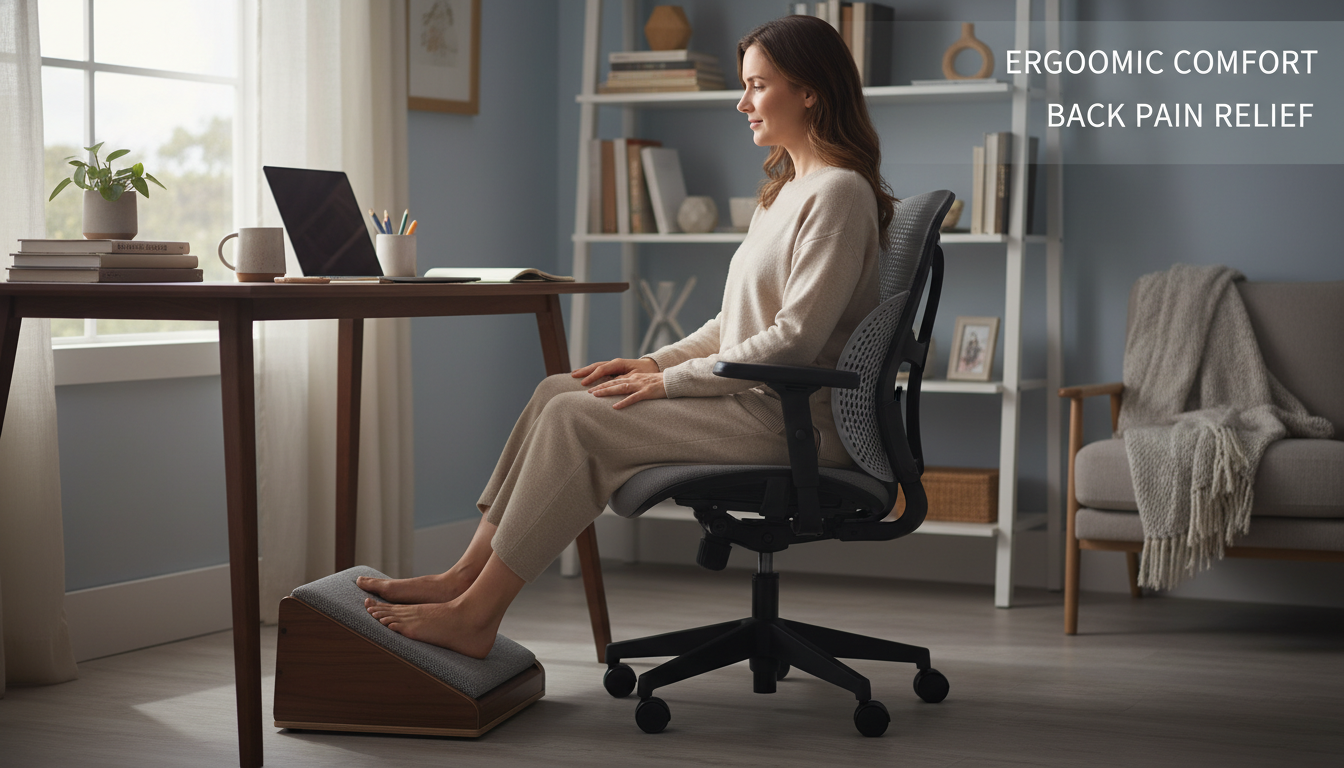
Footrest for Desk Back Pain - Hero Image

Your feet dangling above the floor or pressed flat on hard ground might be the hidden cause of your back pain. A desk footrest seems like a minor accessory, but it’s a critical link in the ergonomic chain. When your feet aren’t properly supported, your entire sitting posture suffers—and your lower back pays the price.

footrest for desk back pain – Footrest for Desk Back Pain

The Connection Between Feet and Back Pain

Your sitting posture is a connected system. Problems at the base cascade upward:

When Feet Don’t Reach the Floor

If you’re shorter than average or your chair doesn’t lower enough:

  • Thigh pressure: Seat edge presses into back of thighs, restricting circulation
  • Posterior pelvic tilt: Without feet grounded, pelvis tends to tilt backward
  • Lumbar flattening: Pelvic tilt flattens your natural lumbar curve
  • Spinal stress: Flattened curve increases disc and muscle strain

When Feet Rest on Hard Floors

Even with feet reaching the floor:

  • Limited movement: Flat floors don’t encourage micro-movements
  • Pressure concentration: Hard surfaces create pressure points
  • Static positioning: No terrain variation promotes static posture

Who Needs a Footrest

Definitely Need One If:

  • Your feet don’t reach the floor comfortably when seated
  • Chair seat height can’t lower enough for your height
  • You feel pressure behind your knees when sitting
  • You tend to sit on the edge of your chair to reach the floor
  • You’re shorter than 5’4″ using a standard-height desk

May Benefit If:

  • You experience leg fatigue during long sitting
  • You want to encourage movement while seated
  • You have circulation issues in your legs
  • Your current floor surface is cold or hard

Quick Height Test

Sit with your back against your chair’s backrest. With your chair at the height needed for proper desk ergonomics (elbows at keyboard height), check your feet:

  • Feet flat on floor, thighs parallel: No footrest needed
  • Feet dangling or only toes touching: Footrest essential
  • Feet flat but thighs sloping down: Footrest can help level thighs

Types of Footrests

Type Best For Features Price Range
Fixed Height Single user, consistent setup Simple, no adjustments $20-40
Adjustable Height Multiple users, varied positions Height customization $30-70
Tilting/Rocking Active sitting, leg circulation Movement-encouraging design $40-100
Heated Cold offices, circulation issues Warmth + support $50-100
Massage/Textured Foot fatigue, circulation Massage nodes or rollers $30-80

Fixed Height Footrests

The simplest option—a solid platform at a set height:

When to Choose Fixed Height

  • You’re the only user and know exactly what height you need
  • Your desk setup doesn’t change
  • You want simplest possible solution
  • Budget is the primary concern

Limitations

  • Can’t adapt to different shoes or sitting positions
  • May not work if you change chairs or desks
  • No movement-encouraging features

Adjustable Height Footrests

Allow customization of platform height:

Adjustment Mechanisms

  • Sliding track: Platform slides up/down on rails
  • Stacking: Add/remove components for height
  • Tilting platform: Angle creates effective height change

Height Range Considerations

Typical adjustable footrests offer 3-6 inches of height range. Measure how much elevation you need:

  1. Sit with proper desk ergonomics (elbows at keyboard height)
  2. Measure gap from floor to comfortable foot position
  3. Ensure footrest range includes your needed height

Tilting and Rocking Footrests

These encourage foot and leg movement while seated:
Benefits for Back Pain

  • Increased circulation: Movement pumps blood through legs
  • Reduced static stress: Subtle motion prevents fixed-position strain
  • Core engagement: Some models encourage light core activation
  • Restlessness relief: Provides outlet for fidgeting impulses

Types of Movement

  • Tilt/rock: Platform tips forward and back
  • Swing: Platform swings side to side or in multiple directions
  • Rotation: Platform rotates in place
  • Combination: Multiple movement types in one design

Person using lumbar support pillow in office chair

Proper Footrest Positioning

Height Setting

The goal is thighs approximately parallel to floor (or slight downward slope):

  • Knees should be at approximately 90-degree angle or slightly greater
  • No pressure from seat edge behind knees
  • Weight distributed between feet and seat

Depth Placement

  • Close enough that you can use it without stretching
  • Far enough that your legs have room to move
  • Typically 6-12 inches under desk from front edge

Angle Considerations

If your footrest has adjustable angle:

  • Flat: Neutral position, good for most situations
  • Slight tilt toward you: Comfortable for longer sitting
  • Tilt away: Can stretch calves, but not for constant use

Footrest + Lumbar Support: The Complete Lower Body Solution

For comprehensive sitting comfort, footrest and lumbar support work together:

The Connection

  • Footrest establishes proper lower body position
  • Proper position enables pelvis to sit correctly
  • Correct pelvis position allows lumbar support to work effectively
  • Supported lumbar maintains natural spinal curve

Neither works as well without the other. A footrest can’t help your back if your lumbar curve isn’t supported. Lumbar support is less effective if your pelvis is tilted wrong due to improper foot position.

Complete Your Sitting Setup

Proper foot support is half the equation. Premium lumbar support completes the ergonomic chain from feet to spine.

Shop lumbar pillow

30-Day Money Back
2-Year Warranty
Free Returns
24/7 Support

Essential Pair: Footrest + Lumbar Support | 30-Day Guarantee

Features to Prioritize

Essential Features

  • Adequate size: Platform should accommodate both feet comfortably (minimum 15″ wide)
  • Non-slip surface: Feet shouldn’t slide off
  • Stable base: Shouldn’t tip or shift under pressure
  • Appropriate height: Must match your actual needs

Beneficial Features

  • Height adjustment: Flexibility for different situations
  • Textured surface: Provides stimulation, prevents slipping
  • Movement capability: Encourages circulation
  • Easy repositioning: Lightweight enough to adjust during day

Situation-Specific Features

  • Heating: For cold offices or circulation issues
  • Massage nodes: For foot fatigue or comfort preference
  • Large platform: For users who want to vary foot position significantly

Common Footrest Mistakes

Mistake #1: Too High

A footrest that’s too high forces knees above hip level, tilting pelvis backward—the exact problem you’re trying to avoid. Lower is generally better than higher.

Mistake #2: Too Far Away

Stretching legs forward to reach the footrest pulls you out of proper sitting position. Keep the footrest close enough for comfortable, natural use.

Mistake #3: Ignoring Movement Options

Static footrests encourage static sitting. If budget allows, movement-capable footrests provide additional circulation and comfort benefits.

Mistake #4: Wrong Size Platform

A platform that’s too small limits foot positioning options and may cause you to perch unnaturally. Size up when in doubt.

DIY vs. Commercial Footrests

Temporary DIY Solutions

If you need immediate relief while waiting for a proper footrest:

  • Stack of sturdy books (test stability first)
  • Storage box turned upside down
  • Ream of paper in packaging

Why Commercial Footrests Are Worth It

  • Proper sizing: Designed for ergonomic foot support
  • Surface texture: Appropriate grip without discomfort
  • Adjustability: Fine-tune to exact needs
  • Durability: Built to withstand constant use
  • Movement features: DIY options can’t replicate rocking/tilting

Frequently Asked Questions

What height should my footrest be?

Your footrest should raise your feet until your thighs are approximately parallel to the floor (or sloping slightly downward). The exact height depends on your chair height, leg length, and desk setup. Start with the minimum height that eliminates pressure behind your knees, then adjust from there.

Can a footrest help with lower back pain?

Yes, by establishing proper lower body positioning. When feet dangle or rest incorrectly, pelvic position suffers, which affects lumbar curve. A footrest that creates proper thigh and pelvic position allows your lumbar support to work effectively. It’s one component of the complete ergonomic setup.

Should I use a footrest even if my feet reach the floor?

Possibly. If your feet reach the floor but your thighs slope upward (knees higher than hips), a footrest can level things out. Also, if your floor is very hard or cold, a cushioned footrest adds comfort. Movement-capable footrests benefit anyone who wants to encourage circulation during long sitting.

Are rocking footrests better than fixed ones?

For most users, yes. Rocking or tilting footrests encourage micro-movements that improve circulation, reduce static stress, and provide an outlet for restlessness. The movement is subtle and doesn’t interfere with work. Fixed footrests are simpler and cheaper but don’t provide these additional benefits.

Can I use a footrest with a standing desk?

When sitting at a sit-stand desk, yes—you need the same foot support as any other seated work. When standing, no—your feet should be on the floor or an anti-fatigue mat. Some users keep a footrest under their desk that they push aside when standing and pull back when sitting.

More Posts

Your Cart

Your cart is empty

Looks like you haven't added anything yet.

Start Shopping