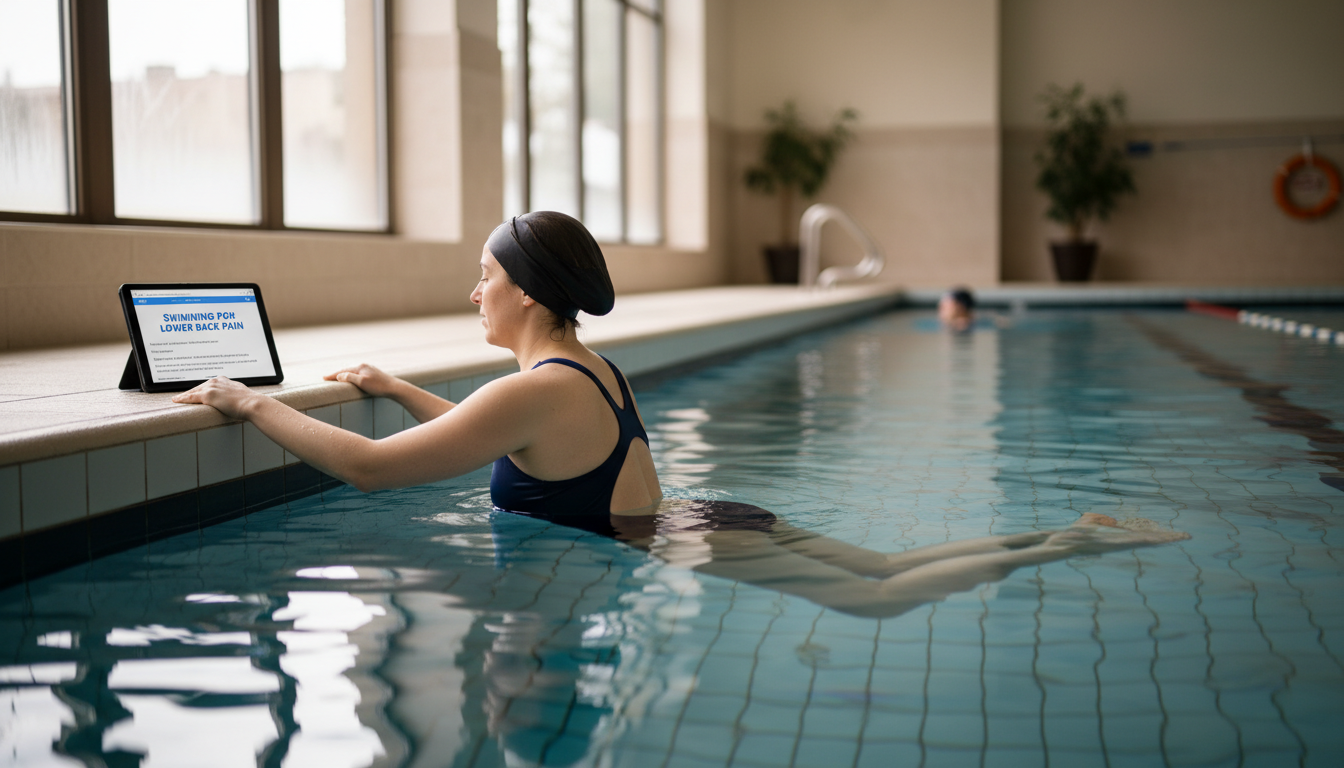
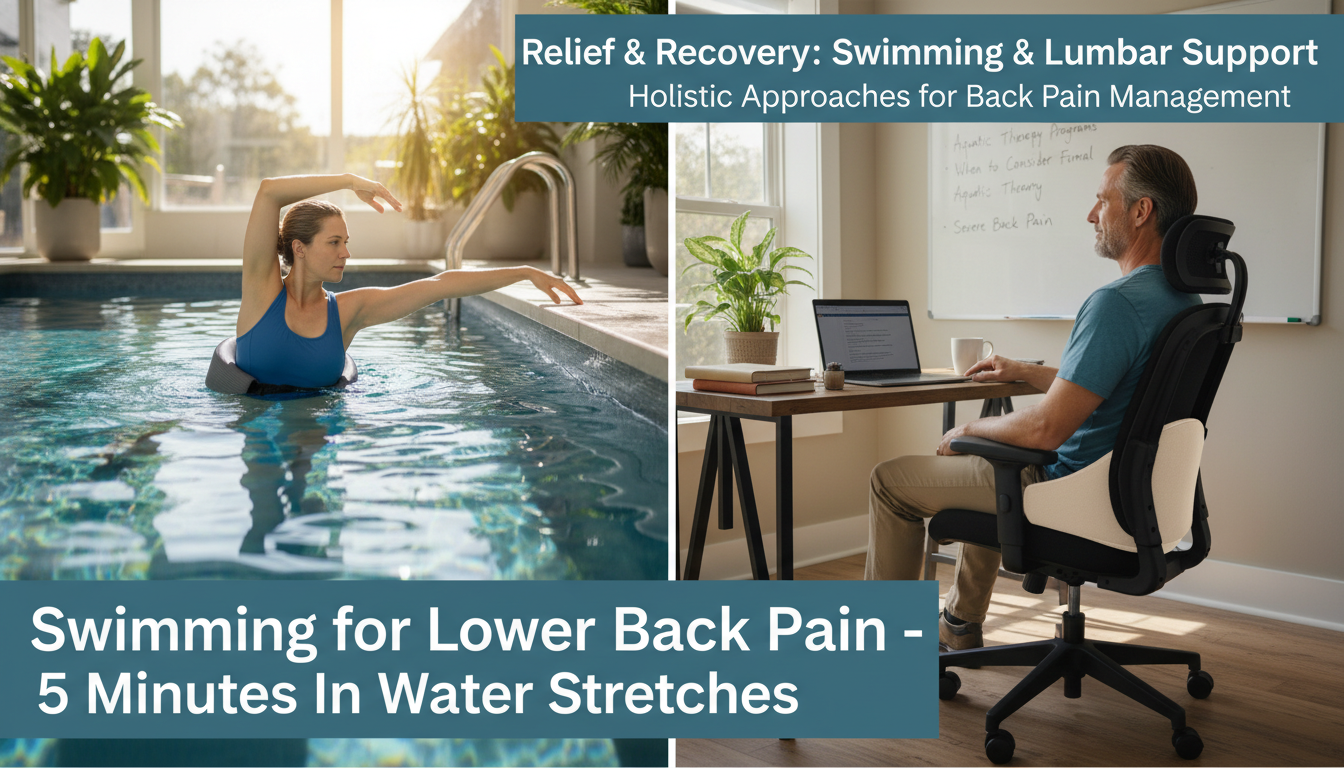
Water takes the weight off your spine—literally. When you're in water up to your waist, you're carrying only about 50% of your body weight. Chest-deep, you're...
Water takes the weight off your spine—literally. When you’re in water up to your waist, you’re carrying only about 50% of your body weight. Chest-deep, you’re at about 25%. This dramatic reduction in spinal load makes swimming and water exercise one of the safest and most effective activities for people with back pain.
swimming lower back pain – Swimming for Lower Back Pain
But not all swimming is created equal for back health. The wrong stroke can strain your spine, while the right techniques can provide relief and build strength without aggravating your condition.
This guide covers how to use swimming and water exercise effectively for lower back pain.
Why Water Exercise Helps Back Pain
The Buoyancy Advantage
Water’s buoyancy provides unique benefits:
Spinal decompression: Reduced gravity decreases disc and joint pressure
Reduced impact: No jarring movements or ground reaction forces
Pain-free movement: Can move through ranges that hurt on land
Multi-directional resistance: Water provides gentle resistance in all directions
Temperature: Warm water relaxes muscles and improves blood flow
Core strengthening: Water requires constant stabilization
Flexibility improvement: Easier to stretch in water
Muscle relaxation: Warm water reduces tension
Balance training: Water challenges proprioception
What Research Shows
Studies support aquatic exercise for back pain:
Reduces pain intensity comparable to land-based exercise
Improves function and quality of life
May be more tolerable for severe or acute pain
Particularly beneficial for conditions aggravated by spinal loading
Water Temperature Matters
Warm water (82-88°F/28-31°C) is ideal for back pain—it relaxes muscles and reduces spasm. Competition pools (often cooler, around 78°F/26°C) may be less therapeutic but still beneficial. Avoid hot tubs for exercise as the heat can be exhausting, though brief soaks can help relax muscles.
Swimming Strokes for Back Pain
Best Strokes
Backstroke
Why it’s often best:
Spine remains neutral—no twisting or hyperextension
Face out of water—no neck rotation
Works posterior chain muscles (often weak in back pain)
Natural spinal position maintained throughout
Technique tips:
Keep head neutral, looking straight up
Rotate through shoulders, not lower back
Keep core gently engaged
Use fins to reduce load on legs if needed
Sidestroke
Why it helps:
Low-intensity option for recovery
Minimal spinal rotation
Easy to maintain neutral spine
Good for building endurance without strain
Moderate Strokes
Freestyle (Front Crawl)
Can work if done correctly:
Requires good rotation technique
Neck rotation for breathing can be problematic
May cause hyperextension if form is poor
Modifications for back pain:
Use a snorkel to eliminate neck rotation
Focus on hip rotation, not lower back
Keep core engaged throughout
Consider bilateral breathing (both sides)
Strokes to Avoid or Modify Significantly
Breaststroke
Problems:
Hyperextends lower back repeatedly
Compresses lumbar spine during glide phase
Neck hyperextension to breathe
One of the worst strokes for back pain
If you must: Keep head in water, using snorkel; minimize back arch
Butterfly
Problems:
Extreme spinal undulation
High-intensity, difficult to control
Repeatedly hyperextends and flexes spine
Generally not recommended for back pain
Support Your Back Out of the Pool
Swimming unloads your spine—then sitting reloads it. Our lumbar pillow helps maintain the relief you get from the water.
Person using lumbar support pillow in office chair
Aquatic Therapy Programs
When to Consider Formal Aquatic Therapy
Severe or chronic back pain not responding to other treatments
Post-surgical rehabilitation
Conditions that make land exercise too painful
Need for supervised progression
Multiple health conditions requiring careful management
What Aquatic Therapy Involves
Supervised by physical therapist or trained professional
Customized exercises for your specific condition
Often in warmer therapeutic pools (92-94°F/33-34°C)
Progressive program with regular assessment
Equipment like noodles, kickboards, resistance tools
Finding Aquatic Therapy
Physical therapy clinics with pools
Hospital rehabilitation departments
Arthritis Foundation water exercise programs
Community centers with therapeutic programs
Practical Considerations
Pool Access
Gyms: Many have pools—ask about lap swim times
Community pools: Often more affordable
Therapy pools: Warmer but may require referral
Hotels: Often have warm pools for guests
Outdoor pools: Seasonal but worth using when available
Equipment That Helps
Snorkel: Eliminates neck rotation in freestyle
Fins: Reduce leg effort, allow focus on form
Pull buoy: Lifts legs, reduces back strain
Flotation belt: For deep water exercise
Water shoes: For pool bottom walking
Frequency Recommendations
Ideal: 3-4 times per week
Minimum: 2 times per week for benefits
Duration: 30-60 minutes per session
Consistency: Regular schedule matters more than occasional long sessions
Frequently Asked Questions
Which swimming stroke is best for lower back pain?
Backstroke is generally best because it maintains neutral spine position, doesn’t require neck rotation, and works the posterior chain muscles that support your back. Sidestroke is another gentle option. Freestyle can work with a snorkel and good technique. Avoid breaststroke and butterfly—both repeatedly hyperextend the lower back.
Can swimming actually strengthen my back?
Yes. Water provides resistance in all directions, so swimming works multiple muscle groups including those that support your spine. However, swimming alone may not build enough strength for optimal back health. Consider supplementing with land-based strengthening exercises, particularly for your core and glutes, which may not be fully challenged by swimming.
How often should I swim for back pain relief?
For meaningful benefit, aim for 3-4 sessions per week, 30-60 minutes each. You can see some benefit from 2 times weekly, but more frequent sessions produce better results. Consistency matters more than duration—regular shorter sessions beat occasional long ones. Start conservatively and build up gradually.
My back hurts after swimming—what am I doing wrong?
Common causes: using breaststroke or butterfly (hyperextends back), poor technique in any stroke, starting too intensely, or issues with neck rotation. Solutions: switch to backstroke or use a snorkel, reduce intensity, focus on core engagement throughout, and consider having your technique evaluated. If pain persists, consult a healthcare provider.
Is pool walking as good as swimming for back pain?
Pool walking is an excellent option, especially if you’re not a confident swimmer or have severe pain. The buoyancy benefits are similar, you get resistance from the water, and it’s easier to maintain good posture. Many people with back pain do better with pool walking than swimming strokes. It’s not “lesser”—it’s a valid and effective approach.
The Bottom Line
Swimming and water exercise offer unique advantages for back pain:
Choose strokes wisely: Backstroke and sidestroke are safest
Consider non-swimming options: Water walking and exercises are highly effective
Maintain consistency: 2-4 sessions weekly for best results
Use proper equipment: Snorkels and fins improve safety
Support yourself on land: Pool benefits don’t persist without proper sitting support
Water provides a unique environment for back pain management—use it strategically as part of your overall approach.
Relief Shouldn’t End at the Pool
Swimming unloads your spine. Our lumbar pillow provides the support you need when you’re back on land and sitting.