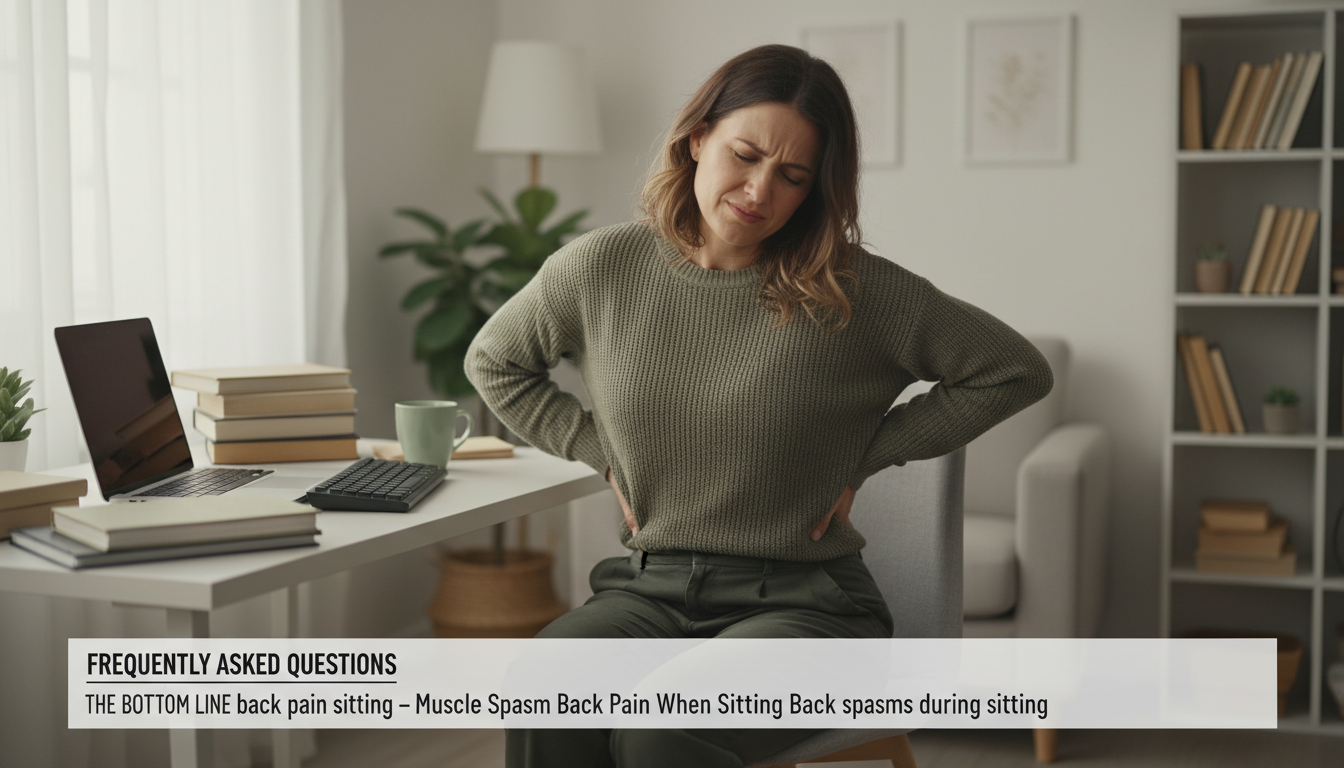
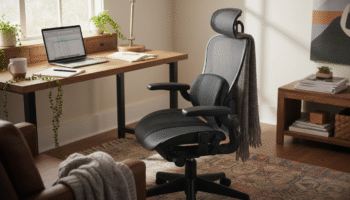
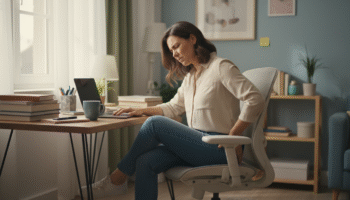
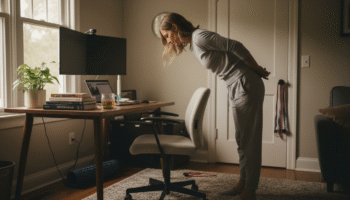
That sudden, involuntary clenching that takes your breath away. Muscle spasms in your back while sitting aren’t just painful—they’re your body’s alarm system telling you something is wrong. And if you spend your day at a desk, you’re particularly vulnerable to these painful episodes.
📋 Table of Contents

Back spasms during sitting typically result from muscle fatigue, poor positioning, or underlying spinal issues that prolonged sitting aggravates. Understanding why they happen—and what to do when they strike—can help you prevent them and manage the pain when they occur.
This guide covers the causes of sitting-related back spasms, immediate relief techniques, and long-term prevention strategies for desk workers.
Understanding Back Muscle Spasms
What Is a Muscle Spasm?
A muscle spasm is an involuntary contraction of one or more muscles. In your back:
- Muscles contract suddenly and intensely
- The contraction may be visible (twitching) or just felt
- Pain ranges from mild tightness to severe, debilitating cramps
- Duration varies from seconds to hours
- May recur repeatedly in the same area
Why Spasms Happen
Back spasms are usually a protective response:
- Muscle fatigue: Overworked muscles contract involuntarily
- Injury protection: Spasms splint the spine to prevent further damage
- Dehydration: Electrolyte imbalances trigger contractions
- Poor positioning: Muscles strain to compensate for bad posture
- Underlying conditions: Disc problems, arthritis, or nerve irritation
Spasm vs. Strain
| Characteristic | Muscle Spasm | Muscle Strain |
|---|---|---|
| Onset | Sudden, involuntary | Gradual or sudden (with injury) |
| Sensation | Cramping, clenching | Aching, soreness |
| Duration | Seconds to minutes (may recur) | Days to weeks |
| Muscle Feel | Hard, knotted during episode | Tender, may be swollen |
When Spasms Signal Something Serious
Seek medical attention if spasms occur with: numbness or weakness in legs, bladder or bowel changes, fever, unexplained weight loss, or pain that doesn’t improve with rest. These may indicate nerve compression or other conditions requiring medical evaluation.
Why Sitting Triggers Back Spasms
The Sitting-Spasm Connection
Prolonged sitting creates perfect conditions for spasms:
- Muscle fatigue: Static positioning exhausts postural muscles
- Reduced blood flow: Sitting compresses blood vessels, reducing oxygen to muscles
- Sustained tension: Muscles stay partially contracted for hours
- Poor posture accumulation: Slouching strains muscles progressively
- Movement deprivation: Lack of movement prevents muscle recovery
Common Sitting Triggers
- Sitting for more than 60 minutes without moving
- Slouching or hunching forward
- Sitting without lumbar support
- Twisting while seated (reaching for things)
- Sitting on soft, unsupportive surfaces
- Cold environments (muscles contract more easily)
The Fatigue-Spasm Cycle
- Prolonged sitting fatigues postural muscles
- Fatigued muscles work harder to maintain position
- Overworked muscles develop trigger points
- Trigger points become hypersensitive
- Minor movement triggers full spasm
- Spasm causes more fatigue when it releases
- Cycle repeats
Immediate Relief for Back Spasms at Work
Step 1: Stop and Breathe
When a spasm hits:
- Stop all movement immediately
- Take slow, deep breaths
- Don’t fight the spasm—resisting increases pain
- Let your body find a position of relative comfort
- Focus on relaxing muscles around the spasm
Step 2: Change Position Carefully
Once the acute spasm eases:
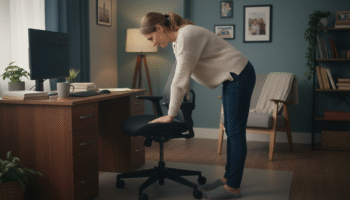
- Stand slowly if sitting, or sit if standing
- Move as a unit—don’t twist
- Find a position that reduces tension on the affected area
- For lower back spasms: lying down with knees bent often helps
Step 3: Apply Heat or Cold
Heat (generally better for spasms):
- Relaxes contracted muscles
- Increases blood flow for healing
- Use heating pad, warm compress, or heat wrap
- Apply for 15-20 minutes
Cold (if inflammation present):
- Reduces swelling and numbs pain
- Better for acute injury or inflammation
- Use ice pack wrapped in cloth
- Apply for 15-20 minutes
Step 4: Gentle Movement
Once acute pain subsides:
- Gentle walking is often the best medicine
- Avoid positions that triggered the spasm
- Move slowly and within pain-free range
- Don’t force stretches during acute spasm
Prevent Spasms Before They Start
Our ergonomic lumbar pillow reduces muscle fatigue by supporting proper posture—helping prevent the conditions that lead to painful spasms.
Ergonomic Design | 30-Day Trial | 2-Year Warranty
Preventing Sitting-Related Back Spasms
Posture Optimization
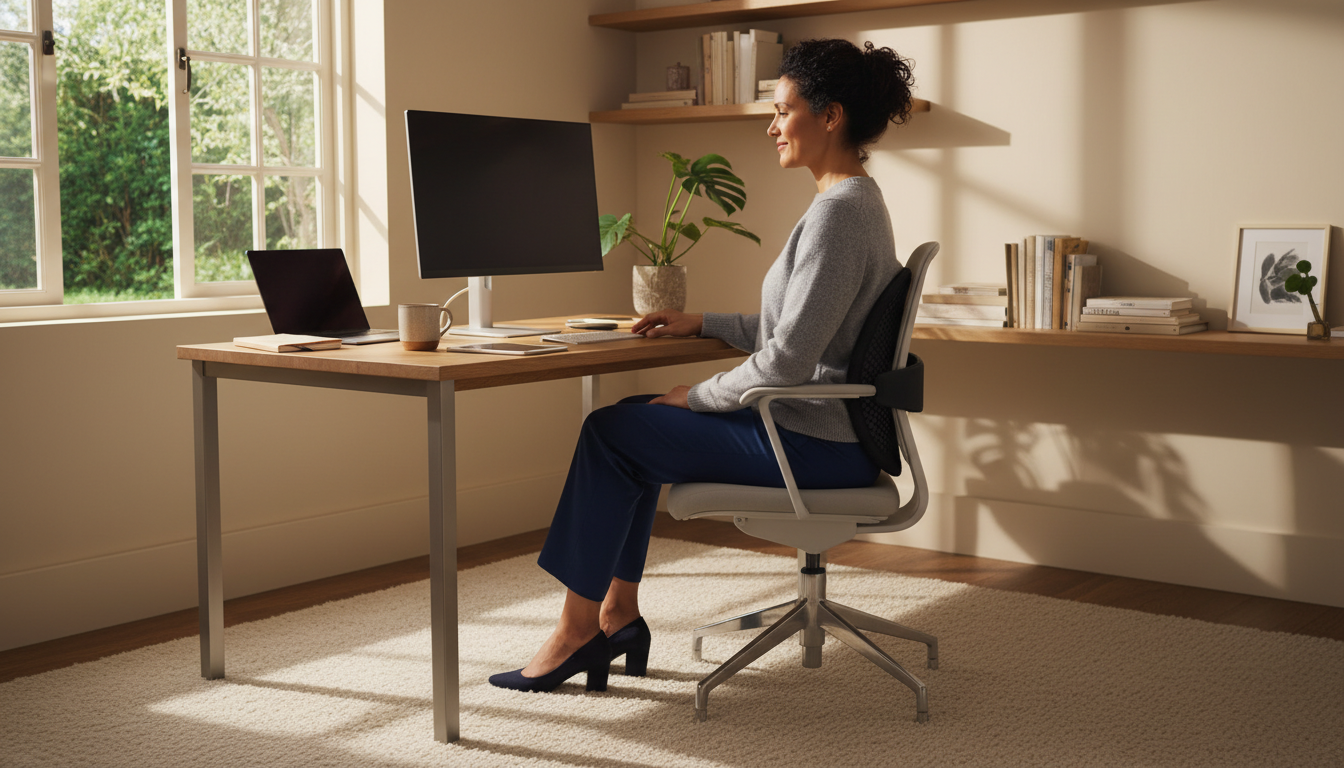
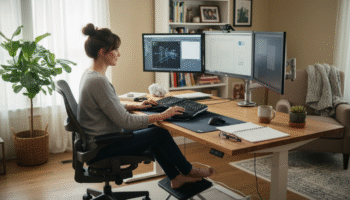
- Use lumbar support: Reduces muscle effort to maintain posture
- Sit back in chair: Use the backrest, don’t perch forward
- Feet flat on floor: Supports proper pelvic position
- Elbows at 90 degrees: Reduces upper back tension
- Monitor at eye level: Prevents forward head posture
Movement Integration
- Stand every 30-45 minutes
- Walk briefly at least once per hour
- Do micro-movements while seated (weight shifts, shoulder rolls)
- Use a sit-stand desk if possible
- Take calls while standing or walking
Hydration and Nutrition
Proper hydration prevents muscle cramps:
- Water: 8-10 glasses daily minimum
- Electrolytes: Sodium, potassium, magnesium balance
- Potassium sources: Bananas, potatoes, leafy greens
- Magnesium sources: Nuts, seeds, whole grains
Workplace Ergonomics
- Adjust chair height so thighs are parallel to floor
- Position keyboard so shoulders can relax
- Keep frequently used items within easy reach
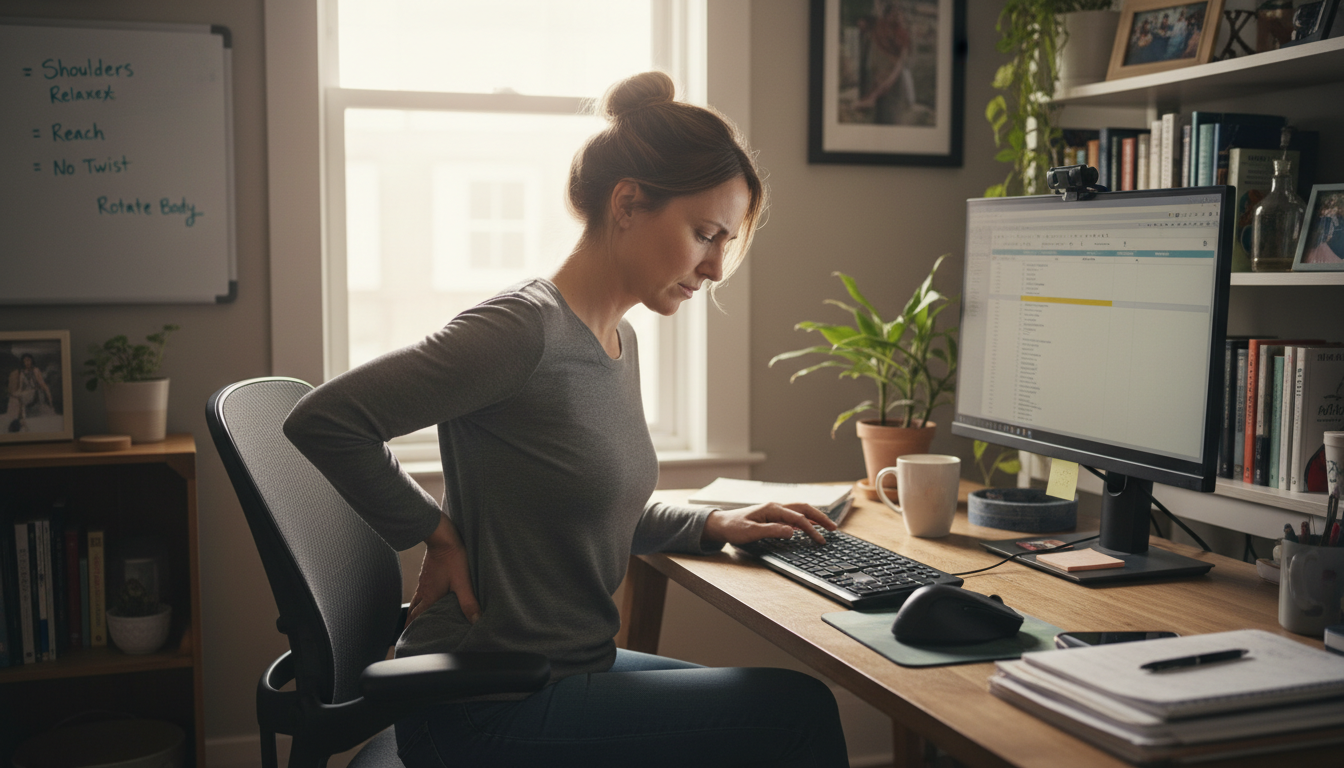
- Avoid twisting—rotate your whole body instead

Exercises to Prevent Back Spasms
Stretches for Spasm-Prone Muscles
Cat-Cow Stretch:
- Get on hands and knees
- Arch back up (cat), then let it sag down (cow)
- Move slowly and smoothly
- 10 repetitions, twice daily
Knee-to-Chest Stretch:
- Lie on back
- Pull one knee toward chest
- Hold 20-30 seconds
- Repeat other side
- Then both knees together
Seated Spinal Twist (Gentle):
- Sit with feet flat
- Rotate torso slowly to one side
- Use chair arm for gentle assistance
- Hold 15-20 seconds each side
Strengthening for Stability
- Core exercises: Bird-dogs, dead bugs, planks (build gradually)
- Back extensions: Gentle Superman exercises
- Hip strengthening: Bridges, clamshells
- Walking: Best overall exercise for back health
Exercise Timing
- Morning: Gentle stretches to warm up stiff muscles
- During work: Brief micro-stretches hourly
- After work: Longer stretching routine
- Not during: Active spasm—wait until it resolves
When to Seek Medical Help
Red Flags Requiring Immediate Attention
- Spasms with leg numbness or weakness
- Loss of bladder or bowel control
- Spasms after significant trauma
- Fever with back spasms
- Severe pain unrelieved by position changes
When to See a Doctor
- Frequent recurring spasms (weekly or more)
- Spasms affecting sleep or daily activities
- Spasms worsening over time
- Associated symptoms like radiating pain
- Spasms not responding to self-care
Treatment Options
Medical treatments may include:
- Muscle relaxants: Short-term prescription medication
- Physical therapy: Targeted exercises and manual therapy
- Trigger point injections: For persistent knots
- Massage therapy: Professional muscle work
- Underlying condition treatment: Address root causes
Frequently Asked Questions
Why do I get back spasms when sitting but not standing?
Sitting places different demands on your muscles than standing. Prolonged sitting fatigues specific muscle groups, reduces blood flow, and can compress nerves—all of which increase spasm risk. Additionally, sitting often involves poor posture that strains muscles unevenly, while standing allows for more natural movement and better circulation.
Should I stretch during a back spasm?
Not aggressively. During an active spasm, forcing stretches can increase pain and potentially cause injury. Instead, focus on gentle breathing and finding a comfortable position. Once the acute spasm releases (usually minutes to hours), gentle stretching can help prevent recurrence. If unsure, wait until the muscle relaxes before stretching.
Is heat or ice better for back spasms?
Heat is generally better for muscle spasms because it relaxes contracted muscles and increases blood flow. However, if there’s acute inflammation (from injury), ice may be better initially. Many people alternate between heat and cold. If unsure, try heat first—if it makes things worse, switch to cold.
Can dehydration cause back spasms while sitting?
Yes. Dehydration and electrolyte imbalances make muscles more prone to cramping and spasms. When you’re sitting and focused on work, it’s easy to forget to drink water. This, combined with the muscle fatigue from prolonged sitting, can trigger spasms. Stay hydrated throughout the day to reduce risk.
How long should I wait before returning to work after a back spasm?
Most minor spasms resolve within minutes to hours, and you can return to work once the acute pain subsides—with modifications. Use lumbar support, take more frequent breaks, and avoid the position or activity that triggered the spasm. If spasms are severe or recurring, consult a healthcare provider before resuming normal activities.
The Bottom Line
Back spasms while sitting are your body’s signal that something needs to change:
- Address immediately: Stop, breathe, find a comfortable position
- Apply heat: Relaxes contracted muscles
- Prevent with posture: Proper support reduces muscle fatigue
- Move regularly: Break up sitting to prevent muscle exhaustion
- Stay hydrated: Proper fluid and electrolyte balance prevents cramping
With proper prevention strategies, sitting-related back spasms can become rare rather than routine.
Support That Prevents Spasms
Our ergonomic lumbar pillow reduces muscle fatigue by maintaining proper spinal alignment—keeping your back muscles relaxed and spasm-free.
30-Day Money-Back Guarantee | 2-Year Warranty | Free Shipping