You've made it through back surgery. Now comes the recovery—and one of your biggest questions is probably: when can I sit again, and how do I do it...
You’ve made it through back surgery. Now comes the recovery—and one of your biggest questions is probably: when can I sit again, and how do I do it safely?
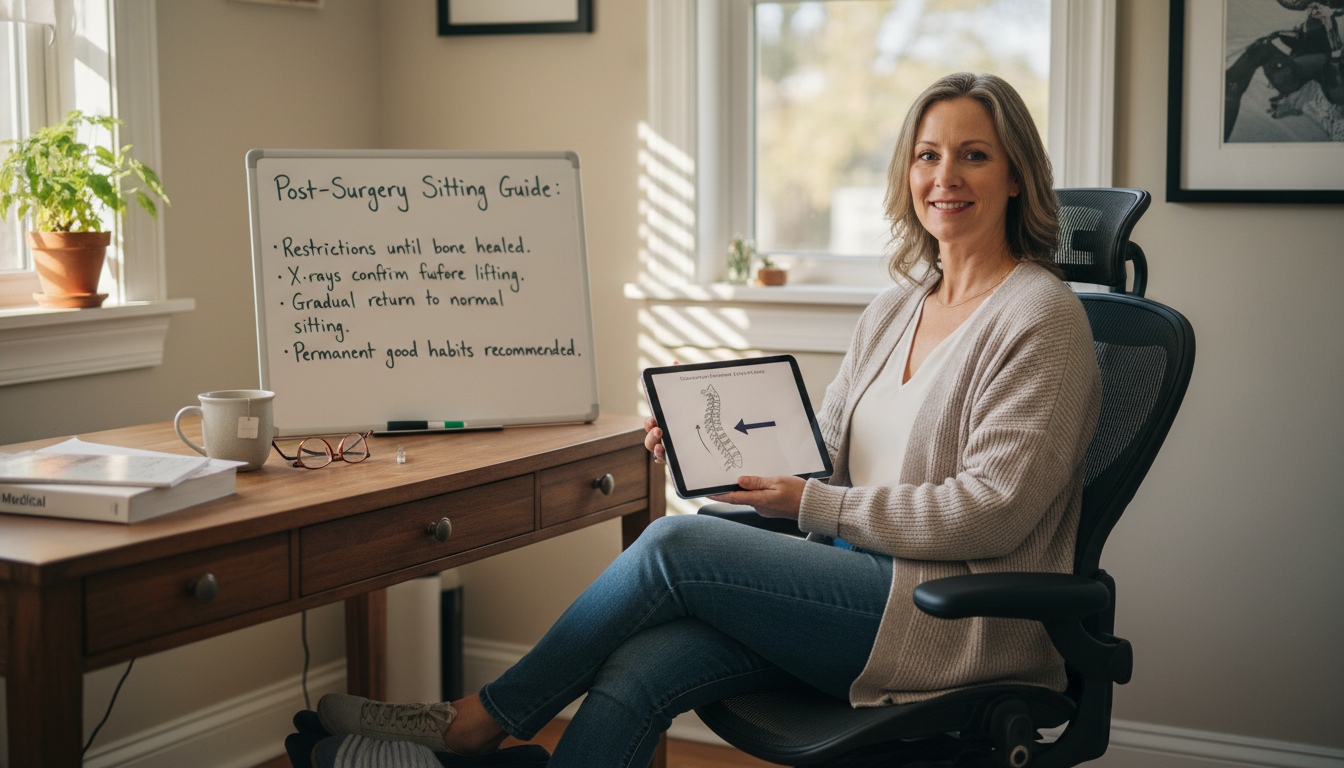
sitting after back surgery – Post-Surgery Sitting Guide
Sitting restrictions after back surgery exist for good reason. Your spine needs time to heal, whether that means bone fusion, soft tissue repair, or simply recovering from surgical trauma. But sitting isn’t forbidden forever—it just needs to be done correctly and reintroduced gradually.
This guide covers sitting guidelines for different surgery types, proper technique during recovery, and how to return to normal sitting as your spine heals.
Understanding Post-Surgery Sitting Restrictions
Why Restrictions Exist
Sitting after back surgery is restricted because:
Increased disc pressure: Sitting raises intradiscal pressure by 40-90%
Fusion stress: Sitting can stress fusion hardware before bone heals
Soft tissue healing: Surgical sites need time without repetitive stress
Swelling management: Prolonged sitting can increase surgical site swelling
Restriction Timelines by Surgery Type
Surgery Type
Initial Limit
Progression
Microdiscectomy
15-20 min sessions
Increase 2-4 weeks
Laminectomy
20-30 min sessions
Increase 2-4 weeks
Single-Level Fusion
15-30 min sessions
Increase 6-12 weeks
Multi-Level Fusion
15-30 min sessions
Increase 8-16 weeks
Disc Replacement
15-30 min sessions
Increase 4-8 weeks
Note: These are general guidelines. Always follow YOUR surgeon’s specific instructions.
Critical Rule
Your surgeon’s instructions override any general guidance. Surgery specifics, your healing progress, and individual factors affect what’s safe for YOU. If in doubt, call your surgical team before changing your routine.
Proper Sitting Technique After Surgery
The Log Roll Technique (Getting Out of Bed)
Before you can sit, you need to get up safely:
Roll onto your side as a unit (don’t twist)
Let legs drop off bed edge
Push up with arms while keeping spine neutral
Rise to sitting without twisting or bending spine
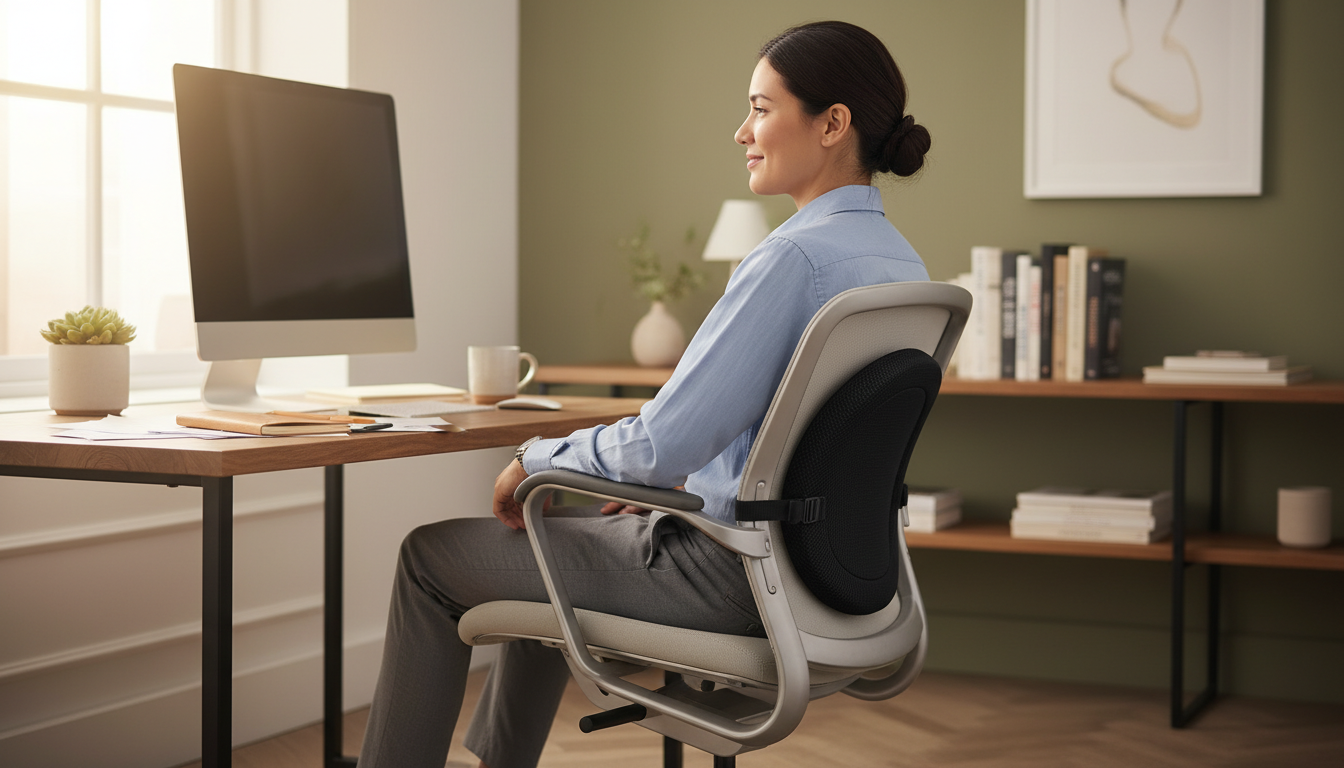
Proper Sitting Position
Sit on firm surface: No soft couches or low chairs
Use lumbar support: Essential for maintaining proper curve
Feet flat on floor: Support proper pelvic position
Hips at or above knees: Reduces lumbar flexion
Arms supported: Reduces spine loading when standing
Sit-to-Stand Technique
Scoot to edge of chair
Place one foot slightly behind the other
Use armrests to push up
Keep spine neutral (no twisting or bending)
Rise smoothly using leg strength
Stand completely before walking
Movements to Avoid
Twisting while seated
Bending forward to reach (have items brought to you)
Leaning to one side
Crossing legs
Sitting on soft, low surfaces
Essential Support During Recovery
Our firm memory foam lumbar pillow provides the consistent support your healing spine needs—without the softness that can compromise positioning.
This varies by surgery type. After discectomy or laminectomy, most people can sit relatively normally within 4-8 weeks. After spinal fusion, sitting restrictions may continue for 3-6 months until bone heals. “Normal” sitting should still include good posture and lumbar support—lessons learned during recovery become permanent good habits.
Can I sit on the couch after back surgery?
Soft couches are generally not recommended during recovery. They don’t support proper spinal alignment and make sit-to-stand transitions difficult. If you must use a couch, add firm cushioning and lumbar support. Most surgeons recommend firm, higher seating with armrests during recovery.
How do I sit in a car after back surgery?
Recline the seat slightly, use firm lumbar support, and limit driving time according to surgeon’s guidelines (often no driving for 2-6 weeks). Enter the car by sitting first, then swinging legs in as a unit. Use a plastic bag on the seat to make pivoting easier. Take breaks on longer trips.
Why does sitting hurt after back surgery?
Sitting increases pressure on spinal structures, which can stress healing tissue. Swelling, muscle guarding, and surgical site sensitivity contribute to sitting discomfort. Pain typically decreases as healing progresses. If sitting pain increases rather than improves over time, contact your surgeon.
When can I return to desk work after back surgery?
Return timelines vary: discectomy patients often return in 4-6 weeks with restrictions; fusion patients may need 8-12 weeks or more. Key factors include your specific surgery, job demands, commute, and individual healing. Your surgeon will provide clearance based on your recovery progress.
The Bottom Line
Sitting after back surgery requires patience and proper technique:
Follow your surgeon’s instructions: They know your specific situation
Use proper support: Lumbar pillow in every chair
Progress gradually: Increase duration slowly
Master transitions: Safe sit-to-stand technique protects your spine
Build permanent habits: Recovery positioning becomes lifelong practice
Your surgery was an investment in your spine health. Proper recovery sitting protects that investment and sets you up for long-term success.
Support Your Surgical Recovery
Our orthopedic lumbar pillow provides the firm, consistent support your healing spine needs—at home, at work, and everywhere in between.