
Gluteal Amnesia and Back Pain
Your glutes have forgotten how to work. It sounds strange,

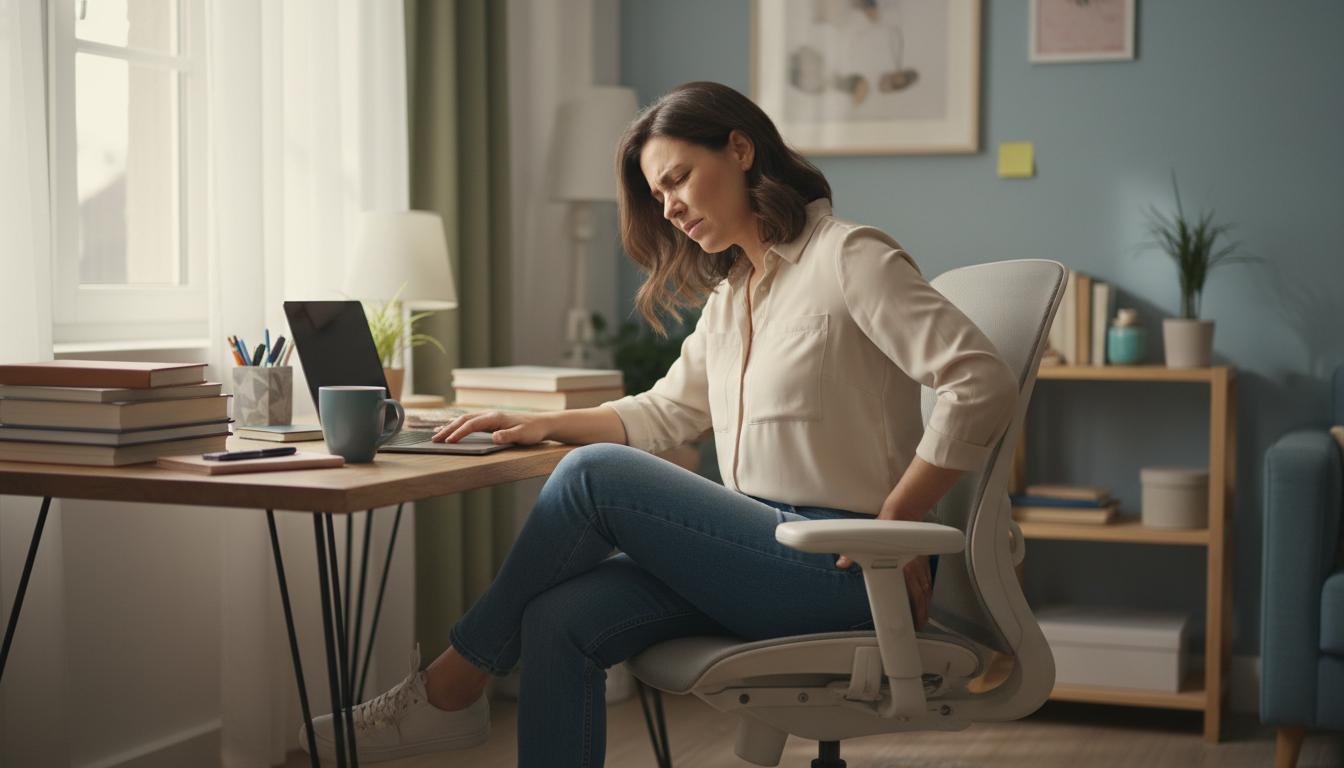
That deep ache in your buttock that won’t quit? The one that shoots down your leg when you’ve been sitting too long? It might not be sciatica—it could be piriformis syndrome, a surprisingly common condition that affects desk workers, drivers, and anyone who spends hours in a chair.
📋 Table of Contents
Piriformis syndrome is often misdiagnosed as sciatica because the symptoms overlap. But the cause—and therefore the solution—is different. Understanding why sitting aggravates your piriformis is the first step to finally getting relief.
This guide explains exactly what’s happening in your body, why sitting makes it worse, and what positions and modifications can help you survive your workday without that burning pain.
The piriformis is a small, flat muscle deep in your buttock. It runs from your sacrum (the triangular bone at the base of your spine) to your femur (thigh bone). Its job is to help rotate your hip outward.
Here’s the problem: the sciatic nerve—the largest nerve in your body—runs either under, through, or over the piriformis muscle in most people. When the piriformis gets tight, inflamed, or spasms, it can compress or irritate this nerve.
| Characteristic | Piriformis Syndrome | True Sciatica |
|---|---|---|
| Source | Piriformis muscle irritation | Spinal disc or bone issue |
| Location | Deep in buttock | Lower back radiating down |
| Sitting impact | Direct pressure worsens pain | Flexion (slouching) worsens pain |
| MRI findings | Usually normal spine | Disc bulge/herniation visible |
| Treatment focus | Muscle release, stretching | Spinal decompression |
Sit on a firm surface. Cross your affected leg over the other knee (figure-4 position). Gently press down on the crossed knee. If this recreates your deep buttock pain, piriformis syndrome is likely. True sciatica typically won’t respond to this test.
When you sit, you’re literally sitting on your piriformis muscle. Your body weight compresses the muscle against the hard seat surface, particularly if you sit on firm chairs or lean to one side.
Sitting with hips flexed puts the piriformis in a shortened position. Over hours, the muscle can develop trigger points and tighten further, increasing its grip on the sciatic nerve.
Compression reduces blood flow to the muscle, impairing healing and allowing inflammation to persist. You sit, the muscle tightens, blood flow decreases, inflammation continues—a vicious cycle.
Sitting on a wallet (or phone, or anything in your back pocket) creates uneven pressure that directly irritates the piriformis. This is such a common cause that some doctors call it “wallet sciatica.”
The most important principle: distribute weight evenly across both sit bones. Leaning to one side dramatically increases pressure on that piriformis.
A small outward rotation of your thighs can reduce tension on the piriformis:
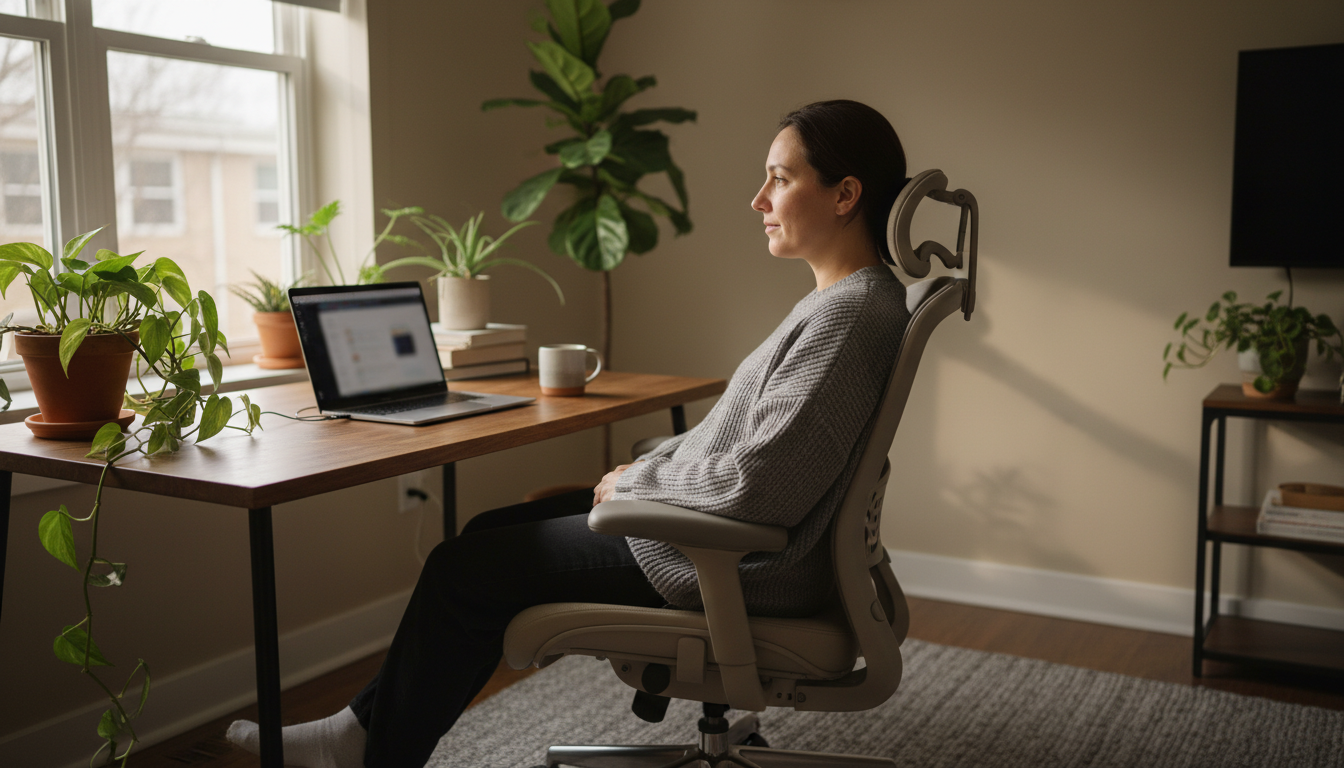
Proper lumbar support keeps your pelvis in a neutral position, which reduces piriformis strain:
Proper Spinal Alignment Reduces Piriformis Strain
Our ergonomic lumbar pillow keeps your pelvis neutral—reducing the position-related stress that aggravates piriformis syndrome.
Memory Foam Comfort | 30-Day Trial | 2-Year Warranty
Standard seat cushions can actually make piriformis syndrome worse by adding pressure. Instead, consider:
Sitting too low increases hip flexion and piriformis tension. Adjust your chair so:
Movement is crucial with piriformis syndrome. The muscle needs regular release from compression:
Heat relaxes the piriformis muscle and improves blood flow:
Self-myofascial release can break up trigger points:
Weak glutes force the piriformis to overwork. Key exercises:
Most piriformis syndrome improves with stretching, positioning, and time. But see a healthcare provider if:
Treatment options include physical therapy, dry needling, cortisone injections, and rarely, surgical release.
Prolonged sitting worsens piriformis syndrome by compressing the muscle and keeping it in a shortened position. However, with proper positioning (even weight distribution, neutral pelvis, frequent breaks), sitting can be tolerable. Standing and movement are generally better during flare-ups.
Sit with weight evenly distributed on both sit bones, feet flat on the floor, hips level with or above knees, and lumbar support to maintain neutral pelvis. Avoid crossing legs, sitting on wallets, or leaning to one side.
With appropriate treatment (stretching, positioning, strengthening), most cases improve significantly within 2-6 weeks. Chronic cases may take several months. Without treatment, piriformis syndrome can persist indefinitely.
Rarely. Even long-standing cases usually respond to consistent stretching and lifestyle modifications. However, delayed treatment can make recovery slower and more difficult.
A coccyx cushion with a U-shaped cutout can help by reducing direct pressure on the piriformis area. Standard donut cushions may not provide enough relief. The cutout should extend far enough back to unload the piriformis.
Piriformis syndrome doesn’t have to end your desk job or make driving unbearable. The keys to managing it while sitting:
Most people see significant improvement within 2-4 weeks of consistent effort. Don’t let this condition become chronic—address it now with proper positioning and stretching.
Support Your Spine, Reduce Piriformis Strain
Proper lumbar support keeps your pelvis in neutral alignment—reducing the postural stress that aggravates piriformis syndrome.
30-Day Money-Back Guarantee | 2-Year Warranty | Free Shipping
Your glutes have forgotten how to work. It sounds strange,
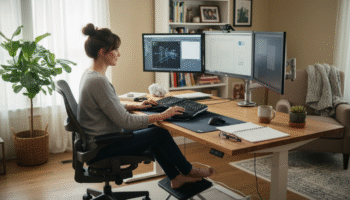
Your hip flexors are the hidden culprits of desk-job back
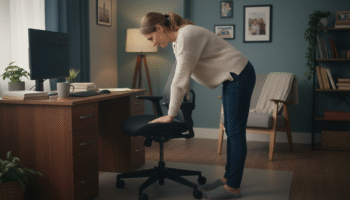
Your back is stiff, tight, and angry. And you’ve got

That nagging pain at the base of your spine—right where
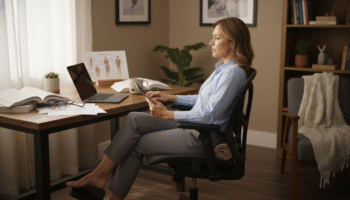
Sitting with a herniated disc can feel like torture. Every
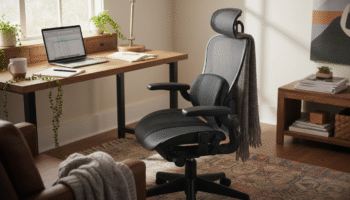
Your desk chair is failing you. Even if you paid

You’ve blamed your chair for years. And you’re probably right—but
Your back is aching right now, isn’t it? That dull
Is your lower back screaming at you by 3 PM?
Most lumbar pillows end up in closets within weeks. Not