
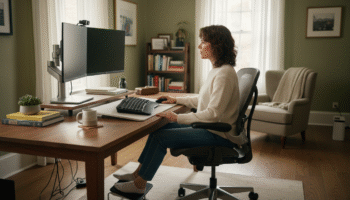
Gluteal Amnesia and Back Pain
Your glutes have forgotten how to work. It sounds strange,

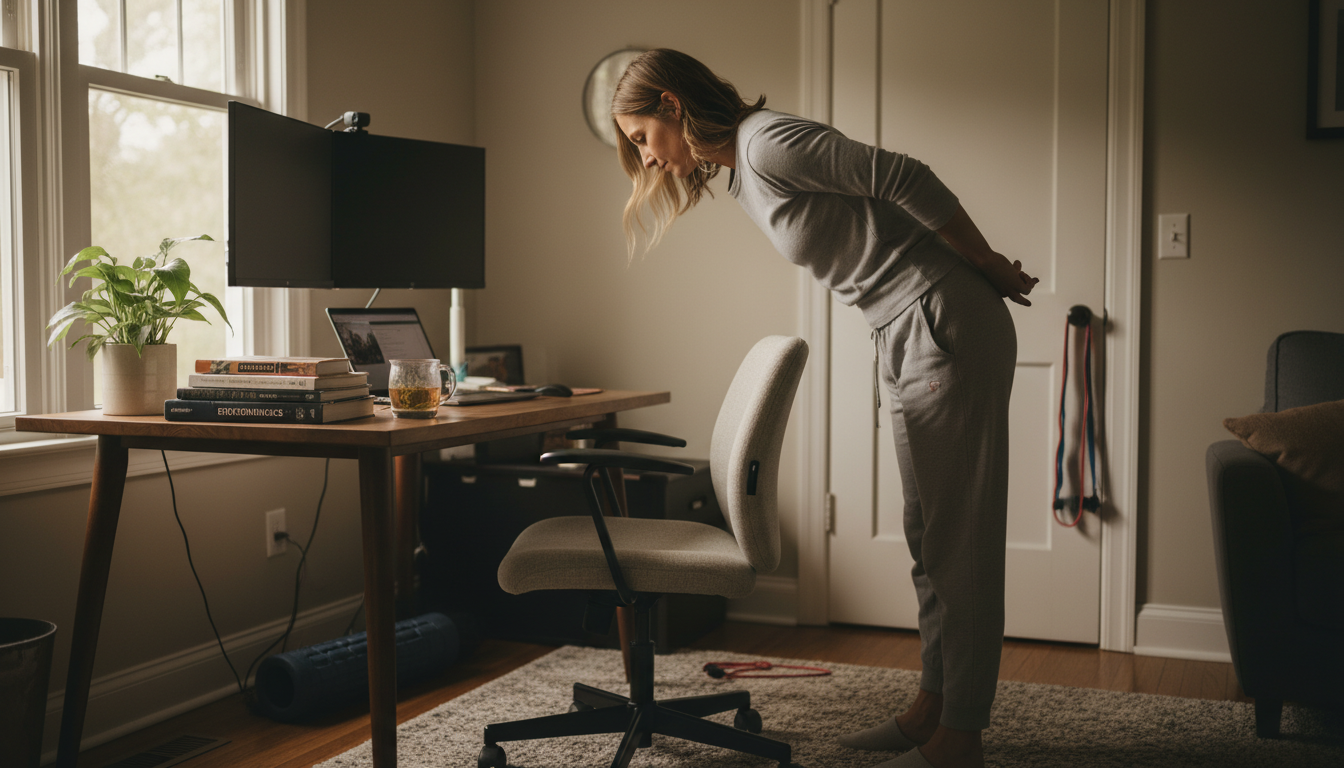
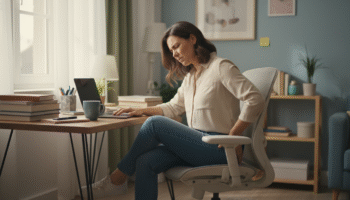
Your back is aching right now, isn’t it? That dull throb between your hips and ribs that gets worse as the day goes on. By 5 PM, standing up feels like a major achievement.
📋 Table of Contents
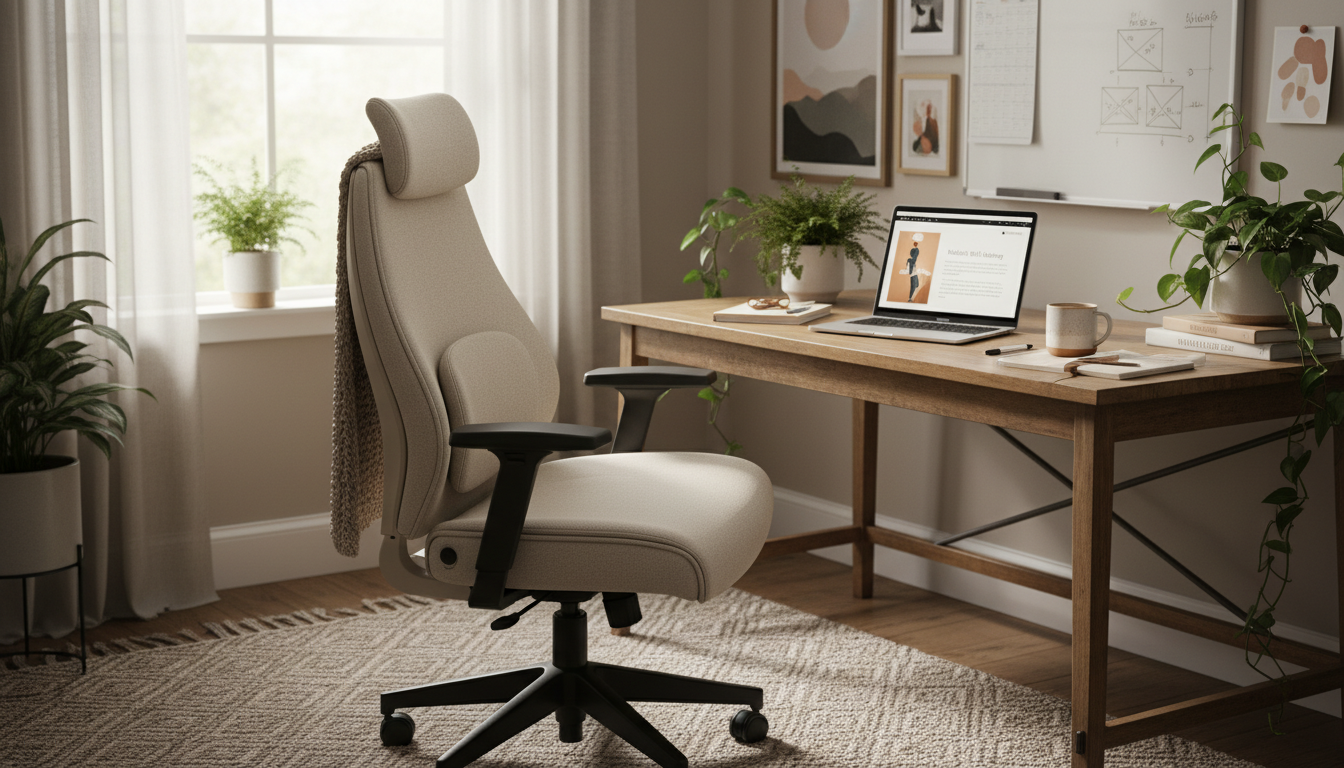
You’re experiencing what millions of desk workers face daily: sitting-induced back pain. The good news? Most of this pain is fixable—often faster than you’d think. The bad news? Ignoring it only makes things worse.
This guide covers everything from instant relief techniques you can do right now to long-term solutions that prevent pain from returning. Let’s get your back feeling human again.
Understanding the cause helps you fix the problem more effectively.
Sitting-related back pain rarely appears overnight. It builds through a predictable cascade:
The longer you sit poorly, the longer recovery takes. That’s why early intervention matters.
If you’re in pain right now, start here. These techniques provide relief within minutes.
This counteracts hours of flexion and is the single most effective immediate intervention.
Why it works: Prolonged sitting flexes your spine forward. Extension reverses this, rehydrates discs, and relieves compressed structures.
Why it works: Restores movement to “stuck” spinal segments and activates dormant muscles.
Why it works: Mobilizes the entire spine, improves circulation, and reduces stiffness.
Sometimes the best relief is the simplest: walk for 2-5 minutes. Walking:
When pain flares up, do this sequence:
Immediate relief is good, but you need solutions that prevent pain from returning every day.
Your chair’s built-in lumbar support (if it has any) probably isn’t enough. External lumbar support:
Studies show proper lumbar support reduces lower back muscle activity by 20-50%, letting your spine relax into good alignment instead of fighting for it.
Most people sit too low, which flexes the hips and rounds the lower back.
Correct height: Your hips should be level with or slightly above your knees when feet are flat on the floor.
Can’t adjust high enough? Add a seat cushion or consider a different chair.
Poor monitor placement causes forward head posture, which cascades down to your lower back.
If your desk doesn’t allow proper chair height, a footrest can help by:
Stop the Pain Cycle Today
Our orthopedic lumbar pillow provides the support your chair doesn’t—so you can sit without suffering.
AirFlex™ Memory Foam | 30-Day Trial | 2-Year Warranty
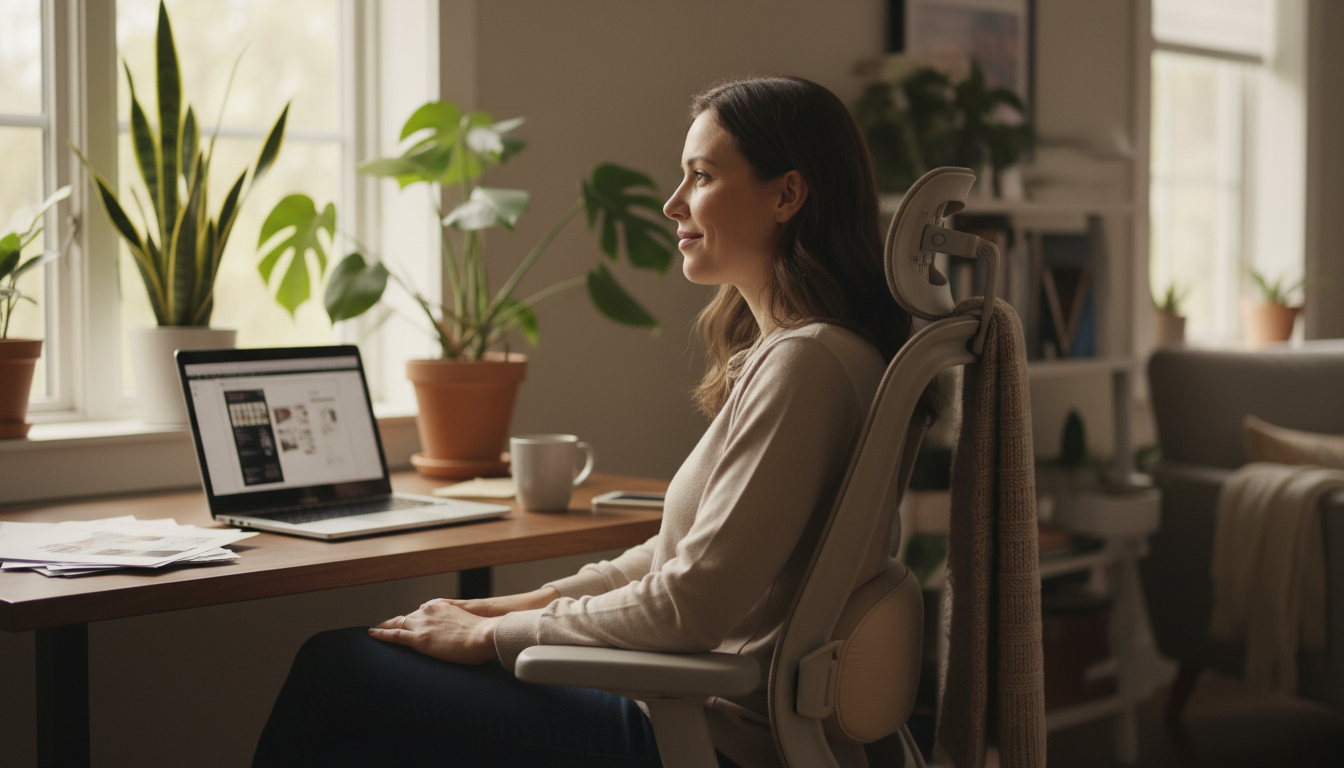
Equipment helps immediately. These habits prevent pain from returning.
Your body isn’t designed for stillness. Build movement into your day:
Tools that help: Phone timers, apps like Stand Up!, or smartwatch reminders.
Strong muscles provide natural spinal support that reduces reliance on external aids.
Key exercises for sitting-related pain:
Start with 2-3 sessions per week, 10-15 minutes each. Consistency beats intensity.
Sitting tightens specific muscle groups that pull your spine out of alignment:
Most sitting-related back pain improves with the strategies above. But some symptoms need professional evaluation:
Immediate relief techniques work within minutes. Equipment changes (like adding lumbar support) often provide noticeable improvement within days. Long-term resolution of chronic sitting pain typically takes 4-12 weeks of consistent better habits.
Neither extreme is ideal. Sitting with proper lumbar support is better than standing still for hours. But alternating between sitting and standing throughout the day is best. The enemy isn’t sitting—it’s static positioning without support or movement.
Cumulative stress. Muscles fatigue, posture degrades, disc pressure builds, and inflammation develops over hours. This is why prevention (lumbar support, movement breaks) is more effective than just treating end-of-day pain.
Years of poor sitting can contribute to disc degeneration and chronic changes, but most sitting-related problems are reversible with better habits. The sooner you address them, the faster and more complete your recovery.
For muscle tension and stiffness (most common with sitting): heat works better. It relaxes muscles, improves blood flow, and feels more comfortable. Use ice if you notice swelling or if pain is sharp/acute (first 48-72 hours of a new injury).
They help but rarely eliminate pain completely. Even high-end chairs benefit from external lumbar support because built-in adjustments are limited. The most important factors are proper positioning and regular movement—not chair price.
Relieving back pain from sitting requires a three-pronged approach:
Most people see significant improvement within 1-2 weeks of consistent effort—and permanent relief within 1-3 months. The key is starting today, not waiting until pain becomes unbearable.
Your Back Doesn’t Have to Hurt Every Day
Join thousands who’ve found relief with proper lumbar support. Our AirFlex™ memory foam pillow maintains your spine’s natural curve—so sitting feels good again.
30-Day Money-Back Guarantee | 2-Year Warranty | Free Shipping
Your glutes have forgotten how to work. It sounds strange,
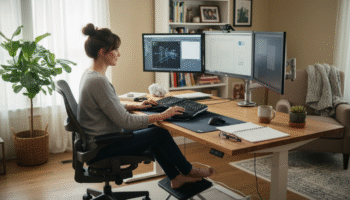
Your hip flexors are the hidden culprits of desk-job back
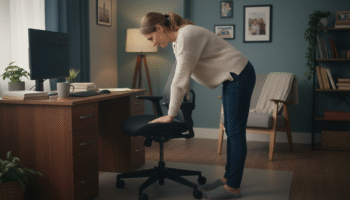
Your back is stiff, tight, and angry. And you’ve got

That nagging pain at the base of your spine—right where
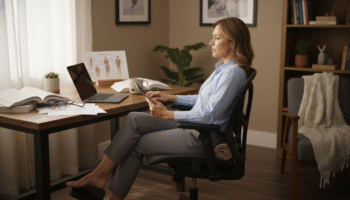
Sitting with a herniated disc can feel like torture. Every
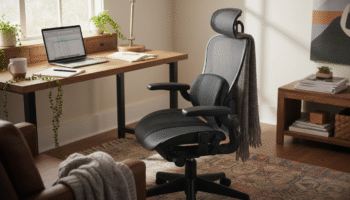
Your desk chair is failing you. Even if you paid
That deep ache in your buttock that won’t quit? The

You’ve blamed your chair for years. And you’re probably right—but
Is your lower back screaming at you by 3 PM?
Most lumbar pillows end up in closets within weeks. Not