
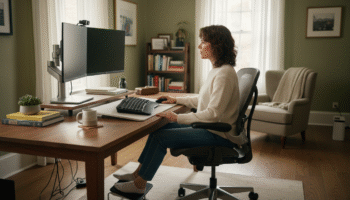
Gluteal Amnesia and Back Pain
Your glutes have forgotten how to work. It sounds strange,


Your glutes have forgotten how to work. It’s called “dead butt syndrome”—and if you sit for hours every day, you probably have it.
📋 Table of Contents
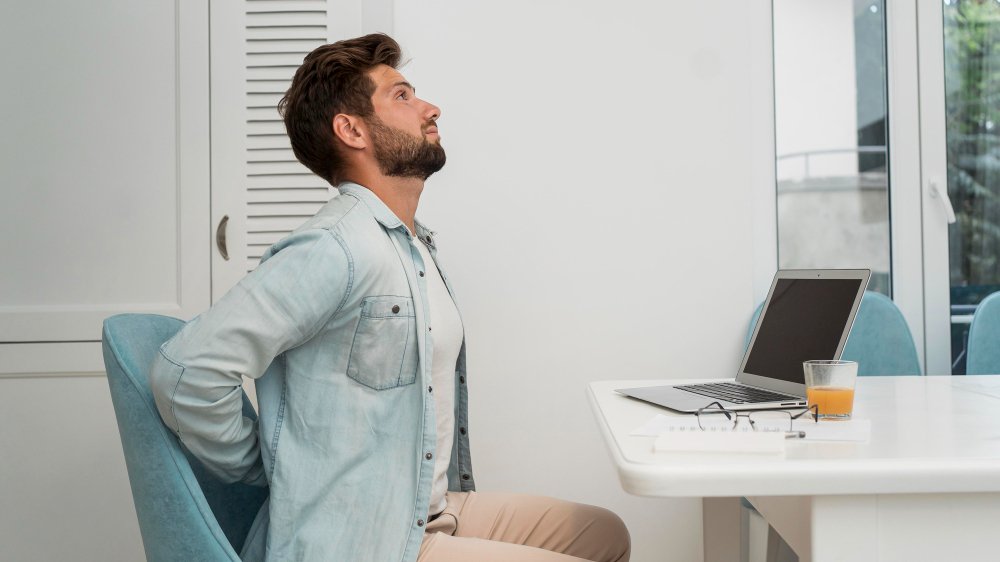
Also known as gluteal amnesia, this condition affects millions of desk workers, drivers, and anyone who spends their days seated. The result? Back pain, hip pain, knee problems, and a cascade of issues that extend far beyond your backside.
This guide explains what’s happening, how to know if you have it, and exactly how to wake up your glutes—plus why fixing your sitting posture is the critical first step most people miss.
Dead butt syndrome (clinically called gluteal amnesia or gluteal inhibition) occurs when your gluteal muscles essentially “forget” how to activate properly. It’s not that your glutes are weak—they’ve literally lost the neural connection that tells them when to fire.
When you sit, your hip flexors (front of hip) shorten and tighten. Through a process called reciprocal inhibition, tight hip flexors signal your glutes to relax. Sit for 8+ hours a day, and this becomes your body’s default state:
Over weeks and months, your nervous system adapts. Your glutes stop receiving proper activation signals. Even when you try to use them—walking, climbing stairs, exercising—they don’t fire correctly.
Your glutes are the largest, most powerful muscle group in your body. They’re designed to:
When your glutes don’t fire properly, other muscles compensate—and break down. This is why dead butt syndrome causes pain throughout your body, not just in your backside.
Most people with gluteal amnesia don’t realize they have it. The symptoms often show up in other areas:
Stand up and try to squeeze your glutes as hard as possible.
Lie on your back, knees bent. Lift one foot off the ground. Push through your planted foot to lift your hips.
Stand on one leg for 30 seconds.
If you failed any of these tests, you likely have some degree of gluteal amnesia.
The number one cause is simple: too much sitting. When you sit:
The sitting posture connection: How you sit directly affects glute inhibition. Slouched sitting with a flattened lower back (posterior pelvic tilt) maximally stretches and inhibits glutes. Proper lumbar support maintains pelvic position and reduces the degree of glute shutdown—even during long sitting periods.

Fixing gluteal amnesia requires a three-part approach: reduce the cause, reactivate the muscles, and reinforce the pattern.
You can do all the glute exercises in the world, but if you’re still sitting 8+ hours with poor posture, you’re fighting a losing battle.
Sitting modifications:
Critical foundation: The LumbarPillow Orthopedic positions your pelvis correctly while sitting, preventing the posterior tilt that causes maximum glute inhibition. This isn’t just about comfort—it’s about stopping the neurological shutdown that creates dead butt syndrome in the first place.
Before strengthening, you need to re-establish the brain-muscle connection. These activation exercises teach your nervous system to fire your glutes again.
Glute Activation Sequence (Do Daily):
1. Glute Squeezes (2 minutes)
2. Glute Bridges (2 sets of 15)
3. Clamshells (2 sets of 15 each side)
4. Bird Dogs (2 sets of 10 each side)
Once you can feel your glutes working, progress to strengthening exercises:
Hip Thrusts: The king of glute exercises. Use bodyweight first, add weight as you progress.
Romanian Deadlifts: Teaches hip hinge with glute engagement. Start with dumbbells.
Step-Ups: Single-leg work forces the working glute to activate. Use a bench or stairs.
Lunges: Focus on driving up through the front heel and squeezing the glute.
Squats: Only effective for glutes if you achieve proper depth and drive through heels.
Your hip flexors are half the problem. Stretch them daily:
Half-Kneeling Hip Flexor Stretch:
Couch Stretch:
Gluteal amnesia develops over months or years—it won’t fix overnight. Expected timeline:
Key factors affecting recovery time:
Dead butt syndrome and anterior pelvic tilt often occur together. Anterior pelvic tilt happens when:
The fix addresses the same muscle imbalances:
If you’ve fixed the problem—or want to prevent it—these habits protect your glutes:
Dead butt syndrome doesn’t cause true sciatica (nerve root compression), but it can cause symptoms that feel similar. When glutes don’t fire properly, the piriformis muscle often compensates and tightens. The sciatic nerve runs under (or through) the piriformis, and a tight piriformis can compress this nerve, causing pain that radiates down the leg. This is piriformis syndrome, often mistaken for sciatica.
The difference is activation versus strength. With weak glutes, you can feel the muscle working—it just fatigues quickly. With dead butt syndrome, you struggle to feel the glute contract at all, and other muscles (hamstrings, lower back) take over. The self-tests above help distinguish: if you can squeeze and feel your glutes strongly, they’re not “dead”—they may just need strengthening.
Not fully. However, fixing your sitting posture with proper lumbar support prevents further deterioration and creates conditions for recovery. Without exercise, you won’t rebuild the neural pathways and strength, but you can stop the damage from getting worse. The most effective approach combines both: fix the sitting, do the exercises.
Standing is better than sitting for glute activation, but a standing desk alone isn’t a complete solution. You still need to actively engage your glutes while standing (most people don’t), and you need activation exercises to rebuild the neural pathways. A standing desk helps by reducing total sitting time, but it’s one piece of the puzzle.
When glutes don’t fire, hamstrings become overworked compensating for them. This overuse creates chronic hamstring tightness that doesn’t respond well to stretching—because the tightness is protective, not structural. The fix is activating glutes so hamstrings can stop compensating. Many people stretch hamstrings for years without improvement because they never address the underlying glute dysfunction.
Stop the shutdown at the source.
Dead butt syndrome starts with how you sit. Our orthopedic lumbar pillow maintains the pelvic position that keeps your glutes from shutting down—preventing the cascade of problems that leads to back pain, hip pain, and muscle dysfunction.
30-Day Money-Back Guarantee | 2-Year Warranty | Free Shipping
Your glutes have forgotten how to work. It sounds strange,
Your hip flexors are the hidden culprits of desk-job back
Your back is stiff, tight, and angry. And you’ve got
That nagging pain at the base of your spine—right where
Sitting with a herniated disc can feel like torture. Every
Your desk chair is failing you. Even if you paid
That deep ache in your buttock that won’t quit? The

You’ve blamed your chair for years. And you’re probably right—but
Your back is aching right now, isn’t it? That dull
Is your lower back screaming at you by 3 PM?