

Gluteal Amnesia and Back Pain
Your glutes have forgotten how to work. It sounds strange,

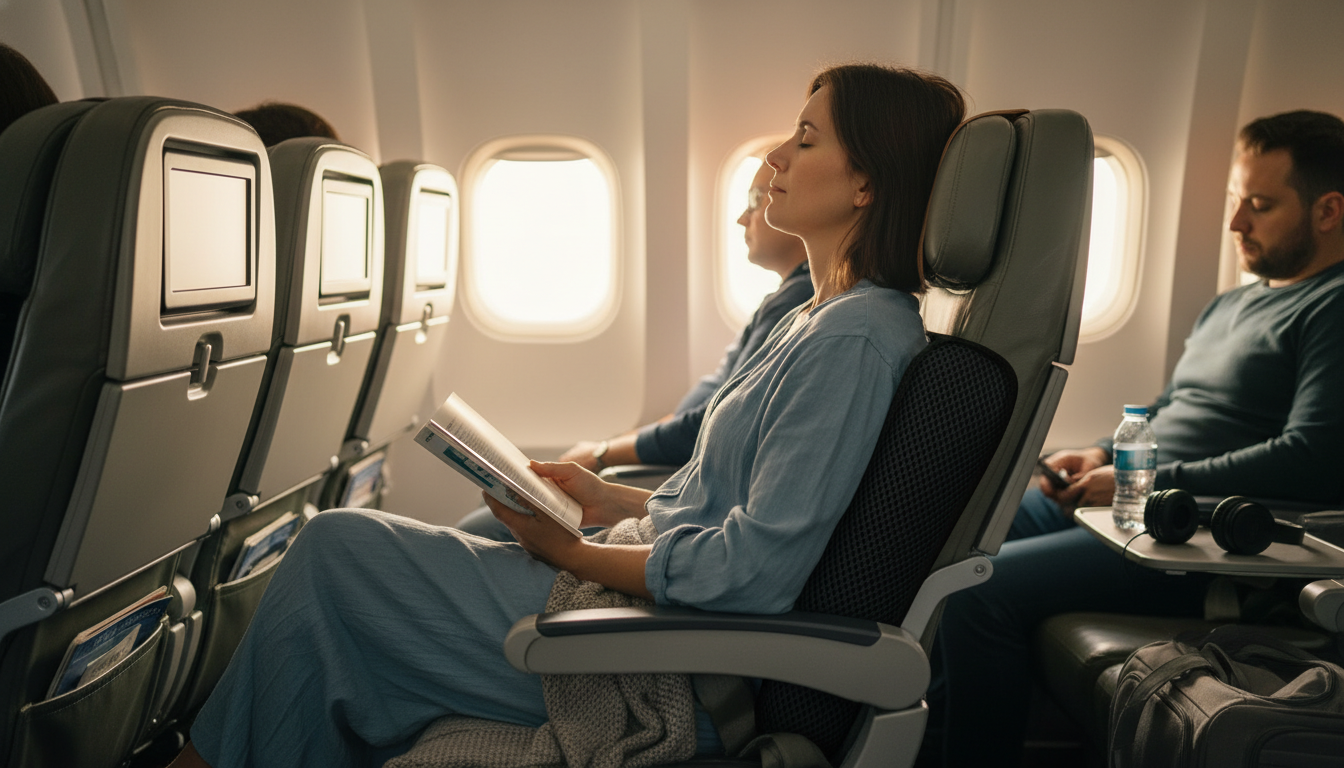
Economy class seats weren’t designed for your back. They were designed to maximize airline profits.
📋 Table of Contents
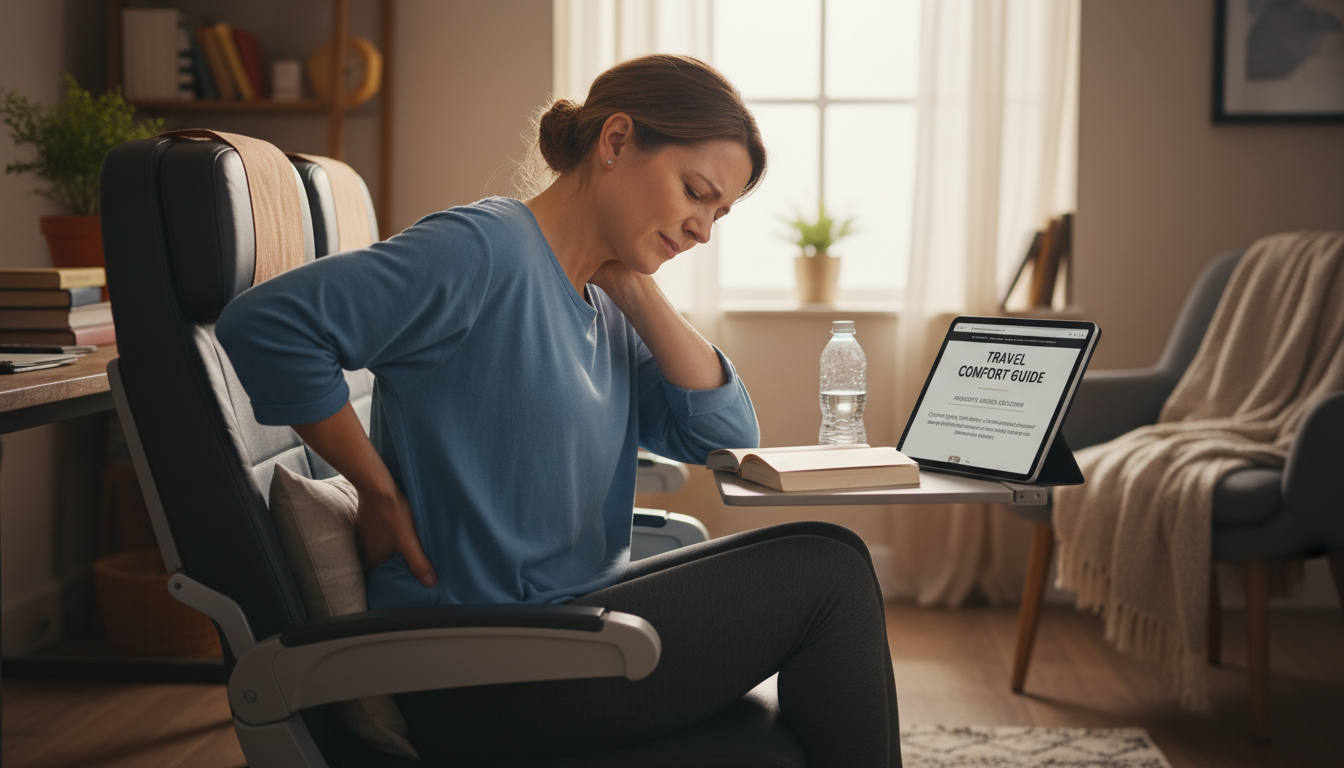
Cramped legroom, minimal recline, and non-existent lumbar support make flying uncomfortable for almost everyone—and downright painful for anyone with existing back issues. A long-haul flight can leave you stiff and sore for days.
This guide covers how to survive airplane seats, what to bring for back support, and strategies for arriving at your destination without needing a chiropractor.
Airplane seats are designed for:
They’re NOT designed for:
No lumbar support: Seat backs are typically flat or curved in the wrong places, forcing your lower back to flatten.
Fixed position: Minimal recline (especially in economy) means you can’t adjust to comfortable angles.
Cramped space: Limited legroom restricts movement and forces awkward positioning.
Seat pitch: The angle of the seat bottom often tilts you backward, pulling your pelvis out of alignment.
Flight duration dramatically affects discomfort:
A portable lumbar pillow is the single most effective item for airplane comfort.
Why it works:
Travel considerations:
Travel-ready: The LumbarPillow Orthopedic fits easily in carry-on bags and provides real support—not the flimsy padding of airline-provided pillows. Use it on the plane, then in your rental car, hotel chair, and conference room at your destination.
A neck pillow helps, but it’s secondary to lumbar support:
For longer flights, a footrest can help:
Not directly back-related, but helpful for overall comfort:
Best for back pain:
Avoid if possible:
Don’t wait until you’re uncomfortable—set up properly from the start:
Every 30-60 minutes:
In-seat exercises:
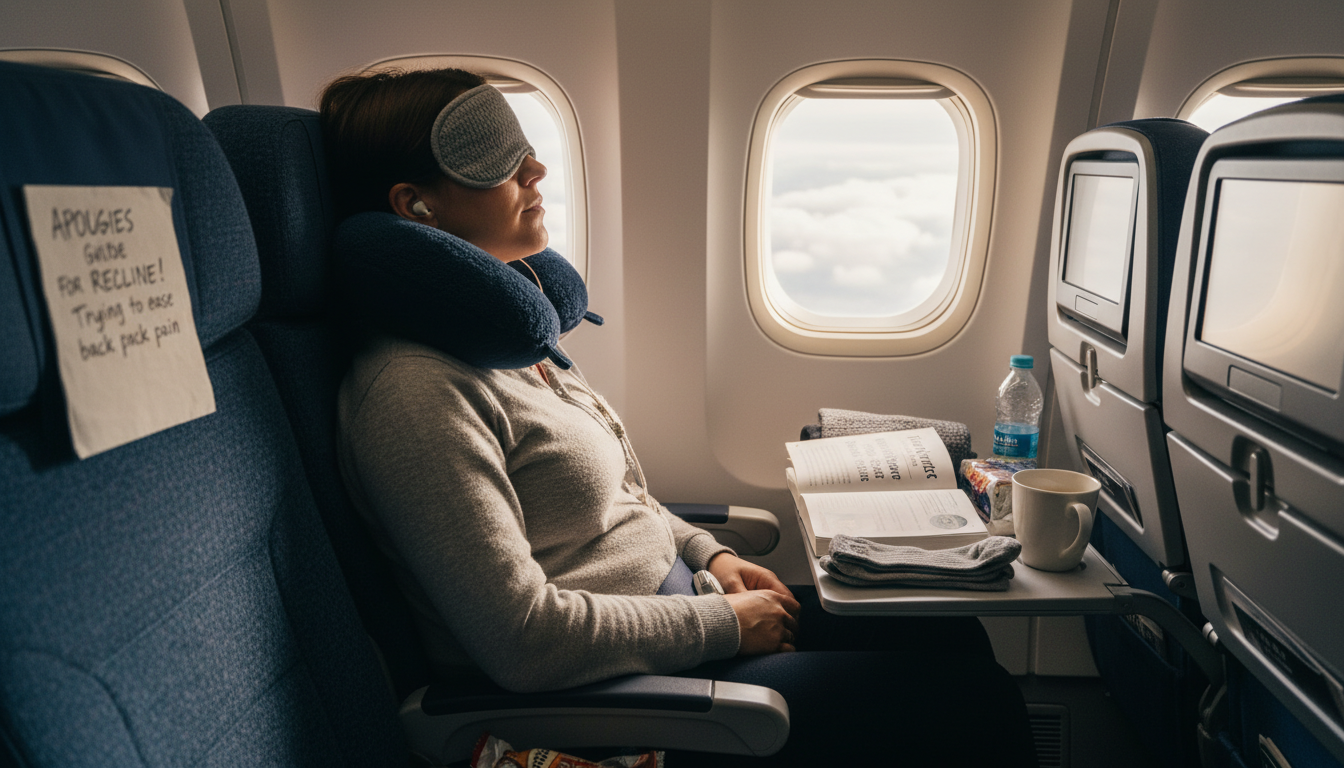
Getting comfortable enough to sleep is challenging:
Where back pain is most common:
Better, but not perfect:
Best option if accessible:
Yes—lumbar pillows are allowed in carry-on bags and personal items. They’re not restricted items. Memory foam pillows compress for packing and expand when you need them. Keep it accessible so you can use it immediately after boarding.
Minimally. Airline pillows are designed for head support, not lumbar support. They’re too soft and the wrong shape to maintain your spinal curve. You can fold one and place it behind your lower back in a pinch, but a proper lumbar pillow is significantly more effective.
For long-haul flights, yes—if you can afford it or have points. Lie-flat seats eliminate most back pain issues. The cost-benefit depends on: flight length, severity of your back problems, and whether you need to function immediately upon landing. A 15-hour flight in economy with severe back issues may not be worth the savings.
They’re better than nothing but less effective than memory foam. Inflatable supports: can leak, don’t conform to your body as well, often slide out of position, and need manual adjustment as they deflate. For occasional travel, they’re acceptable. For frequent flyers, invest in proper foam support.
After landing: walk and move as much as possible, stretch hip flexors and back (the stretches in our posture guide help), stay hydrated, avoid heavy lifting for a few hours, and consider gentle exercise or a hot bath. Most flight-related back discomfort resolves within 24-48 hours with movement and proper support.
Travel without the pain.
Don’t let airplane seats ruin your trip. Our orthopedic lumbar pillow fits in your carry-on and provides real support from takeoff to landing—then keeps working in rental cars, hotel chairs, and beyond.
30-Day Money-Back Guarantee | 2-Year Warranty | Free Shipping
Your glutes have forgotten how to work. It sounds strange,

Your hip flexors are the hidden culprits of desk-job back
Your back is stiff, tight, and angry. And you’ve got

That nagging pain at the base of your spine—right where
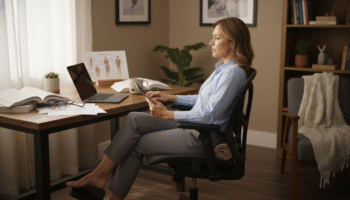
Sitting with a herniated disc can feel like torture. Every
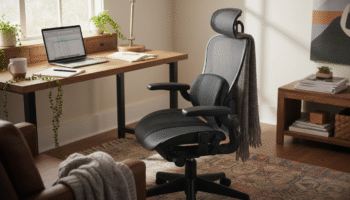
Your desk chair is failing you. Even if you paid

That deep ache in your buttock that won’t quit? The

You’ve blamed your chair for years. And you’re probably right—but
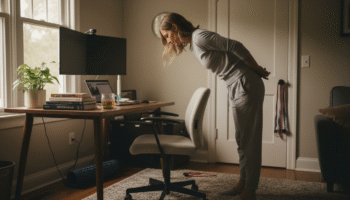
Your back is aching right now, isn’t it? That dull
Is your lower back screaming at you by 3 PM?