

Gluteal Amnesia and Back Pain
Your glutes have forgotten how to work. It sounds strange,

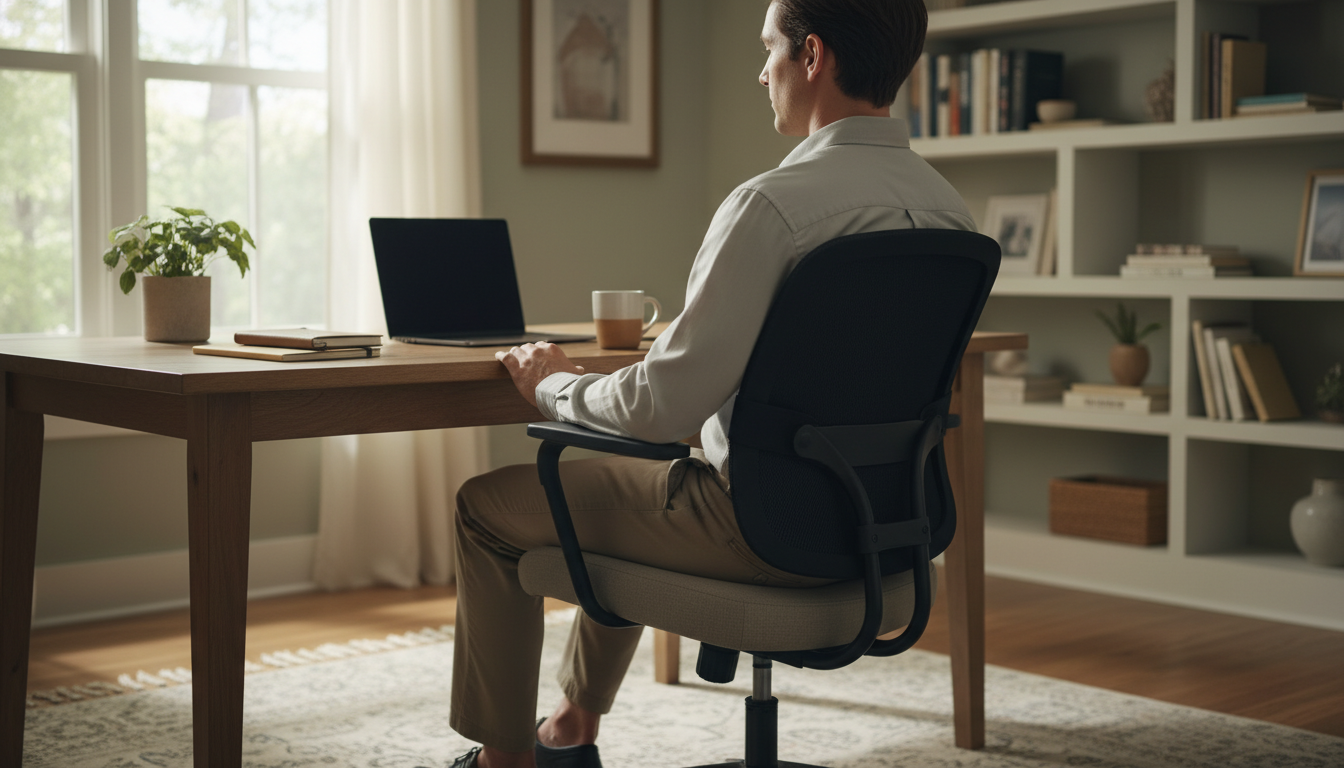
Memory foam or gel-infused? It’s the most common question when shopping for a lumbar pillow.
📋 Table of Contents
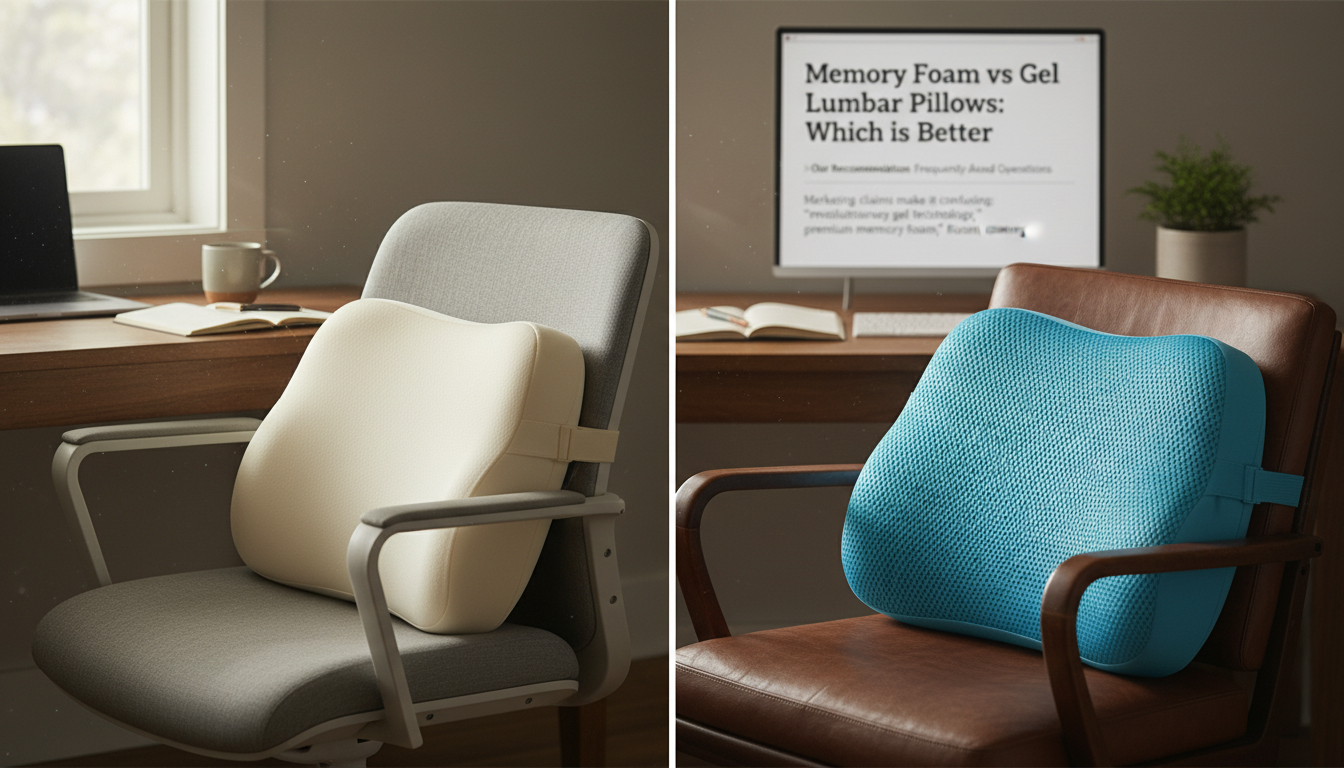
Marketing claims make it confusing: “revolutionary gel technology,” “premium memory foam,” “cooling comfort.” What actually matters for back support? Which material works better for your situation?
This guide breaks down the science behind lumbar pillow materials, compares their real-world performance, and helps you choose the right option for your needs.
Memory foam (viscoelastic foam) was originally developed by NASA in the 1960s for seat cushions. Here’s what makes it special:
Density matters: Memory foam is measured in pounds per cubic foot. Higher density (3-5 lb) provides better support and durability. Lower density (2-3 lb) is softer but flattens faster.
Gel-infused foam is memory foam with gel particles or gel layers added. The primary purpose is temperature regulation:
Important distinction: Gel-infused foam is still primarily memory foam—the gel adds cooling properties but doesn’t fundamentally change the support mechanism.
Latex:
Polyester fill:
Inflatable:
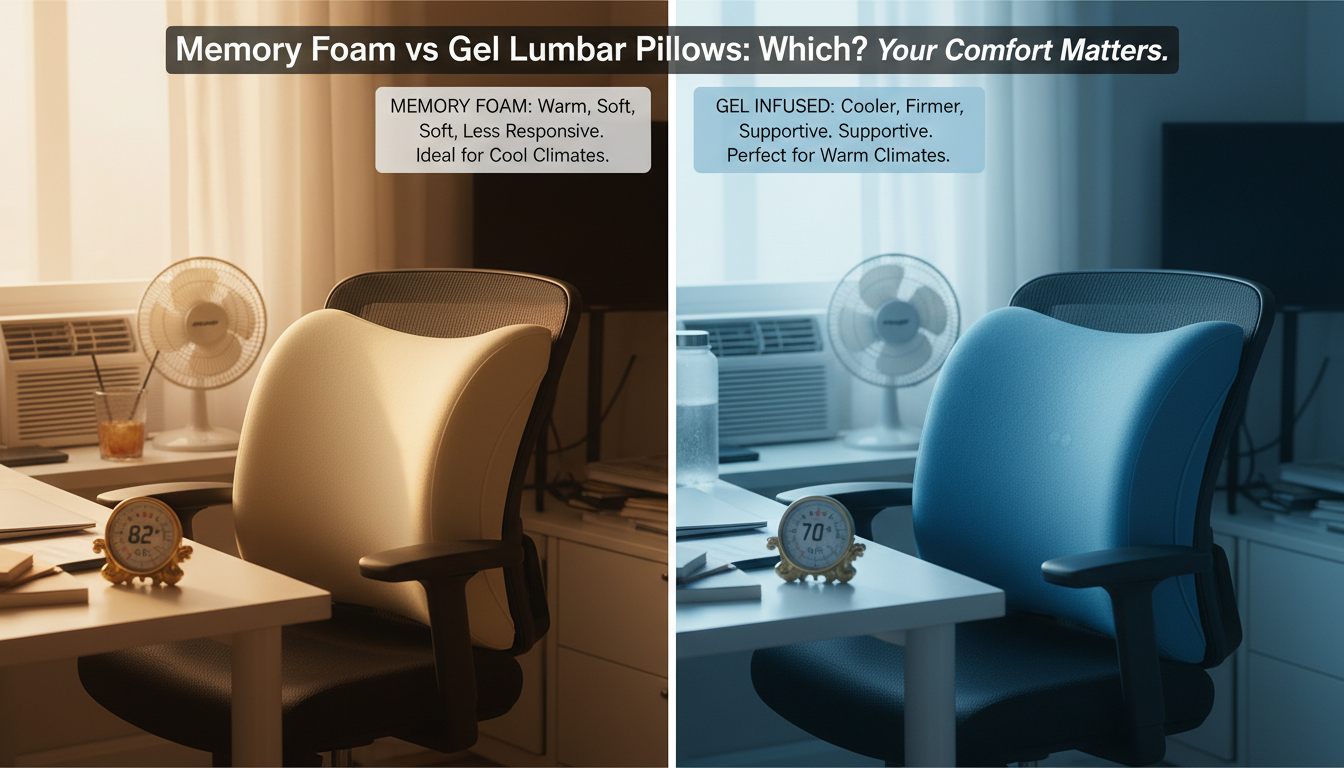
Gel-infused foam typically feels 2-5 degrees cooler than standard memory foam during the first 30-60 minutes of use. This can be meaningful if:
Reality check: The cooling effect diminishes over extended sitting as the gel reaches thermal equilibrium with your body. It’s most noticeable initially.
Adding gel particles to memory foam typically makes it:
Some people prefer this firmer feel; others find it less conforming than pure memory foam.
Consider gel-infused foam if:
| Factor | Memory Foam | Gel-Infused | Winner |
|---|---|---|---|
| Support Quality | Excellent | Very Good | Memory Foam |
| Contouring | Superior | Good | Memory Foam |
| Temperature | Warm | Cooler | Gel-Infused |
| Durability | Excellent | Good | Memory Foam |
| Price Range | $30-70 | $40-80 | Memory Foam |
| Best Use Cases | All-around support | Warm environments | Depends |
Pros:
Cons:
Best for: People who prefer a bouncier feel and have budget flexibility.
Avoid for lumbar support. Polyester fill provides minimal support and flattens quickly. It’s fine for decorative pillows but won’t help your back.
Pros: Adjustable firmness, ultra-portable, inexpensive
Cons: Doesn’t conform like foam, can feel plasticky, potential for leaks
Best for: Travel backup, not primary daily use.
After extensive research and testing, we chose high-density memory foam for the LumbarPillow because:
If heat retention is your main concern with memory foam:
Experience the difference quality foam makes.
Our AirFlex™ memory foam is specifically designed to resist flattening while providing the contouring support your spine needs. Breathable mesh cover keeps you comfortable all day.
30-Day Money-Back Guarantee | 2-Year Warranty | Free Shipping
Traditional memory foam can feel warmer than other materials because it conforms closely to your body, reducing air circulation. However, in climate-controlled environments (most offices and homes), this is rarely a significant issue. Breathable covers help considerably. If you’ve used memory foam mattresses and found them too hot, a pillow cover matters more than the foam type.
High-density memory foam (3-5 lb density) typically lasts 2-3 years with daily use before support noticeably degrades. Low-density foam (2-3 lb) may flatten within 6-12 months. Look for manufacturers that specify density and offer warranties reflecting confidence in durability.
Gel-infused foam does feel cooler initially—helpful if you work in a warm environment without air conditioning. However, the cooling effect diminishes after 30-60 minutes as the gel reaches your body temperature. In air-conditioned spaces, the difference is minimal after the first hour.
Look for products with money-back guarantees (like our 30-day trial). This lets you actually use the pillow in your environment before committing. In-store testing rarely reflects real-world all-day use.
For lumbar support, look for memory foam with 3-5 lb per cubic foot density. This provides adequate support without being too firm. Avoid products that don’t specify density—it’s often a sign of lower-quality foam.
Yes. Memory foam handles temperature variations well. In a very hot car, it may temporarily soften but returns to normal firmness when cooled. This doesn’t damage the foam. The support properties remain effective across a wide temperature range.
Your glutes have forgotten how to work. It sounds strange,
Your hip flexors are the hidden culprits of desk-job back
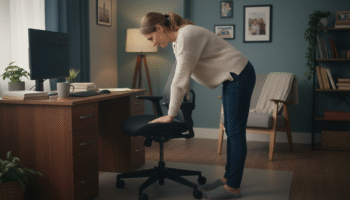
Your back is stiff, tight, and angry. And you’ve got

That nagging pain at the base of your spine—right where
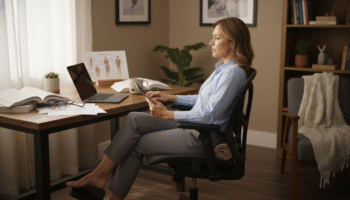
Sitting with a herniated disc can feel like torture. Every
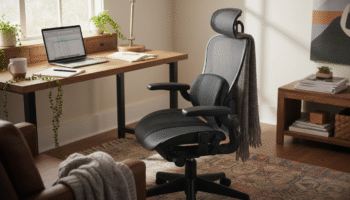
Your desk chair is failing you. Even if you paid

That deep ache in your buttock that won’t quit? The

You’ve blamed your chair for years. And you’re probably right—but
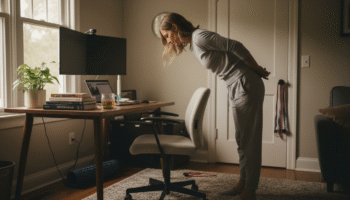
Your back is aching right now, isn’t it? That dull
Is your lower back screaming at you by 3 PM?