
Gluteal Amnesia and Back Pain
Your glutes have forgotten how to work. It sounds strange,

Your recliner is supposed to be the most comfortable seat in your home. So why does your back ache after an evening of TV?
📋 Table of Contents

Recliners are designed for relaxation, not spinal health. When you sink into that soft cushioning, your lower back loses the support it needs—and by the end of a movie, you’re stiff and sore instead of relaxed.
This guide shows you how to add proper lumbar support to recliners, sofas, and lounge chairs—so your evening relaxation actually leaves you feeling better, not worse.
Recliners change your spine’s position as you recline:
Most recliners have:
The result: your lower back has no support, and your muscles work overtime to maintain proper position—even when you’re trying to relax.
Here’s the irony: when you’re relaxing, you’re less aware of your posture. You slouch, shift, and settle into whatever position feels comfortable in the moment. But positions that feel comfortable initially often strain your back over time.
Without proper support, “relaxing” in your recliner actually creates tension.
Recliner positioning differs from office chairs because the angle changes:
Upright position:
Partially reclined:
Fully reclined:
Recliners present unique challenges for keeping pillows in place:
Options for securing:
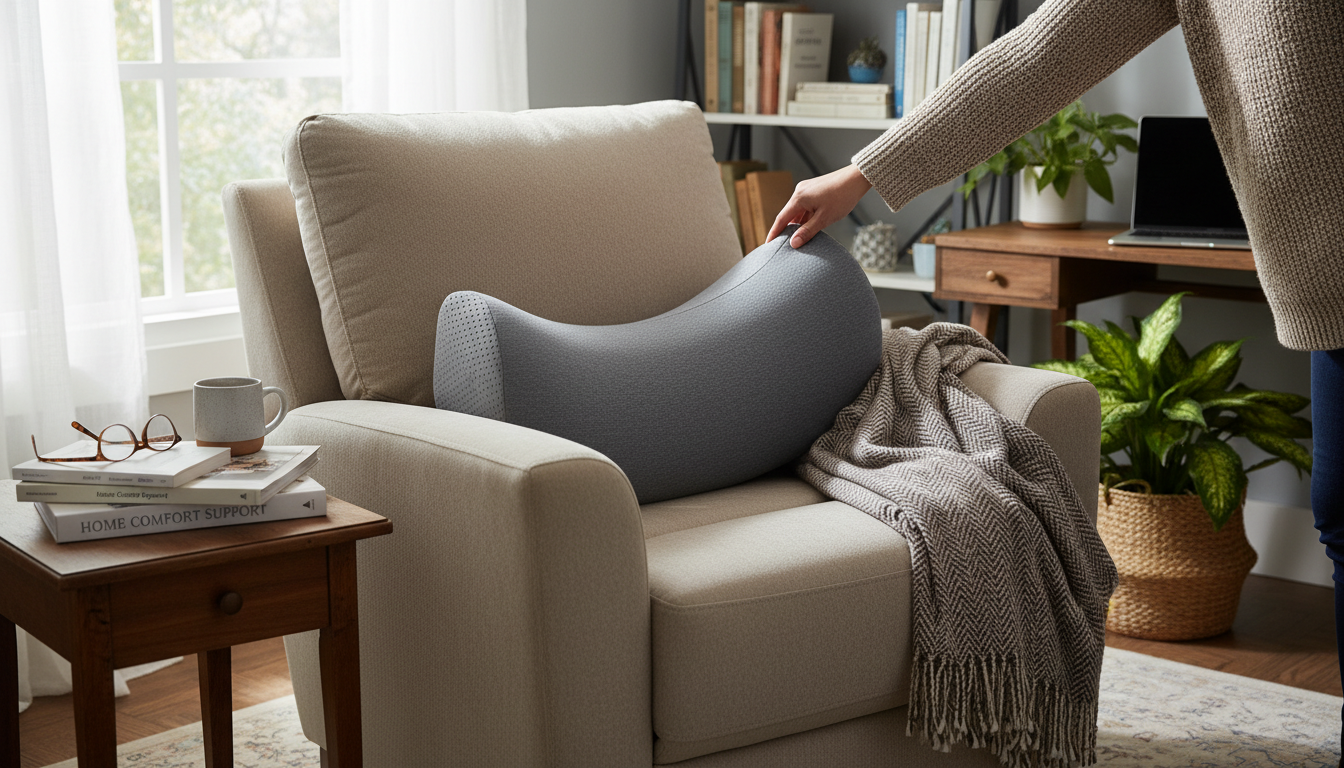
For recliner use, look for:
💡 Home comfort pick: The LumbarPillow Orthopedic adapts to recliner use—the ergonomic contour provides support at multiple angles, and the breathable mesh cover stays comfortable during long TV sessions.
For recliners, consider pillow shape:
Couches present similar challenges to recliners—maybe worse:
Tips for couch sitting:
Optimal TV watching position:
If your TV is too low (common problem), consider a taller TV stand or wall-mounting at correct height.
Reading in a recliner presents neck challenges:
Yes—a quality lumbar pillow works in both settings. Many people have one pillow that travels between home and work, though having two (one at each location) is more convenient. The LumbarPillow works equally well in office chairs, car seats, and recliners.
Power recliners with motorized adjustment work fine with lumbar pillows. The main consideration: as you adjust position, you may need to reposition the pillow. Some people find they prefer the pillow at certain recline angles and remove it at others.
A moderate recline (about 130-140 degrees) with proper lumbar support is often most comfortable. Fully upright can feel rigid; fully reclined for hours flattens your spine. The key is lumbar support at whatever angle you choose, and a TV positioned so you don’t crane your neck.
Some higher-end recliners include adjustable lumbar support—try it first. If you still experience discomfort with built-in support maximized, adding a dedicated pillow provides more substantial support. Built-in systems often have limited range.
For short naps in a partially reclined position, you can leave the pillow in place. For longer sleep or fully reclined positions, you might find it more comfortable to remove the pillow—when lying flat, your spine doesn’t need the same lumbar support as when sitting.
If you currently feel stiff after spending time in your recliner, proper lumbar support often helps significantly. The support reduces the muscle strain that causes stiffness. Many people notice improvement within their first evening of supported reclining.
Actually relax in your recliner.
Your evening shouldn’t end with back pain. Our orthopedic lumbar pillow provides the support your recliner is missing—so you can enjoy TV time, reading, or just unwinding without the next-day stiffness.
30-Day Money-Back Guarantee | 2-Year Warranty | Free Shipping
Your glutes have forgotten how to work. It sounds strange,
Your hip flexors are the hidden culprits of desk-job back
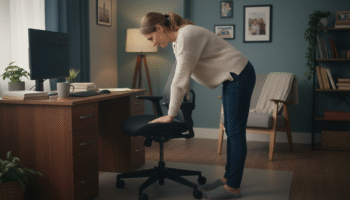
Your back is stiff, tight, and angry. And you’ve got

That nagging pain at the base of your spine—right where
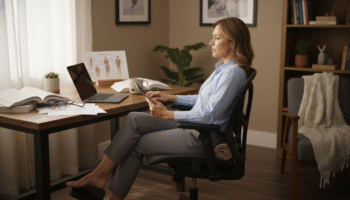
Sitting with a herniated disc can feel like torture. Every
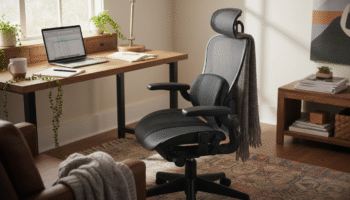
Your desk chair is failing you. Even if you paid
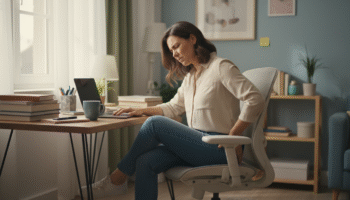
That deep ache in your buttock that won’t quit? The

You’ve blamed your chair for years. And you’re probably right—but
Your back is aching right now, isn’t it? That dull
Is your lower back screaming at you by 3 PM?