Free Shipping
Fast Delivery
Safe Payment
30-Day Guarantee
Free Shipping
Fast Delivery
Safe Payment
30-Day Guarantee

Car Lumbar Support – Long Drive Comfort Guide

Long commutes and road trips shouldn't end with an aching back. But for millions of drivers, they do—because car seats are designed for crashes, not...
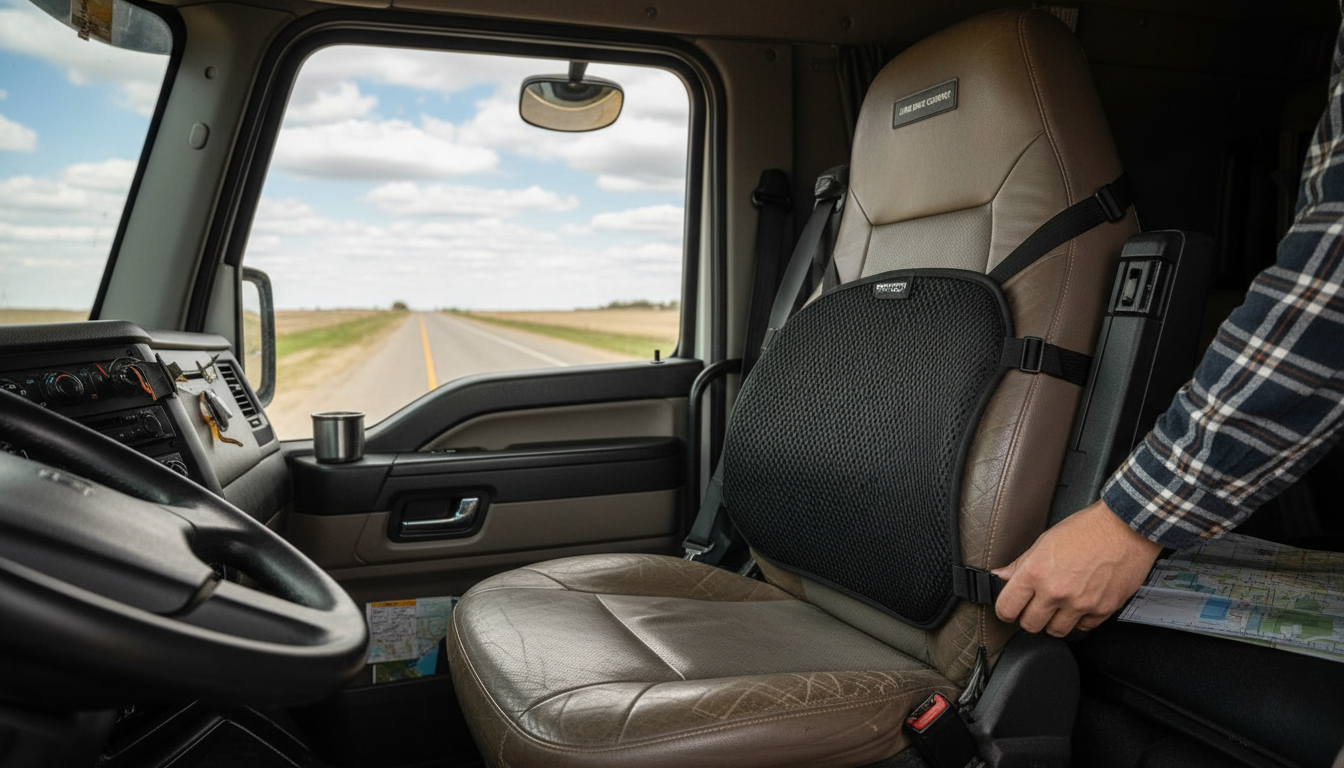
Car Lumbar Support - Long Drive Comfort Guide - Hero Image

Long commutes and road trips shouldn’t end with an aching back. But for millions of drivers, they do—because car seats are designed for crashes, not comfort.

The average American spends over 290 hours per year behind the wheel. That’s nearly two weeks of sitting in a seat engineered for safety, not spinal health. No wonder so many drivers suffer from chronic back pain.

This guide shows you how to add proper lumbar support to any vehicle, positioning tips for pain-free driving, and which products actually work for daily commuters, road trippers, and professional drivers.

Why Driving Causes Back Pain

Car Seat Design Flaws

Car seats prioritize safety—which is important—but often neglect ergonomics:

  • Flat lumbar region: Most car seats have minimal curve where your lower back needs support
  • Fixed positions: Limited adjustability means you can’t dial in your perfect position
  • Bucket design: While supportive in turns, bucket seats can lock your pelvis in awkward positions
  • One-size-fits-all: Seats are designed for “average” body types, not your specific proportions

Vibration Effects on Spine

Driving adds something office chairs don’t: whole-body vibration.

  • Road vibrations travel through the seat into your spine
  • Studies link whole-body vibration to increased disc degeneration
  • Vibration combined with prolonged sitting accelerates fatigue
  • Your muscles work constantly to stabilize against vibration

Fixed Position Problems

When you’re driving, you can’t exactly get up and stretch. You’re locked in one position, often with:

  • Arms extended forward (pulling shoulders away from seat)
  • Right leg extended to pedals (creating hip imbalance)
  • Head turned slightly to check mirrors (neck strain)
  • Tension from traffic stress (muscle tightening)

Commuter Statistics

  • Average US commute: 27 minutes each way (54 minutes daily)
  • Over 50% of drivers report some back discomfort while driving
  • Professional drivers (truck, delivery, rideshare) have 2-3x higher back pain rates
  • Long-distance drivers are among the highest-risk occupations for back problems

Types of Car Lumbar Support

Lumbar Support Pillows

Memory foam lumbar pillows are the most effective add-on solution for car seats.

Advantages for driving:

  • Portable—use in car, then bring to office or home
  • Adjustable positioning with straps
  • High-density memory foam absorbs some vibration
  • Works with virtually any vehicle seat

What to look for:

  • Straps long enough to loop around car headrest (for secure positioning)
  • Memory foam dense enough to resist flattening from car vibration
  • Breathable cover (cars can get hot)
  • Compact enough to fit between you and the seat

💡 Driver’s pick: The LumbarPillow Orthopedic works excellently in vehicles—its adjustable dual straps loop around headrests or seat backs, and the AirFlex™ memory foam maintains support even through highway vibration.

Built-in Lumbar Adjustments

Many newer vehicles include adjustable lumbar support. If your car has it:

  • Look for a switch or dial on the side of your seat
  • Power lumbar often includes in/out and up/down adjustment
  • Experiment with different settings during your drive
  • Built-in support is often minimal—you may still need supplemental support

Reality check: Even premium car lumbar systems are often inadequate. They provide light support, but usually not enough for people with existing back problems or very long drives.

Seat Covers with Lumbar Support

All-in-one seat covers with built-in lumbar support are available.

Pros: Complete seat coverage, often include cooling/heating

Cons: Fixed lumbar position, variable quality, can affect airbag sensors

Important: Check that any seat cover doesn’t interfere with side airbag deployment.

Inflatable Lumbar Supports

Air-filled lumbar supports let you adjust firmness on the go.

Pros: Adjustable firmness, compact when deflated

Cons: Can lose air over time, less conforming than memory foam, may shift during driving

Best Car Lumbar Supports (Ranked)

Product Type Best For Key Feature
LumbarPillow Orthopedic Memory Foam Overall Best AirFlex™ foam, dual straps
Everlasting Comfort Car Memory Foam Budget Option Strap system, affordable
McKenzie SuperRoll Foam Roll Long Hauls PT designed, firm support
Big Ant Car Support Full Seat Truck Drivers Full seat coverage

How to Set Up Lumbar Support in Your Car

Finding the Right Position

  1. Start with your seat adjusted correctly: Adjust seat height, distance from pedals, and recline angle before adding lumbar support
  2. Identify your lumbar curve: Feel for the inward curve in your lower back—this is where support belongs
  3. Position the pillow: The thickest part should align with or sit slightly below your belt line

Securing to Car Seat

Headrest anchor method (most secure):

  1. Loop the strap(s) around the headrest post
  2. Tighten until the pillow sits at the correct height
  3. Test by pressing back—pillow should stay in place

Seat back method:

  1. Loop straps around the entire seat back
  2. Works well for bucket seats without accessible headrest posts
  3. May need extension straps for larger seats

Adjusting for Different Trips

  • City driving: Standard positioning; frequent stops give natural breaks
  • Highway commuting: Ensure firm positioning; less movement means more static loading
  • Long road trips: Consider slightly less recline than usual; plan stops every 2 hours

Driving posture Tips

Seat Position Basics

  • Distance from pedals: Slight bend in knee when pressing pedal fully; never fully extended
  • Seat height: Eyes level with the middle of the windshield
  • Recline angle: 100-110 degrees (slightly reclined from vertical)—more upright than you think
  • Seat bottom tilt: Flat or slight upward angle at front (if adjustable)

Mirror Adjustment Technique

Adjust your mirrors after you’ve set up proper posture (including lumbar support). This ensures you maintain good position to use them effectively.

  • Adjust side mirrors slightly outward to reduce blind spots
  • Rearview mirror should show entire rear window with minimal head movement
  • If you find yourself leaning to see mirrors, readjust them

Steering Wheel Position

  • Wrists should rest on top of wheel with arms slightly bent
  • Shoulders should stay against the seat back
  • Adjust tilt and telescoping if available
  • Air bag clearance: at least 10 inches from steering wheel to chest

Taking Breaks on Long Trips

  • Every 2 hours: Stop and walk for 5-10 minutes
  • Quick stops: Stand, stretch, and walk around your car at minimum
  • Stretches to do: Hip flexor stretch, standing back extension, shoulder rolls
  • Hydration: Drink water—it forces bathroom breaks that double as movement breaks

Special Considerations

For Commuters

Daily commuters face the challenge of repeated exposure:

  • Set up your lumbar support once and leave it—daily repositioning is annoying
  • Consider leaving a pillow in your car rather than transporting daily
  • Use your commute time to practice good posture habits
  • If possible, vary your route occasionally to change your mental state

For Road Trips

Long-distance driving requires extra preparation:

  • Test your lumbar setup before the trip, not when you’re already uncomfortable
  • Plan stops every 2 hours—schedule them into your route
  • Pack a travel-sized foam roller for more intensive stretching at stops
  • Consider alternating drivers to give your back recovery time

For Truck Drivers

Professional drivers spend 8-11 hours daily in the driver’s seat:

  • Invest in the highest-quality lumbar support you can find—it’s a work tool
  • Consider combining lumbar support with a seat cushion for full support
  • Air-ride seats help but don’t eliminate the need for lumbar support
  • Federal regulations require rest breaks—use them for stretching, not just sitting somewhere else

For Uber/Lyft Drivers

Rideshare drivers face unique challenges:

  • Long hours, but unpredictable—hard to schedule breaks
  • Getting in and out frequently can actually help—take advantage of natural movement opportunities
  • Keep lumbar support in place between rides
  • Consider setting a personal timer for stretching regardless of ride requests

Frequently Asked Questions

Can I leave the lumbar pillow in my car?

Yes, quality memory foam handles temperature variations well. However, extreme heat (summer parked cars can exceed 140°F) may temporarily soften the foam. It returns to normal firmness once cooled. Consider parking in shade or using a sunshade during hot months. The pillow won’t be damaged—just temporarily softer.

Will it work in any vehicle?

Most lumbar pillows work in cars, trucks, SUVs, and vans. Adjustable straps accommodate different seat designs. The main exception is sports car seats with very aggressive bolstering—there may not be room between the side bolsters for a standard pillow. In that case, look for narrower lumbar rolls.

How do I prevent it from sliding?

Use the strap system properly—tighten until the pillow stays in place when you lean back and sit up. If your pillow slides despite proper strapping, try routing straps through a different part of the seat. A non-slip backing also helps. If you’re using a pillow without straps, consider upgrading to one with adjustable straps for vehicle use.

Do I need different support for driving vs. office?

Not necessarily. A quality lumbar pillow designed for multiple settings works well in both environments. Some people prefer slightly firmer support for driving due to vibration—the same pillow may feel different in a moving car versus a stationary office chair. The LumbarPillow’s high-density foam works well for both.

My car has built-in lumbar—do I still need a pillow?

If you’re experiencing back pain despite using your car’s lumbar adjustment, the built-in support likely isn’t enough. Try maximizing the built-in setting first. If that doesn’t fully relieve your pain, adding a dedicated lumbar pillow provides more substantial support. You may find you prefer the pillow to the built-in system.

Drive without the pain.

Whether you’re commuting, road tripping, or driving professionally, our orthopedic lumbar pillow provides the support your car seat is missing. AirFlex™ memory foam maintains support through vibration and long drives.

Try Risk-Free for 30 Days →

30-Day Money Back
2-Year Warranty
Free Returns
24/7 Support

30-Day Money-Back Guarantee | 2-Year Warranty | Works in Any Vehicle

More Posts

Your Cart

Your cart is empty

Looks like you haven't added anything yet.

Start Shopping