
Gluteal Amnesia and Back Pain
Your glutes have forgotten how to work. It sounds strange,

That dull ache in your lower back after a long day at your desk isn’t just annoying—it’s your body sending you a warning signal.
📋 Table of Contents

If you’re one of the 80% of Americans who experience lower back pain at some point, there’s a good chance sitting is making it worse. The average office worker sits 10+ hours per day, and most chairs simply weren’t designed to support your spine properly.
The good news? You don’t need an expensive standing desk or a complete lifestyle overhaul. This guide covers 12 proven methods to relieve and prevent lower back pain from sitting—starting with changes you can make right now.
To fix the problem, we need to understand what’s actually happening to your spine when you sit.
When you stand, your spine distributes weight relatively evenly. But when you sit—especially with poor posture—pressure on your lumbar discs increases by up to 40-90%.
Your spinal discs are like cushions between vertebrae. They’re filled with a gel-like substance that absorbs shock. Prolonged sitting compresses these discs, potentially causing:
Most people naturally slouch when sitting for extended periods. This creates a C-shaped curve in your spine (instead of the healthy S-shape), which:
Researchers have coined the term “sitting disease” to describe the health effects of prolonged sitting. Beyond back pain, excessive sitting is linked to:
The solution isn’t to never sit—that’s impractical for most of us. Instead, it’s about sitting better and sitting less.
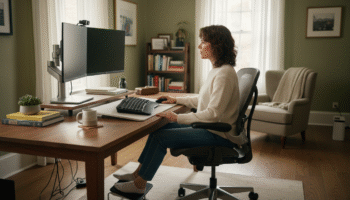
Proper posture can reduce spinal pressure by 50% or more. Here’s exactly how to sit correctly:
The ideal sitting position creates three 90-degree angles:
Your desk should allow you to maintain those 90-degree angles:
Incorrect monitor height causes you to crane your neck, which affects your entire spine:
Do this 3-second check every hour:
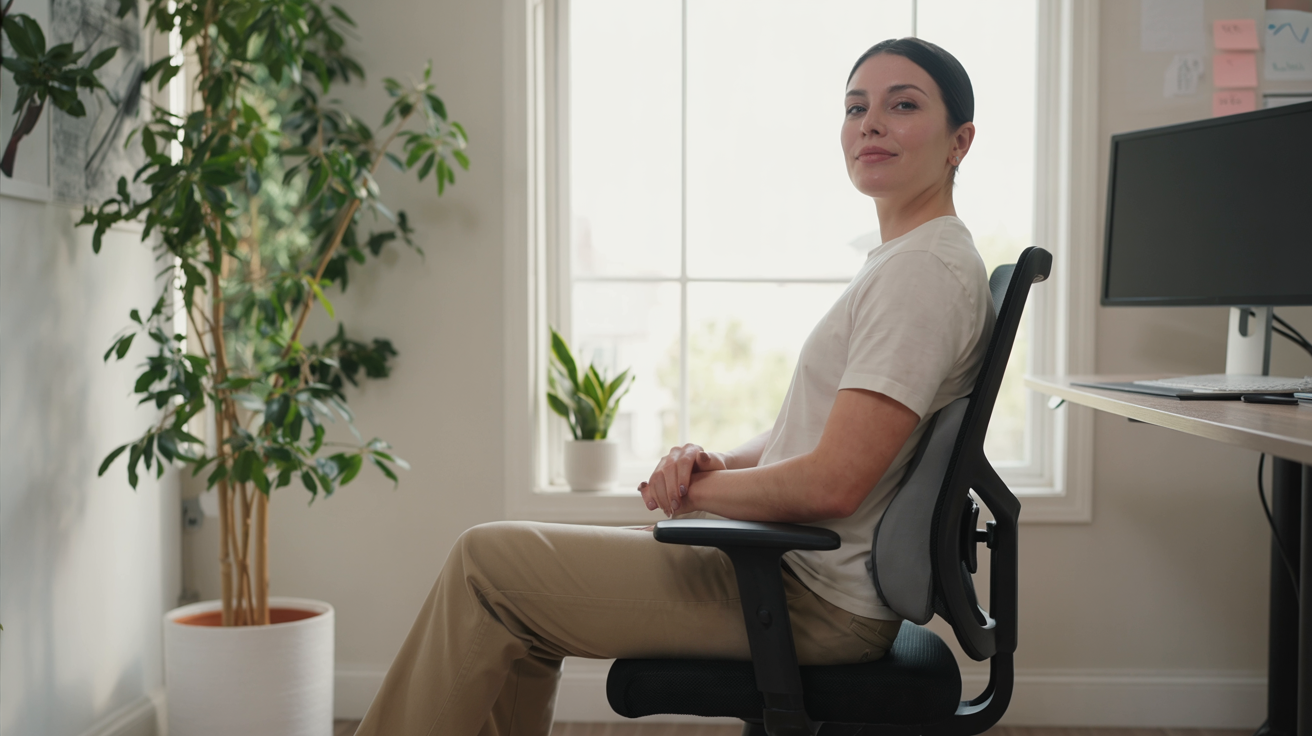
This is the single most effective change for most people. Your chair likely has a gap between your lower back and the backrest—a lumbar pillow fills that gap.
Why it works: A lumbar support pillow maintains your spine’s natural curve, reducing disc compression and muscle strain. It passively improves your posture without requiring constant attention.
What to look for: Memory foam lumbar pillows with ergonomic contouring provide the best combination of support and comfort. Look for options with adjustable straps to secure the pillow in place.
💡 Pro tip: A quality lumbar pillow like the LumbarPillow Orthopedic Support can eliminate back pain in minutes by properly supporting your spine’s natural curve. Many users report relief on the first day of use.
Even perfect posture causes problems if you never move. The key is frequent, short breaks rather than occasional long ones.
The 20-20-20 rule for backs:
Set a timer if you need to—most people dramatically underestimate how long they’ve been sitting.
Your hip flexors connect your spine to your legs. When you sit, they stay in a shortened position for hours. Over time, they become chronically tight and pull on your lower spine—even when you’re standing.
3 simple hip flexor stretches:
Strong core muscles support your spine and reduce strain on your back. You don’t need a gym—these can be done at home:
5-minute daily core routine:
Start slow and focus on form over reps. A physical therapist can help if you’re unsure about proper technique.
If your chair is too high, your feet dangle (straining your back). Too low, and your hips drop below your knees (increasing disc pressure).
Ideal chair height: Feet flat on floor, thighs parallel to ground, knees at 90 degrees.
If you can’t adjust your chair low enough (common for shorter individuals), a footrest brings the floor to you.
Look for an angled footrest that allows some movement—static positioning is part of the problem.
Standing desks can help, but they’re not a magic solution. Standing all day creates its own problems.
Best approach: A sit-stand desk that lets you alternate positions throughout the day. Aim for 15-30 minutes of standing per hour.
For temporary relief:
Heat before stretching can improve flexibility. Ice after activity can reduce inflammation.
Your back works overtime to heal while you sleep. Poor sleep posture undoes your daytime efforts.
Back-friendly sleep positions:
Your spinal discs are largely made of water. Dehydration reduces their ability to absorb shock and can contribute to disc problems.
Aim for 8 glasses of water per day—more if you drink coffee or exercise.
Beyond your chair, consider:
If your back pain:
Consider seeing a healthcare provider. Options include your primary care doctor, a physical therapist, a chiropractor, or an orthopedic specialist.
Not all products marketed for back pain actually work. Here’s what the evidence supports:
A quality lumbar pillow is the most cost-effective solution for most people. It addresses the root cause (poor spinal alignment) rather than just masking symptoms.
What to look for:
Ready to stop fighting back pain every workday?
Our orthopedic lumbar pillow uses pressure-relieving AirFlex™ memory foam to eliminate pain at the source—not just cover it up.
30-Day Money-Back Guarantee | Free Shipping | Real Human Support
A seat cushion can help if your chair’s seat is too hard, but it doesn’t replace lumbar support. Consider using both for maximum benefit.
A good ergonomic chair helps, but many still lack adequate lumbar support. Even expensive chairs often benefit from an added lumbar pillow.
If you’re shopping for a chair, look for adjustable lumbar support built in—but don’t assume it will be sufficient.
Worth considering if you want to alternate between sitting and standing without replacing your entire desk.
Most sitting-related back pain improves with the methods above. However, seek medical attention if you experience:
You can do these at your desk without anyone noticing:
With proper intervention (lumbar support, posture correction, movement breaks), most people notice improvement within 1-2 weeks. Significant improvement typically occurs within 4-6 weeks. However, if you’ve had pain for months or years, full recovery may take longer.
Not necessarily. Standing all day creates its own problems: varicose veins, foot pain, and fatigue. The best approach is alternating between sitting and standing throughout the day. When you do sit, sit properly with adequate lumbar support.
Yes—when it’s the right pillow used correctly. A quality lumbar support pillow maintains your spine’s natural curve, reducing disc pressure and muscle strain. It works by addressing the cause of pain rather than just masking symptoms.
Look for chairs with adjustable seat height, seat depth, armrests, and lumbar support. However, even expensive ergonomic chairs often have inadequate lumbar support—adding a dedicated lumbar pillow typically provides better support at lower cost.
A sit-stand desk can be helpful as part of an overall strategy, but it won’t solve back pain on its own. Proper sitting posture with lumbar support, combined with regular movement, is often more effective than simply standing more.
Lower back pain from sitting isn’t something you have to accept as part of desk work. The most effective solutions are often the simplest:
Start with lumbar support—it’s the change most people notice fastest. From there, layer in the other strategies for long-term back health.
Stop suffering through another workday.
Join hundreds who’ve finally found relief from daily sitting pain—and aren’t looking back. Our AirFlex™ memory foam lumbar pillow eliminates tailbone and lower back pain in minutes.
30-Day Money-Back Guarantee | 2-Year Warranty | Free Shipping
Your glutes have forgotten how to work. It sounds strange,
Your hip flexors are the hidden culprits of desk-job back
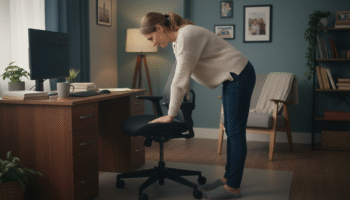
Your back is stiff, tight, and angry. And you’ve got

That nagging pain at the base of your spine—right where
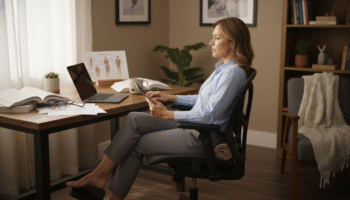
Sitting with a herniated disc can feel like torture. Every
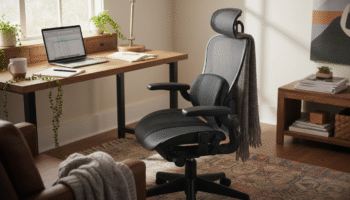
Your desk chair is failing you. Even if you paid
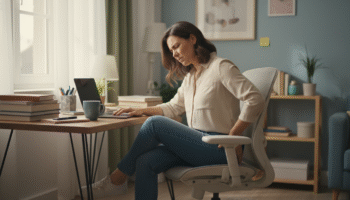
That deep ache in your buttock that won’t quit? The

You’ve blamed your chair for years. And you’re probably right—but
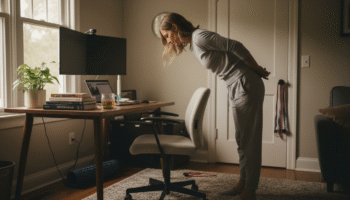
Your back is aching right now, isn’t it? That dull
Is your lower back screaming at you by 3 PM?